
father mother sister brother movie review
Cast: Tom Waits, Adam Driver, Mayim Bialik, Charlotte Rampling, Cate Blanchett, Vicky Cripps, Sarah Greene, Indya Moore, Luka Sabbat, François LeBrun
Director: Jim Jarmusch
Star Rating: ★★★.5
Jim Jarmusch’s latest film is charming and may initially seem too simple for its own good, but there’s a lovely wisdom to it that endures. Right from its strange title, the film comes with a distinct satirical humor. It is a triptych that revolves around the essentiality of family. We all come from parents, and we all have some family, and our own complex relationships around it. Jarmusch’s sad and delicate film explores three such family histories, offering an analysis of the ways we communicate and choose to avoid those we are closest to.
Base
The first of these stories is the funniest and most touching. Adam Driver and Mayim Bialik play brother-sister, Jeff and Emily. They’re headed to an isolated cabin to meet their father (a hilarious and stirring performance from Tom Waits). They are worried about her, but not enough to take her back with them. So they celebrate their happiness and engage in small talk until there is nothing left to discuss. Jarmusch creates awkward silences so expertly that I have to hide a quick laugh.
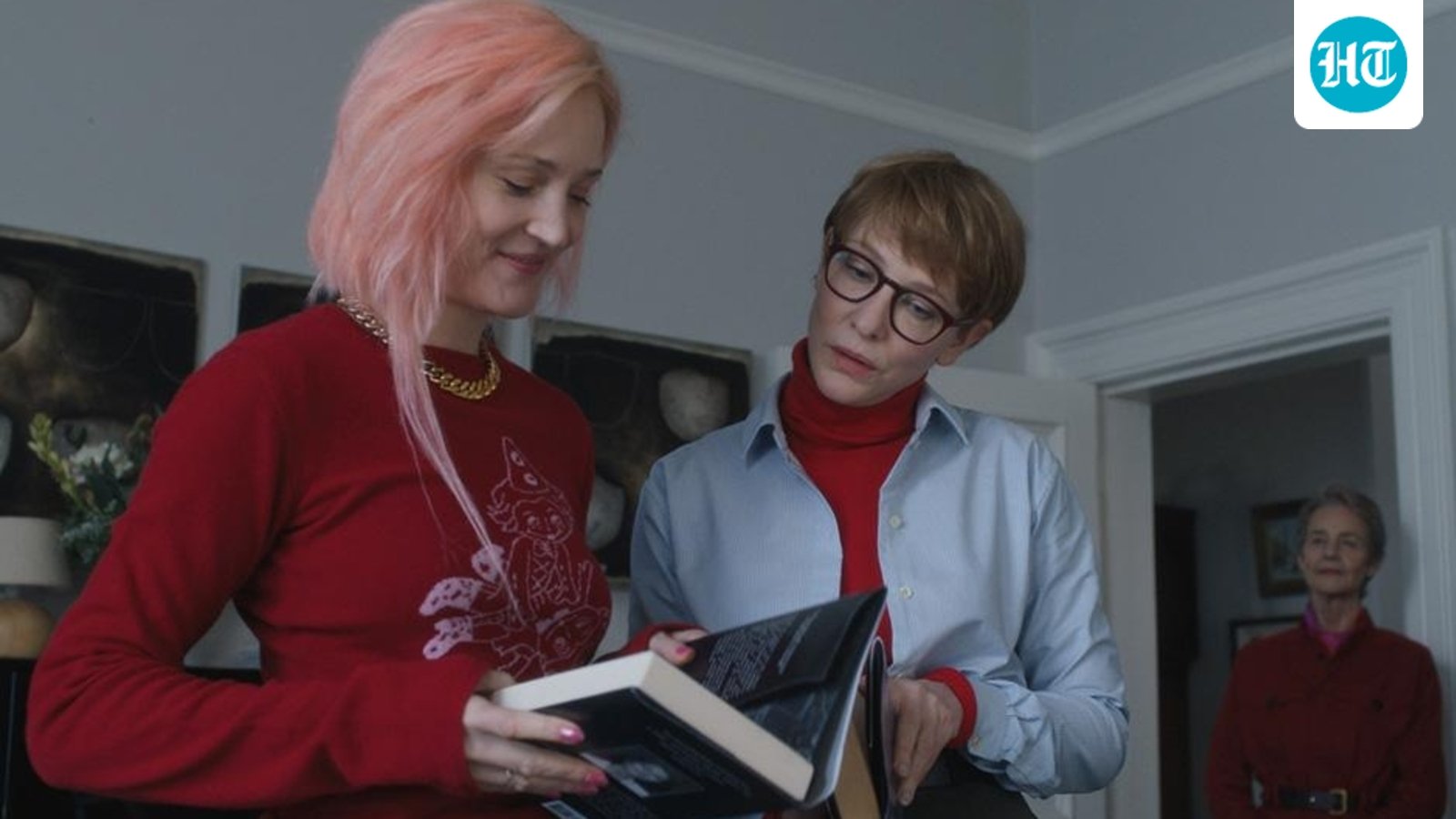
Elsewhere, Charlotte Rampling plays a rather authoritative matriarch in a sleek red dress. She is a writer who does not like her daughters to touch her books. She is hoping to meet two of them: the eldest, Timothy (Cate Blanchett), and the youngest, Lilith (Vicky Cripps). Timothy is dutiful and careful, while Lilith, who has dyed her hair orange and is telling casual lies to hide their relationship, does not care for the encounter. The three sit down to mingle, but really, it’s as good as a telephonic call.
The last of these is a completely different story. There’s no sarcastic humor involved, as French-American twins Billy (Luca Sabbat) and Skye (Indya Moore) finally make time to meet at their deceased parents’ Parisian apartment. This provides some time for the twins to reflect and connect on their lives and memories growing up. It is the longest and ends the film on a somber note, gently confirming the underlying context of this intelligently made feature.
A gentle, sad film
The cast is universally good, with Craps and Driver being excellent. Jarmusch’s dialogue delivery is astute as ever, with a scene involving the ax used by the father generating the biggest laughs at a packed screening at the International Film Festival of Kerala. Jarmusch connects the dots in small moments, not in connecting family members. A group of young skateboarders also recur in each of these threads, as a charming moment of silence occurs while our characters contemplate how the world has moved on. This is a film where what is said is never what is meant. Unspoken words fill the room, frame by frame, unraveling a common thread of miscommunication. What is said is said; It can never be taken back.
What is this movie about? Why, it’s about family. The peace and chaos that it brings together. The way our parents know us so intimately and yet do not know us. In the same way perhaps we do not know him as a human being. It’s about showing up. It is also a film about the passage of time. We may have made so much progress, and yet, we still believe in the illusion of a deeply capitalist society.
Notice how the third story is marked by the absence of the parents, and this is the only time the film abandons that awkward energy and focuses on effective communication. Unlike the previous two acts, Jarmusch, here working with DOPs Frederic Elms and Yorick Le Saux, grants the third position. In this, the frame changes, expands, and allows the twins to extend their arms, walk, and fall flat. Laugh and say, ‘I love you so much,’ over and over again. There’s not an iota of weirdness in it, which allows the audience to listen and pay attention; Jarmusch is able to bring about that change with sharp wit and dramatic satire. This is a small film in which the key to a big mystery is hidden. Jarmusch insists that you get closer, and sometimes, just call your parents.