
To enter Madame Tussaud’s wax museum is to come face to face with lifelike clones of many of the faces we have grown up knowing. Around the world, the walls of these museums preserve life in the most paradoxical way. What once started as an art traveling exhibition is now going down in history. Today this name resonates as a cultural phenomenon.
Legendary singer Asha Bhosle with her wax statue at Madame Tussauds Wax Museum, New Delhi. | Photo Courtesy: Sudarshan V/The Hindu
Who is this madam?
Anne Marie Tussaud née Grosholtz was a French girl born on 1 December 1761 in Strasbourg. She was a very determined and extremely creative person. At the time of his birth France was going through extreme difficulties, crisis and tension. Such a land was preparing itself for the coming revolution.
Her mother took Marie to Bern, Switzerland where she spent her early years. Marie learned to make wax figures from Philippe Matthe Curtius, a trained doctor and native of Switzerland, in whose house Marie’s mother worked as a housekeeper. Curtius, who had taken up waxwork because of his profession, soon became a master (he was also a painter and therefore artistic in nature) and an expert at sculpting anatomical wax figures (his medical training aiding his accuracy). Marie was exposed to the idea of Curtius’s wax museums and exhibitions, which ingrained her into the elite Swiss and later French consciousness.
Art became popular. Paris, the undisputed French cultural center, had to bring both. Thus, young Marie and Curtius, now in Paris, began a full-fledged career in wax-modelling.
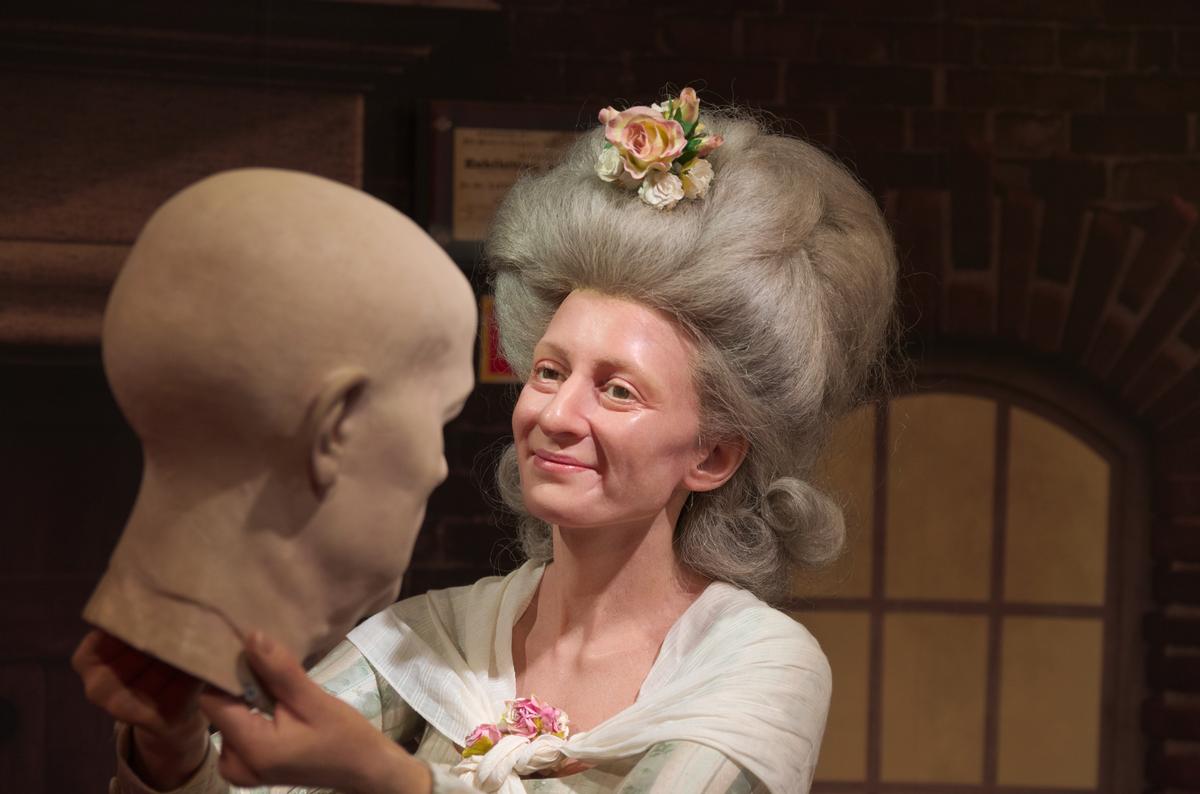
Wax statue of Marie Tussaud in Vienna. | Photo Credit: Wikimedia Commons
The 18-year-old Marie Tussaud gave wax-modeling lessons to Madame Elisabeth, sister of King Louis XVI.
The history of wax-modelling goes back centuries, ancient civilizations like Egypt, Greece, Roman etc. used to make wax models of people for display. This was especially seen on the occasions of death. France was fascinated with wax-modelling in the late 1700s.
french revolution
With the shift in politics from the elite to the common, the meanings inherent in art began to change. While on one hand newspapers, theaters etc. were suppressed, censored and monitored, on the other hand wax works escaped scrutiny and became powerful visual media providing information and reflecting the environment. Philip Curtius vigorously pursued his business and actively supported the revolution. Although profits had taken a huge hit due to the struggling economy, the business run by both Mary and Curtius was still going.
Do you know?
Madame Tussaud’s first wax figure was of Voltaire, one of France’s greatest writers of all time. It was built in 1777. In fact, Voltaire was a frequent visitor to Philippe Curtius’s Paris home.
Marie had to create wax masks of several guillotined aristocrats, including her former employers, King Louis XVI and Queen Marie Antoinette, to show their loyalty to the Revolution.
Curtius died of illness in the midst of the Revolution, the same year Robespierre died, marking a turning point in both the lives of Marie and the French Revolution. Curtius left his business entirely to Marie, who became Madame Tussaud after marrying François Tussaud.
Nomad died in London
Shortly after the official end of the Revolution, Tussaud launched a traveling exhibition of her wax works. She came to Britain and quickly achieved fame and reputation as a sculptor. There were a notable number of female sculptors as well as female entrepreneurs in 18th century England. Tussaud found its place. Britons found the exhibition’s “Separate Room” gallery attractive because it displayed wax death masks of famous guillotine victims of the French Revolution. Death, thus lived through wax. The Nomadic Exhibition survived in this manner for more than 30 years. In 1835, the exhibition settled permanently in London; The nomad was put to rest forever.
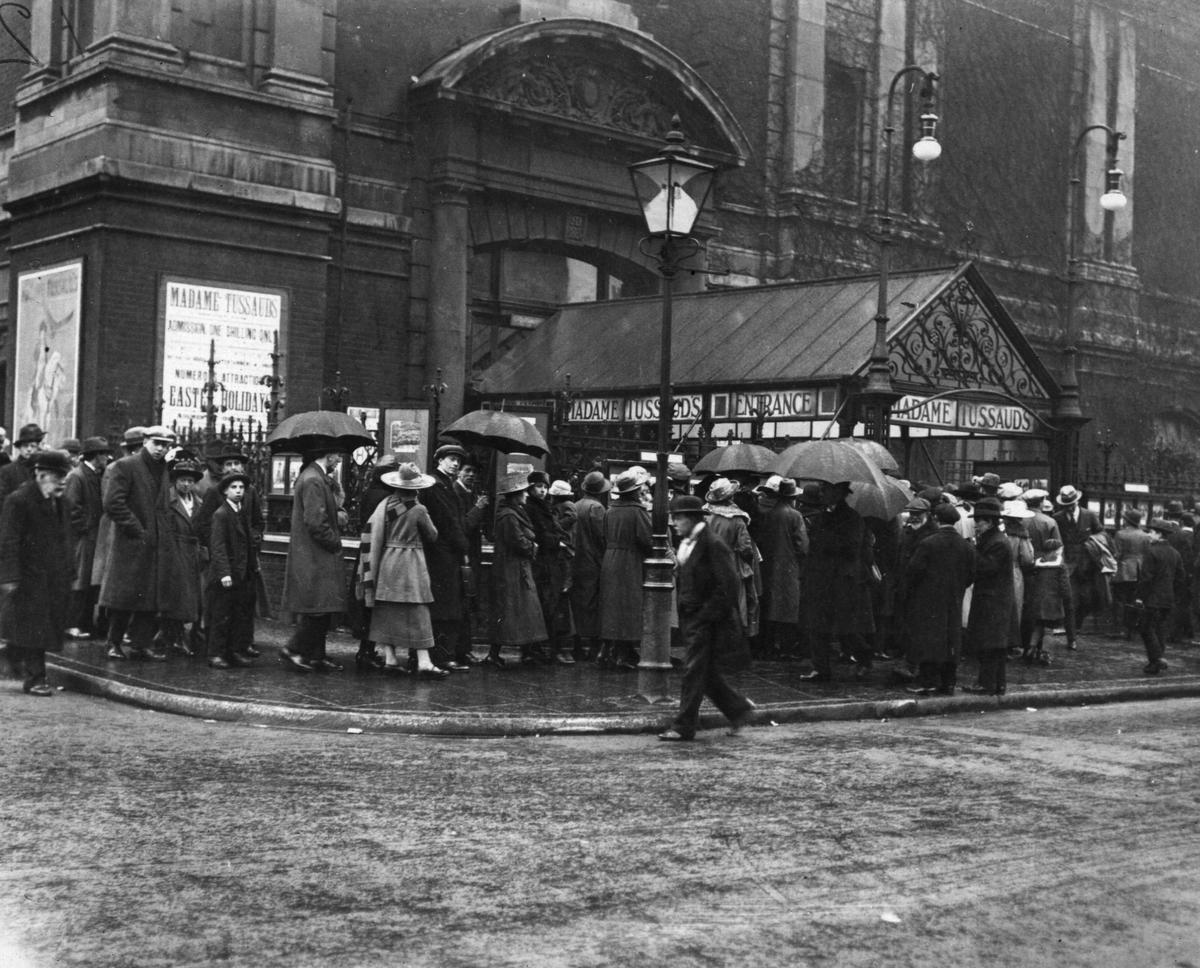
1930: People queuing in the rain outside Madame Tussauds Waxworks in London. | Photo Credit: Topical Press Agency/Getty Images
Madame Tussaud died in 1850 at the age of 88.
The original “Madame Tussaud London”, located on Marylebone Road in London, was moved there from its original location in Baker Street market by Tussaud’s grandchildren in 1884.
wax life
As the business expanded, more hands were needed on deck. Talented sculptors were employed to complete the wax-modeling process, which takes months to complete (at least 3 to 4 months!). Many hands work on the sculpture, including not only sculptors but also hair experts, colorists, etc. In total about 10 different artists/experts are responsible for the wax figures that you can see and enjoy at Madame Tussauds.
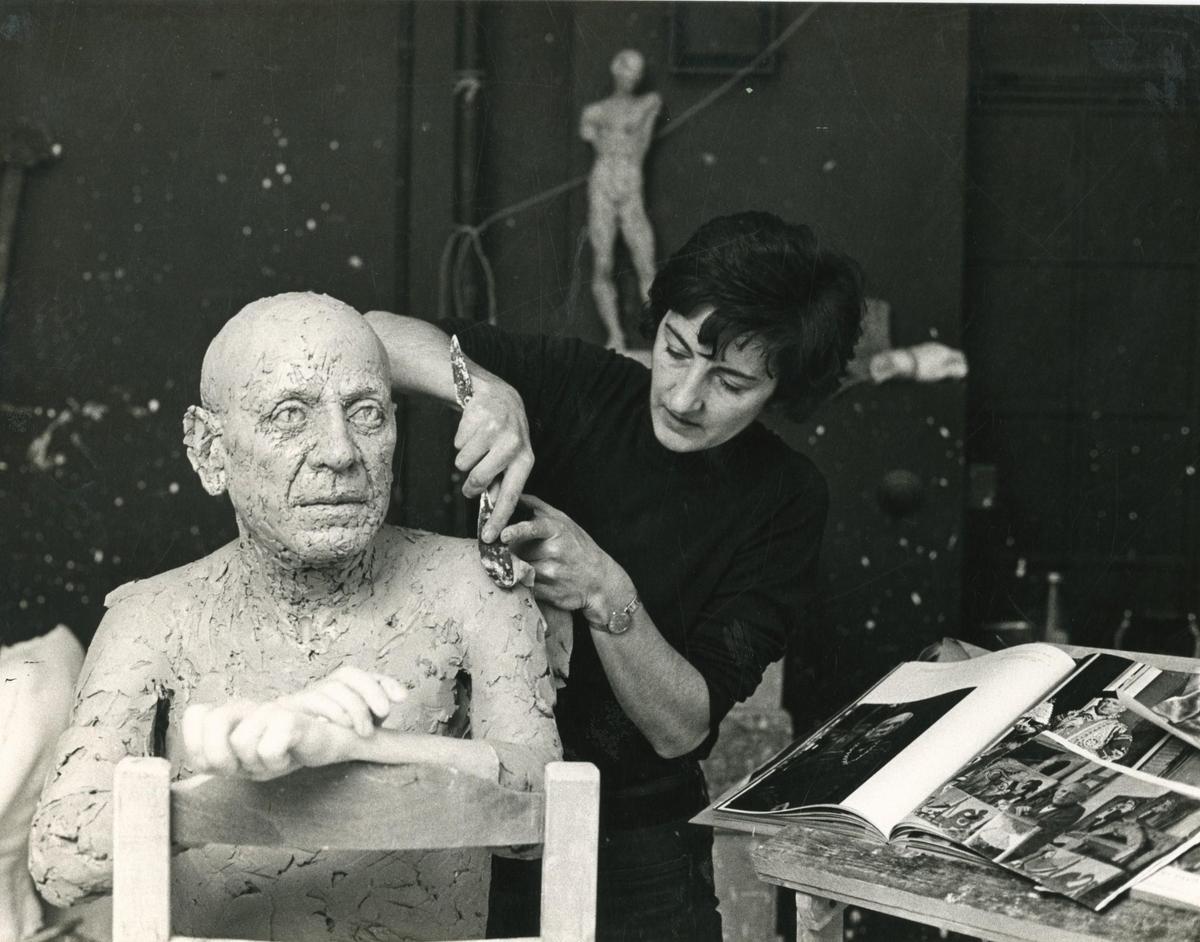
Madame Tussaud’s sculptor, Jean Fraser, creates a portrait of artist Pablo Picasso from clay at the famous London waxworks. | Photo Courtesy: The Hindu Archives
respectively
1. Photo Time: The person who is going to get modeling done will give all his body measurements to the team of artists. The person will pose and countless photographs will be taken from different angles to ensure maximum accuracy. At any point, if there is any doubt, the artist can refer back to the drawings and all other data. The hair specialist will select the right texture and tone of hair after comparing the samples. Color experts take care of the right color.
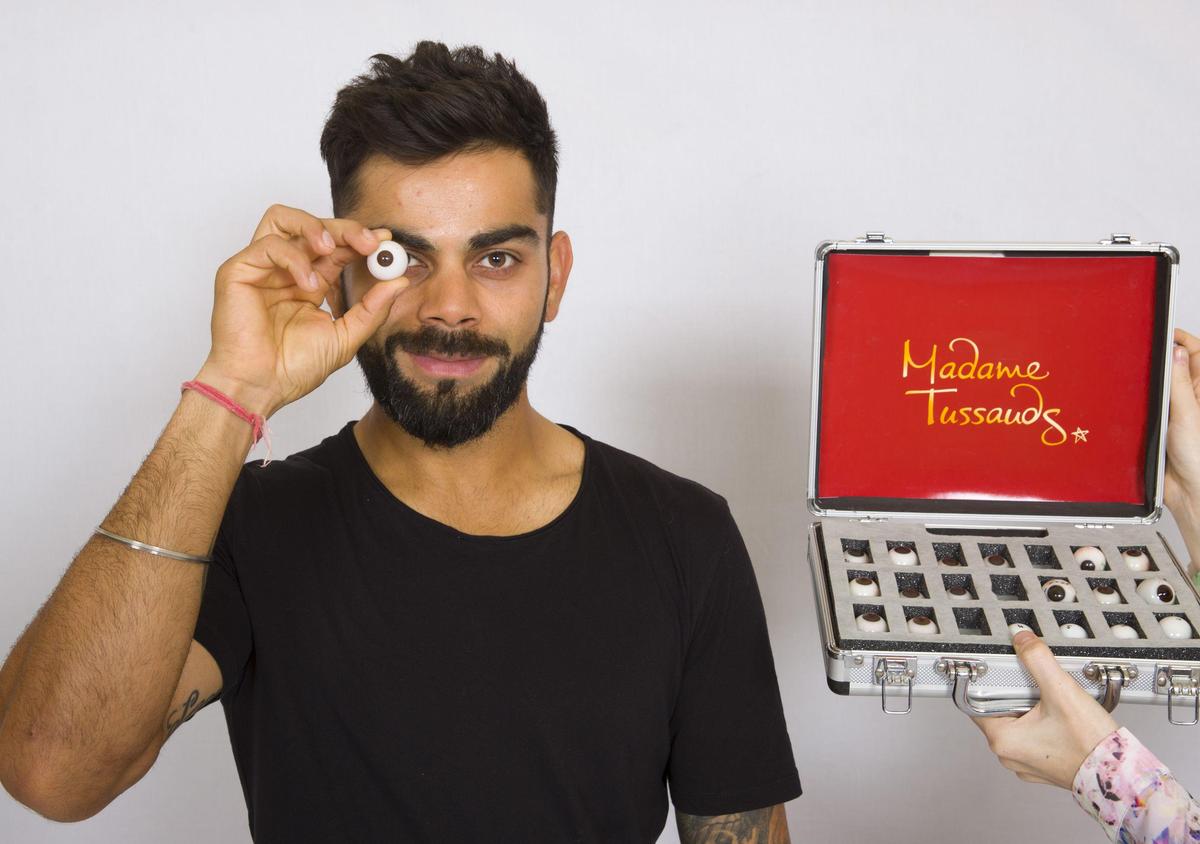
Indian cricket player Virat Kohli poses for a picture while choosing the eyeball model for his wax double. | Photo courtesy: AFP
2. Soil Shape: Once the basic data is obtained, a clay figure of the individual is created as accurately as possible. Casts of teeth are also made using dental records and with the help of a dentist.
3. Template: A molding engineer makes plaster molds for all the parts like head, hands, body etc. The head and arm molds are filled with wax while the body molds are filled with fiberglass. The body is not made of wax as it would be too heavy and would become loose.
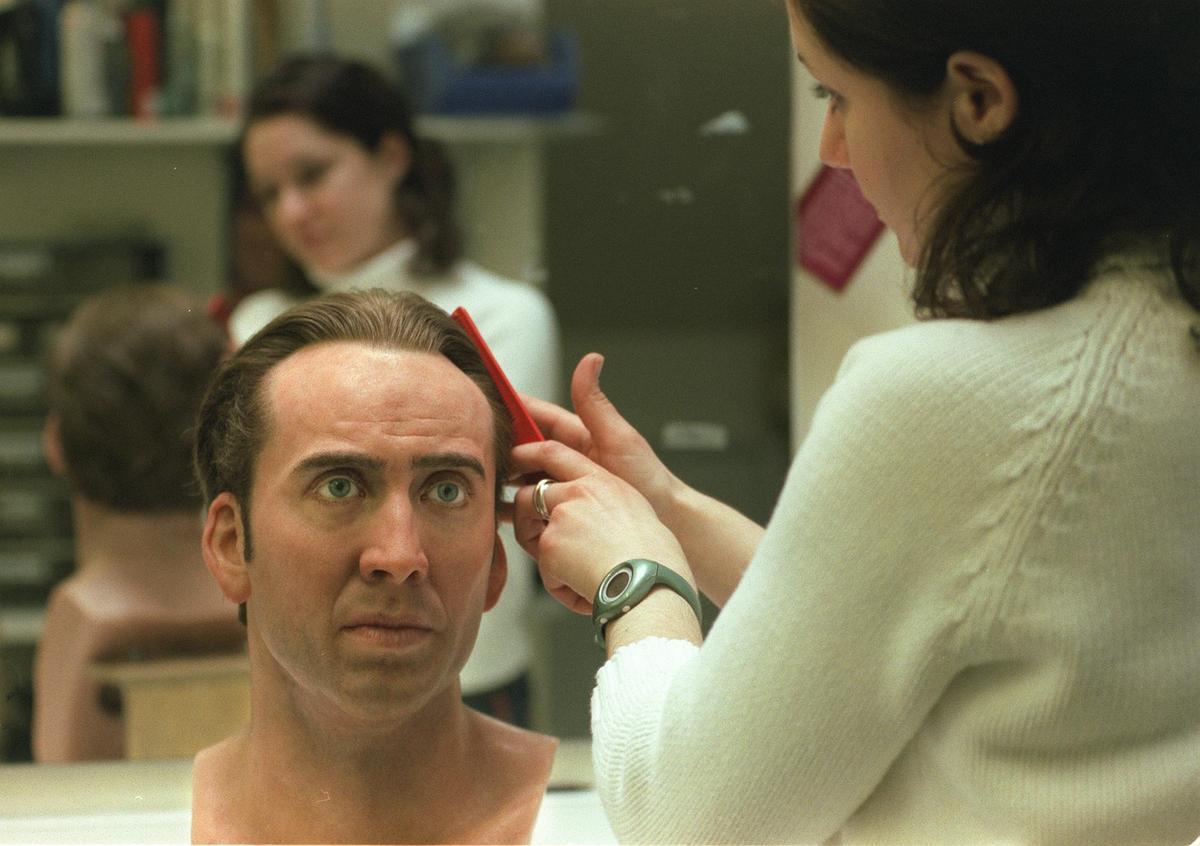
Madame Tussauds hair and color artist Joe Kinsey is putting the finishing touches to the wax head of Hollywood actor Nicolas Cage. | Photo Credit: PA Images via Getty Images
4. Salon Closing: Oil paint is mixed vigorously with turpentine to obtain clear fleshy colors and the smallest details on the wax double. Hairstyles require almost all the products that we use on our hair like rollers, curling irons, etc. Hair care artists must ensure that each strand is carefully fitted and styled to perfection. The double is dressed and styled as required.
5. Ready for inspection and display: It is inspected to make sure everything is correct and then the statue is taken to the Madame Tussauds exhibit where it has been decided to go.
Quick Wax Data!
About 150 kg of clay is used to make a clay statue for one wax double.
The head part alone requires about 5 kg of wax.
Combined, there are thousands of wax figures that are spread across the many Madame Tussauds museums around the world.
published – January 13, 2026 11:00 AM IST