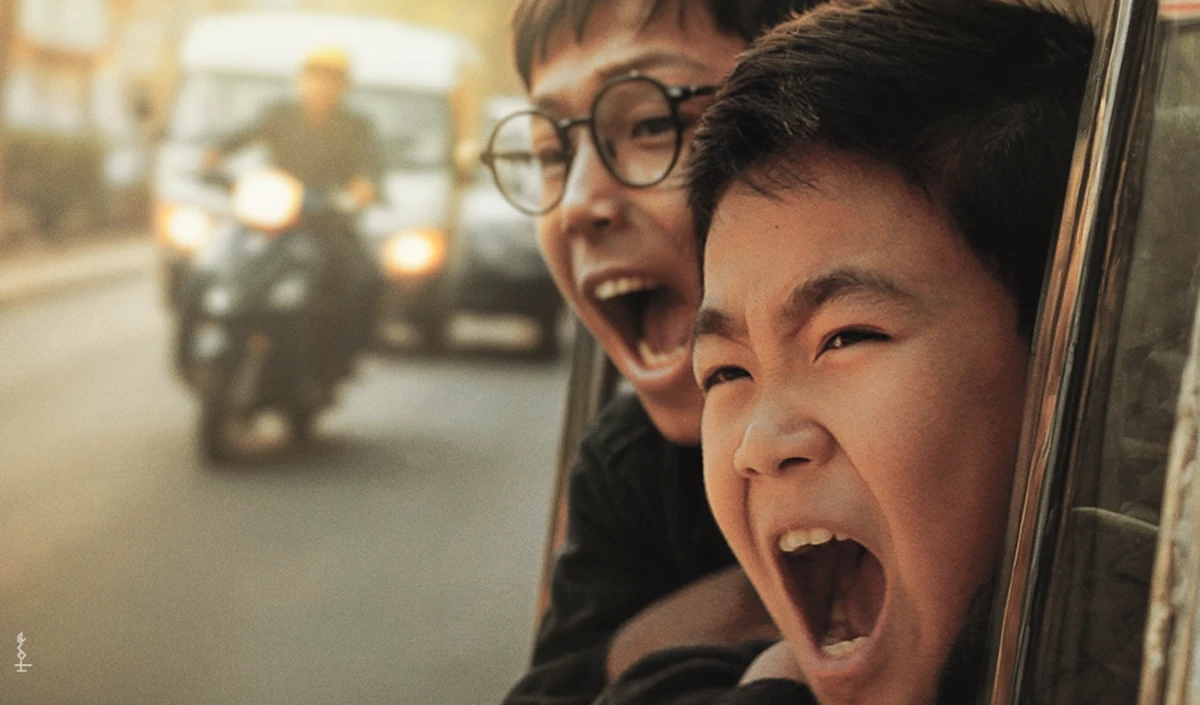

Often when we hear the name Manipur we think of newspaper headlines and political turmoil. But the magical world of cinema sometimes brings us deep human stories from the soil, which are buried somewhere in the noise of news. The BAFTA winning film ‘Boong’ is one such treasured creation. Debutant director Lakshmpriya Devi’s film does not act as a grand political speech, but tells the untold story of Manipur through the innocence of a 9-year-old child. This film proves that sometimes behind a child’s stubbornness lies the hardest truth in the world.
The stubbornness and daring pursuit of an innocent heart
The story of the film revolves around 9-year-old Brajendra Singh alias ‘Boong’ (Gugan Kipjen). The main focus of the story is the search for his missing father. Boong, who lives in a small village near the Myanmar border, is unwilling to accept that his father has left him or is dead. While the adults have accepted reality, Boong’s innocent heart sets out on a quest that not only takes him beyond boundaries but also gives him a new meaning in relationships.
Extraordinary emotions in an ordinary story
What makes ‘Boong’ most special is its simplicity. The film has no grand spectacle, nor a heavy background score to tell you when to cry. Instead, the film gets into your heart through small everyday moments. A mischievous schoolboy, his worried mother and a friendship that feels close to reality form the soul of this film.
Also Read Ranveer Singh’s Brace Yourself Style, Dhurandhar 2 Trailer Ahead Poster Creates A Wave
Unbreakable trust of mother and son
Many years have passed since Boong’s father went missing. Phone calls and voice messages go unanswered, yet Boong is sure they are alive. He wants to ‘gift’ his mother Mandakini (Bala Hijam) for his return. The entire village has accepted his father’s death, but Mandakini’s denial only strengthens Boong’s resolve. Along with his best friend Raju (Angom Sanmatham), Boong navigates the complexities of a border town like Mori and reaches Myanmar.
The conflict of political background and innocence
On the surface it appears to be a child’s adventure story, but the film touches on the tense social and political situation of Manipur. The issue of boundaries, identity and belonging is expressed here not through noise, but through feeling. Director Laxmipriya Devi portrays caste tension and separatist conflict as part of everyday life from the perspective of children.
Also Read: Janhvi Kapoor climbs 3500 steps of Tirumala barefoot, gets blessings of Lord Venkateswara
Light moments and social satire
Boong’s antics in the film amuse the audience. Changing the name of his school to a ‘homo boys’ school’, singing Madonna during morning prayers or calling a bully a “second-hand foreigner” all reflect his growing understanding of his environment. The film quietly attacks patriarchy and prejudice without promoting it.
Inside-Out: A Bitter Reality
The movie ‘Boong’ also touches on the debate of ‘outside and inside’ very well. Raju’s father Sudhir’s (Vikram Kochhar) family has lived there for centuries, but he still faces discrimination due to his Marwari heritage. The track is a reminder of the discrimination faced by the North-East facing people in other parts of India. According to statistics, cases of racial slurs and discrimination against women and students from the Northeast have been frequent in India’s metros (as recently happened to women from Arunachal and Manipur in Delhi). The film shows that this disease of discrimination exists everywhere.
The magic of friendship and acting
The entire weight of the film rests on Boong and Raju’s friendship. Both children are dealing with some form of loss—Boong has no father, Raju has lost his mother. Guggun Kipjen portrays the perfect blend of innocence and playfulness in the character of ‘Boong’. While Bala Hijam gives a muted yet effective performance as a mother. The hidden tragedy in his eyes gives the film seriousness.
Conclusion: A small but powerful sound
At a time when mainstream cinema prioritizes scale over spirit, ‘Boong’ is a reminder that the most powerful stories often come from small voices. This film is the story of a child who never stops believing. When the movie ends, you find yourself praying for that little boy.