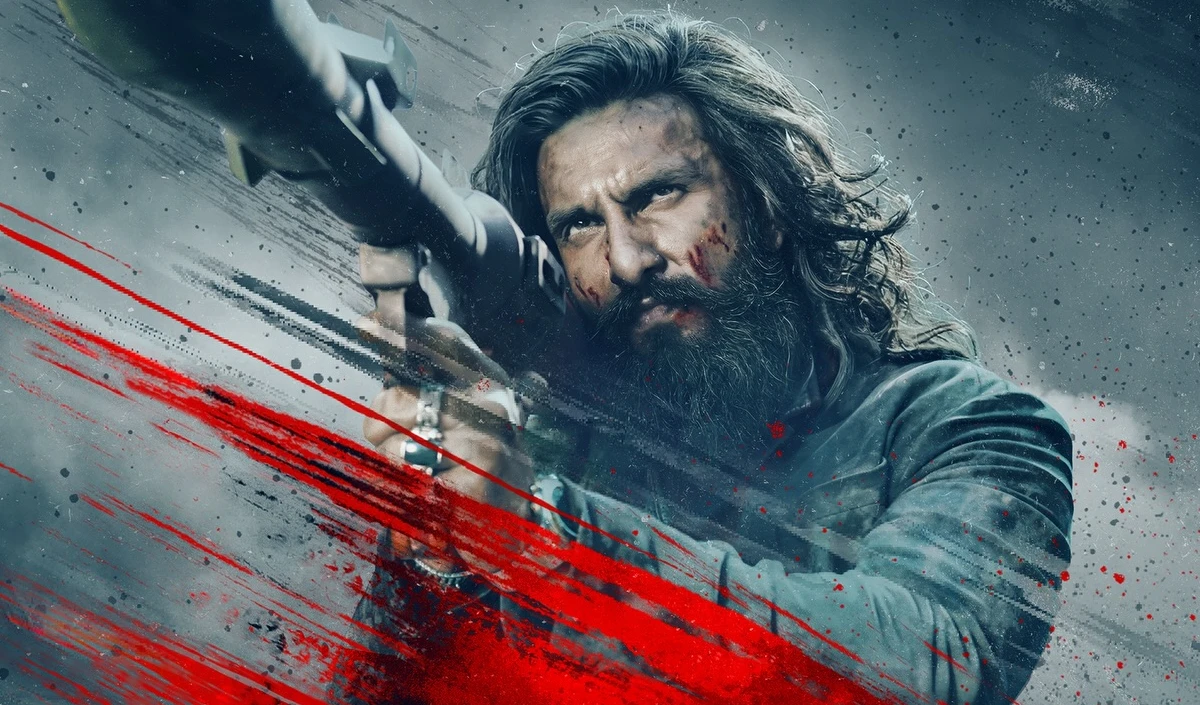

The battle between ‘Dhurandhar’ and ‘Dhurandhar 2: The Revenge’ is like a battle between ‘Preparation’ and ‘Execution’. While the first film treated Jaskirat Singh Rangi’s character and the world of espionage with great restraint, subtlety and style, ‘Dhurandhar 2’ breaks that restraint and is seen in an aggressive and direct confrontational mode. While Aditya Dhar emphasized on the chessboard and character introduction in the first part, in the second part he has increased the scale of politics, violence and emotions manifold. Ranveer Singh’s acting has also reached a new level from ‘self-control’ in the first part to ‘full freedom’ and ‘masculinity’ in the second part. In short, if ‘Dhurandhar’ was a quiet undercurrent, ‘Dhurandhar 2’ is a roaring explosion that unhesitatingly brings the political vision of a “changing new India” to the screen.
Also read: War breaks out in the Middle East, President Erdogan tells Muslim countries on Eid- ‘Be united’
Dhurandhar sets the stage, Dhurandhar 2 plays the ‘game’
The first film ‘Dhurandhar’ was an introduction. It was intended to introduce the audience to the world of Jaskirat Singh Rangi, his intelligence and the restrained atmosphere of espionage. There was a pause in this, the process of laying out a chess board. In contrast, ‘Dhurandhar: Da Badla’ completely abandons that restraint. This film talks about directness. If the first part was about style and setup, the second part is about brutality and direct confrontation. Here the chess board is laid out and the game is most violent and decisive.
Technically the language of both the films is similar. Dhar continues to experiment visually, often within a scene. A very close, almost uncomfortable ‘close-up’ suddenly gives way to a wide, distant ‘top shot’, changing the perspective without warning. This is not done just for show. This becomes part of how the film delivers tension to the audience. Both films are equally confident in this respect, and their visual grammar is very thoughtful and controlled.
Also Read: Immediately stop attack on Iran, Russia reprimands US-Israel in Persian Gulf
Music and more
Music follows a similar pattern. The first film had the advantage of ‘identity’ – songs that resonated with the audience and were easy to remember. ‘The Revenge’ may not have that advantage, but it has a sense of putting things in the right place. The music works best when it supports the story, especially in the second half, where the emphasis is on the pace of the film.
What really sets these two films apart is their intentions. Looking at ‘Dhurandhar’ it seemed as if he was preparing to say something. ‘Dhurandhar: Revenge’ says just that – directly and without hesitation. It puts more emphasis on the government’s vision, and links the fight against terrorism to a larger political message. It names events, mentions real changes, and creates a narrative that tries to fit its story into the “changing new India”.
From demonetisation to the Babri Masjid verdict, from the murder of gangster Atiq Ahmed to the rise of a certain “chaewala” and “honest” leadership in Uttar Pradesh, the film extracts elements from recent history and weaves them into its fictional story. The film’s political bent becomes difficult to ignore due to the clear allusions to Prime Minister Narendra Modi. The hints aren’t very subtle, and the film doesn’t even try to be. What works is that these gestures do not become a hindrance to the story, but become a part of the story.
The world of ‘Dhurandhar’ has always revolved around men, and still does. But the second film takes it even further. In it masculinity appears sharp, clear and sometimes even dominant. The story is still about a single man and his quest for revenge, but this time the scope of his quest for revenge seems larger. It is no longer just personal things that are at stake; They are now presented as something bigger and more symbolic.
Based on many characters
In the second film, the supporting characters also get ample opportunity to show their presence. Sanjay Dutt, Arjun Rampal and Rakesh Bedi are no longer just part of the story. They are fully involved in the story. Everyone’s performances carry their own weight – Dutt has a down-to-earth presence, Rampal has enough poise to make his acting effective, and Bedi brings a unique depth to his character. It is not just a matter of good casting, but also the space the story writers have given to these characters.
Ranveer Singh lives in the middle of all these things. Instead of restraining himself in the second film, he shows more freedom in his acting. There is a marked change in this compared to the first part – from self-control to complete self-abandonment. This change seems effective because the story of the film demands it. The character has now moved on from the conflict; Now his identity is determined by this conflict.
This change is also clearly visible in written form. The focus of the first film was inward—the infiltration and movement that was just beginning. The second film is now being directed outside. It is more talkative, more direct and more ready for confrontation. At times, it feels as if the film is asking you to engage with it beyond what you see on screen—to delve deeper into its context, to question its fidelity and answer its certainty. And then comes the finale of the film.
Finally there is something else
Dhar saves his most impressive moves for last. The film moves towards a revelation that initially seems predictable, almost expected. But what emerges is something else entirely. The surprise that was being speculated about is left behind – it proves Dhar’s command of the story, showing that he knows exactly when to withhold information and when to reveal it. The film lives up to the expectations of the audience and in most cases it wins.
Dhurandhar: The avenger has no interest in being neutral. It picks a side, sticks to it, and weaves its story around that certainty. It speaks of a “new India”, but also seeks to define a new kind of mainstream Hindi cinema – one that is comfortable talking straight, even if it can be divisive for some.
If there was a preparation for Dhurandhar, then Dhurandhar: Vengeance is its execution. One prepares the ground. The other stakes his claim on it. And somewhere between the two, the line between cinema and narration becomes even more difficult to draw.