For Richa Chadha, Mumbai is a city that keeps revealing itself. A fishing trip with a young collie friend led him to a little-known part of the coast, where he saw an abandoned lighthouse and realized how much of the town’s history remained unknown to him. That discovery helped set the wheels in motion the travelerHer first non-fiction series. Envisioned as “edutainment”, the eight-episode first season looks beyond the familiar travelogue to explore Mumbai’s layered past, its communities and the people working to preserve its stories. Chadha, a St. Stephen’s College history graduate, hopes the series will encourage viewers to look more closely at the places they live — and to travel with curiosity and care. In a conversation with Mehr Bajwa, editor of NDTV Good Times, he discussed the personal impact behind it the travelerThe problem of demonstrative travel, and why India deserves to be explored with the same curiosity we bring to destinations abroad.
You have described the traveler As “education”. What led you to create a non-fiction series about history and culture?
Richa Chadha: I’m a history graduate from St. Stephen’s, and I’ve also minored in media studies. If I were to combine those degrees, I would do something like this. I was concerned about why people would listen to an actor talk about history, but I also worried that people weren’t reading enough and might lose a sense of context. I wanted to understand where we came from and why we are the way we are today.
Why did you decide to start from Mumbai?
Richa Chadha: I wanted to start from where I was. I live in Juhu, and Koli is a friend of mine from the fishing community. One day, when I wasn’t feeling well, he took me on his fishing boat to a place that wasn’t on the map. There was an abandoned lighthouse, and I could see my house from there. I remember thinking, ‘How much do I know about this city?’ I later learned that the Portuguese built the lighthouse. It made me realize how much there is to discover close to home.
What kind of stories did you want the series to tell?
Richa Chadha: I wanted it to be about ‘people, places and’ love‘. You meet people doing interesting work, such as ecologists trying to restore areas with native species. In the first episode, there is also a retired academic who takes a history walk in South Mumbai, showing people how a church was once a synagogue, where Chinese communities lived, and where a Chinese temple stands. The places themselves can also be mind-blowing. There are sites around Mumbai that hold extraordinary history, yet hardly anyone knows about them.
You have said that Mumbai is just the beginning. What do you hope audiences take away from these stories?
Richa Chadha: India should be explored with the same curiosity with which we explore Europe. Each place has its own differences, and that’s where the fun comes in. Mumbai itself exists in waves: there were seven islands, ancient harbors and communities shaped by different religious and commercial traditions. When you start to reimagine a place and understand what it was, I think it creates a better sense of self for us as a people. History can also teach us practical things, how communities managed water and how they lived with their surroundings.
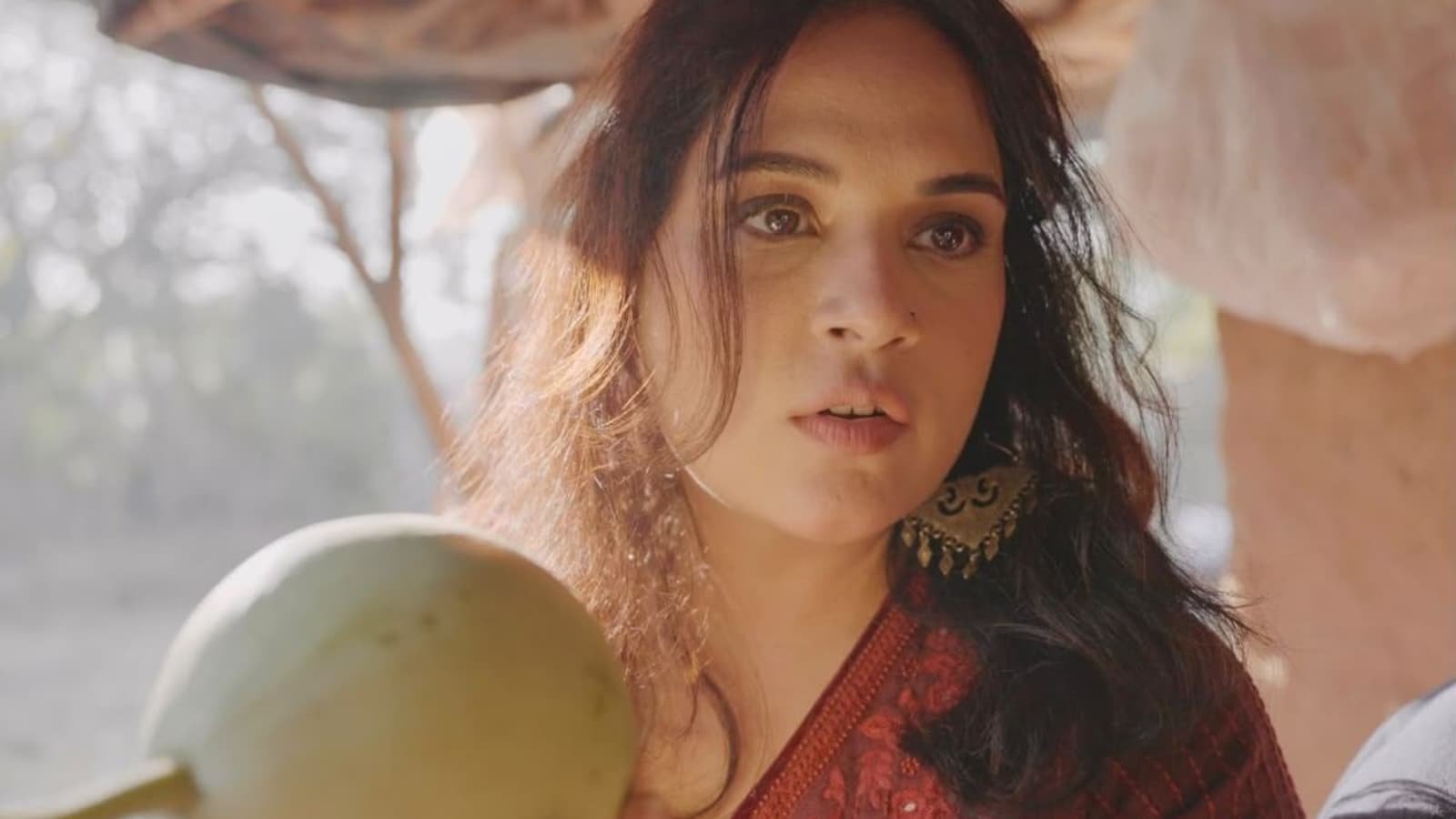
Richa Chadha in a picture of Musafiri.
What do you think Indian travelers can do differently?
Richa Chadha: I think you have to recognize when travel becomes performance. You are taking a photo and running away instead of enjoying the place. You don’t talk to anyone, try roadside eats or just take time to soak it all in. Luxury travel is great if you can afford it, but India has so much more to offer. I would encourage people to slow down, smell the flowers as well as the coffee, have a conversation and start caring for the places they visit.
Is there a danger that drawing attention to lesser-known places might harm them?
Richa Chadha: Some things that are hidden gems should be hidden gems. Here’s the little island my fisherman friend took me to, and I didn’t include it in the show. I may have the visuals, but people won’t know how to get there. At the same time, I believe that if people have a better understanding of themselves and their culture, they will do more to preserve it. This sense of self comes from understanding our history and heritage – not just looking back to a golden past, but accepting things for what they are.
What has been your favorite type of story while creating the series?
Richa Chadha: I love the historical accidents that happen – the big patterns that aren’t obvious when you’re living through them. For example, Bombay’s rise as a major port was shaped by events elsewhere, including the opening of the Suez Canal and the American Civil War. When American cotton became unavailable to British textile mills, merchants from the Surat and Parsi communities came to Bombay to sell cotton. I love looking at the big picture and seeing how events around the world connect over time.
Also Read | the traveler Trailer: Richa Chadha’s first non-fiction series debuts on YouTube