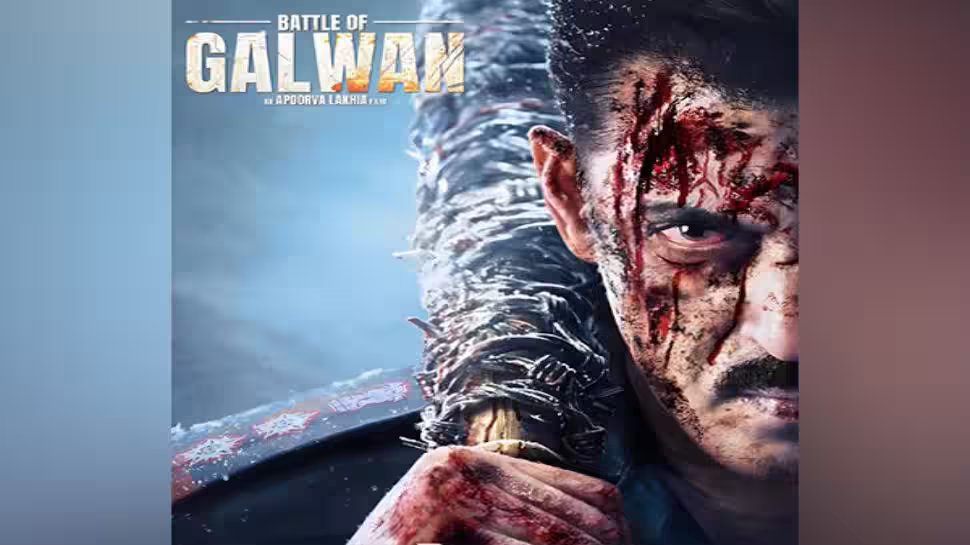

New Delhi/Beijing: Even before the release of the upcoming Bollywood film ‘Battle of Galwan’, there has been a diplomatic stir. China has criticized the teaser and disputed its depiction of the 2020 Galwan Valley clash. Beijing has emphasized the role of its troops in protecting national sovereignty. He has accused India of crossing the border first during the conflict.
Starring Salman Khan in the role of Colonel Bikkumla Santosh Babu, the film shows the sacrifice of Indian soldiers in response to the Chinese invasion at Galwan. Set to be released in theaters on April 17, 2026, the teaser has drawn attention to Dragon, with Chinese media calling it provocative.
Global Times published a comprehensive report on the teaser, stating that no amount of cinematic dramatization can rewrite history or weaken the PLA’s resolve to defend Chinese territory. It added that Khan, who is equally popular in China for ‘Bajrangi Bhaijaan’, often faces criticism from Chinese netizens when his roles exaggerate or dramatize historical events.
There are strong reactions to the teaser
Khan’s portrayal of Colonel Babu highlights the officer’s role in the Galwan Valley conflict. Global Times reported that some Chinese netizens compared the teaser to a scene from Game of Thrones and questioned its authenticity. On the Chinese social media platform Weibo, one Qingming Riu Wei commented that the film was “completely disconnected from the actual facts”, while another user, Situka98, mocked the media hype, saying “When history falls short, Bollywood steps in.”
China’s Foreign Ministry has reiterated that Galwan Valley is located on the Chinese side of the Line of Actual Control (LAC) in the western sector of the China-India border, where Chinese troops have been patrolling for years. The Global Times further claimed that since April, Indian troops have carried out “unilateral” construction activities along the LAC, including roads and bridges, provoking repeated Chinese protests.
Films and nationalist sentiment
The daily quoted a Chinese military expert as alleging that it is not surprising for India to use films to stoke nationalistic sentiment, which reflects a long-standing cultural and political tradition. He stressed that cinematic “dramatization” cannot change the basic facts of the Galwan incident.
According to him, Indian troops crossed the border first, while the PLA defended Chinese territory as per law.
He highlighted the bravery of officers such as Qi Fabao and Chen Hongjun, saying their actions symbolize the steadfast commitment of China’s new generation of soldiers to safeguard national sovereignty and territorial integrity.
“Chinese soldiers perform their duty without hesitation in the face of danger in extremely challenging mountainous conditions, which strengthens public confidence and has a lasting impact on society,” Song said.
Galwan clash: June 2020
Escalating border tensions since May resulted in violent clashes in the Galwan Valley between Indian and Chinese troops in June 2020. On the night of 15–16 June, during disengagement at Patrol Point 14, Chinese forces attacked the Indian patrol using iron rods, stones and pointed sticks.
Twenty Indian soldiers, including Colonel Santosh Babu, lost their lives.
While India officially acknowledged its casualties, Beijing initially kept the details secret. Later, it confirmed four deaths, although some reports suggest that as many as 40 Chinese soldiers may have been killed. The clash became part of the prolonged standoff along the LAC, increasing tensions between the two countries.