

Christopher Gurusamy. , Photo Courtesy: SR Raghunathan
For Kalavahini, Christopher Gurusamy presented ‘Anand’, a solo presentation that saw joy not as a fleeting emotion, but as a state shaped through sustained engagement with movement, memory and discipline. Rooted in the margam format, allowing space for personal reflection, the work draws inspiration from Hindu philosophy, classical literature, Carnatic music and contemporary ideas to propose dance as a path to happiness.
The opening excerpt from ‘Shuddha Shakti Mujakkam’, ‘Vanamai’, written by Sri Shuddhananda Bharati, serves as an invocation of the feminine principle as the creator and sustainer of the universe. Starting with contemplative stillness, the choreography gradually expanded to a larger scale, revealing the emergence of the three worlds and the benevolent presence of the Goddess. The energetic musical score was set in Ritigaula and Aadi taala, providing rhythmic drive while maintaining melodic relaxation. Christopher’s movement emphasized clean geometry and rhythmic expression, allowing the philosophical broadness of the text to remain central.
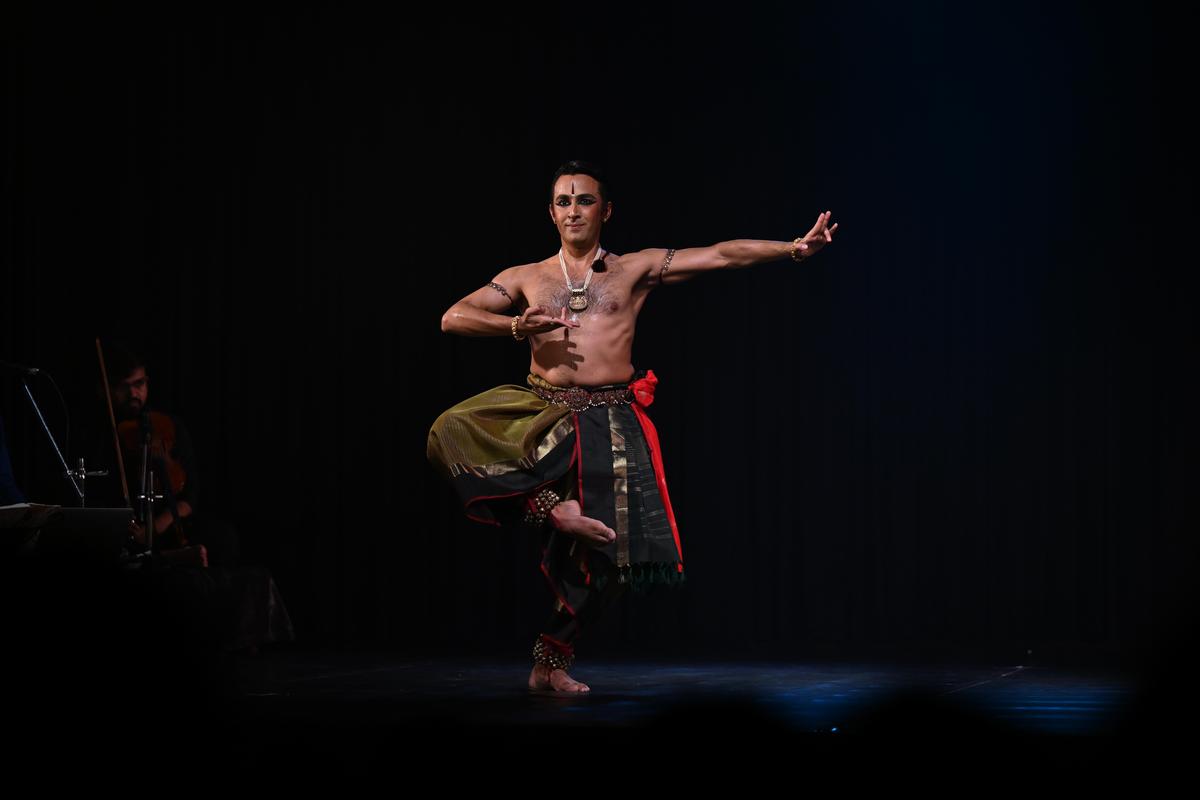
Christopher’s movement emphasized clean geometry and rhythmic expression. , Photo Courtesy: SR Raghunathan
The Nattakurinji varnam, ‘Sami Naan Undhan Adimai’ was re-imagined as the reflective core of the production. Rather than framing the piece entirely within traditional themes of devotion and longing, Christopher conceived of it as a dialogue with dance. The body was presented as a site of origin, language, and transformation, shaped by years of training and introspection. Through adapted communicative pathways, Varnam traces an inner journey that combines an early sense of wonder with a mature understanding of dance as a means of sharing lived experience. However, while the overarching theme was initially outlined, the absence of concise contextual explanations for the individual pieces – particularly this varnam, conceived as an autobiographical reflection – left certain aspects of the personal narrative implicit. Clear articulation of how each section related to the central idea of pleasure would have helped bridge the gap between concept and reception.
A calm emotional register arrived with Padam ‘Ninnu Juchi’. Known for its internal focus, Padma was approached with measured restraint, allowing pauses, glances, and minimal changes to carry the expressive weight. Subtle shifts in gaze and posture conveyed longing and hesitation, consistent with its introspective tone.
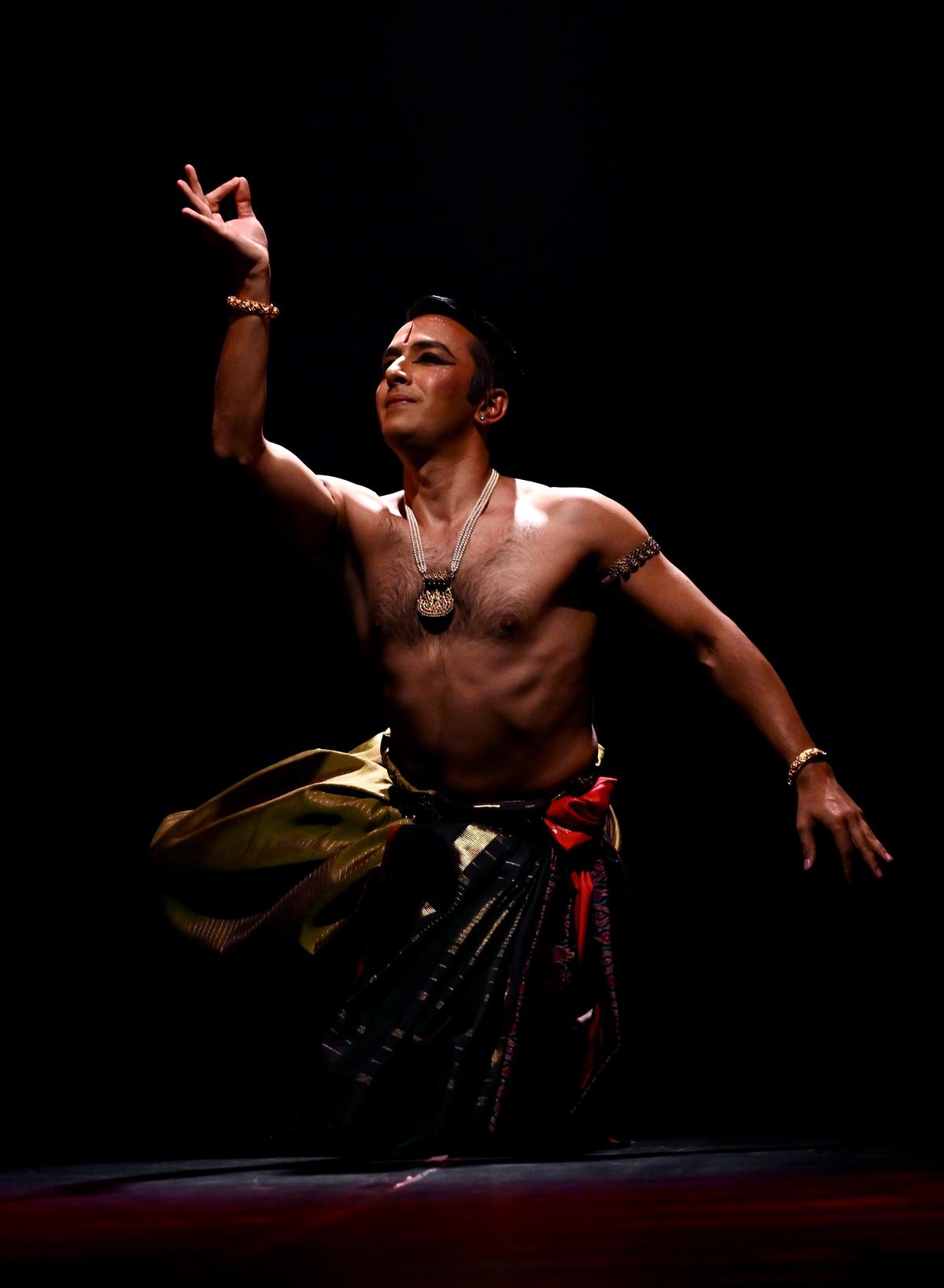
Christopher Guruswamy presented ‘Anand’. , Photo Courtesy: SR Raghunathan
The performance concluded with Raga Thillana in Kannada, with lyrics and music by Mridangam artiste and composer K. Belonged to Arun Prakash. Euphoric in rhythm but reflective in intent, Thillana conveys a message that balances caution with optimism, urging the earth to be cared for as the universal mother that sustains all life. As a closing statement, it brought together energy, urgency and responsibility, presenting ‘joy’ not just as individual pleasure but as a shared moral awareness. The accompanying artistes included S.Aditya Narayanan on vocals, Sudarshini Iyer on Nattuvangam, Karthikeyan Ramanathan on Mridangam, Aniruddha Atreya on Kanjira and Sai Rakshit on violin.
published – January 07, 2026 12:38 PM IST