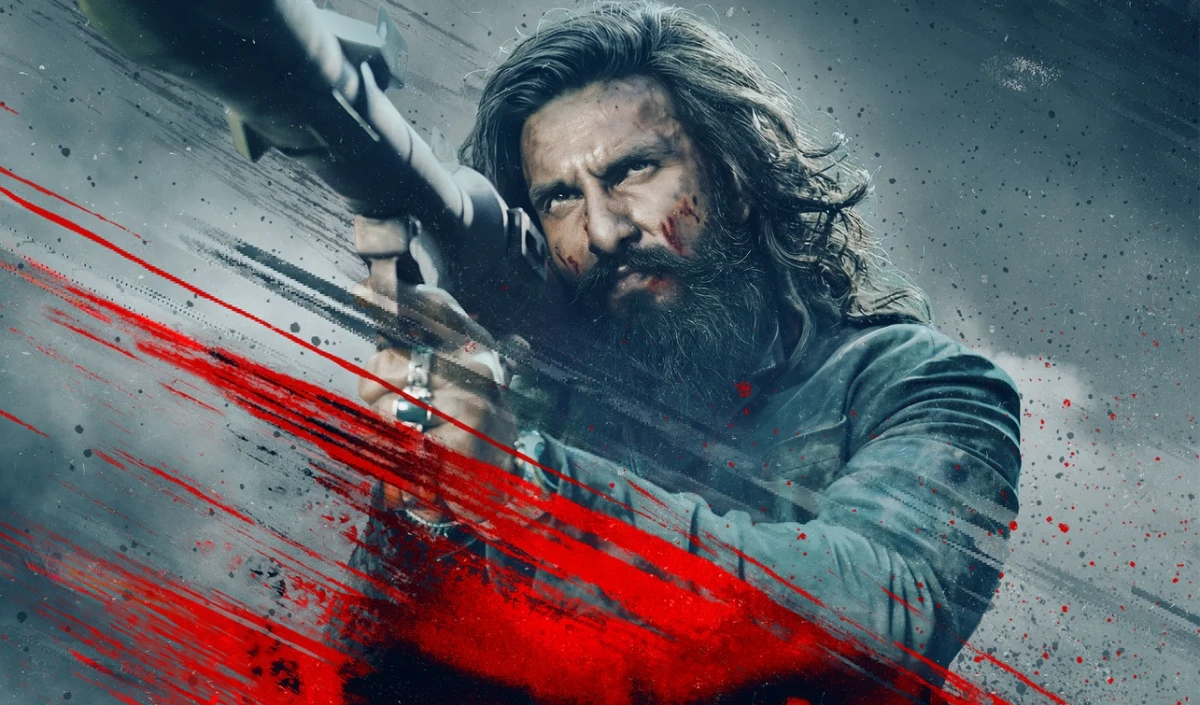

Aditya Dhar’s film ‘Dhurandhar: The Revenge’ is not just a sequel, but a more intense, elaborate and emotionally disturbing work than its predecessor. While the first film laid the foundation of the world of espionage, ‘The Revenge’ builds on it a grand edifice of revenge and nationalism that keeps the audience glued to their seats till the end.
Plot: A war of identity and destruction
The story of the film starts from where the first part ended. It is divided into six chapters, which gradually reveal the layers of the protagonist’s personality. The story traces the journey from Jaskirat Singh Rangi (an idealistic soldier) to Hamza Ali Mazari (the dreaded King of Lyari) and then to becoming the ‘Jassi’ of India. Aditya Dhar has turned the spy story into a ‘character study’. The film systematically analyzes the terror machinery and links every link of Pakistan’s terror network to India.
Ranveer Singh: The best performance of his career
Ranveer Singh has given himself completely in this film. If ‘Lootara’ showcases her poise, here is her extravagance and power.
As Jaskirat: Her silence and the pain in her eyes are touching.
As Hamza: His outbursts resemble some mythical rage.
Ranveer commands every frame of the film, establishing him as one of the most skilled and passionate actors of this era.
Auxiliary Cast: Narrow Casting
A major strength of the film is its supporting cast, who finally get a chance to show their mettle:
Sanjay Dutt: His seriousness lends weight to the film.
Arjun Rampal: A composed and quiet menace is evident in his character.
Rakesh Bedi: He has surprised everyone with his amazing depth.
Gaurav Gera and Danish Pandor: Has made his presence felt in small but impressive roles.
Ranveer Singh is exceptional. If his composure was seen in Lootera (2013), his exaggeration is visible in Dhurandhar: The Revenge, and he pulls it off very well. Their performance is not only a show of art, but also of power. Her silence as Jaskirat is touching, while her outbursts as Hamza are almost epic. There is a kind of reckless, relentless and passionate style that takes the film to new heights. Singh completely owns the film and gives his hottest, most accomplished and most powerful performance.
The supporting cast finally gets the space it deserves. Sanjay Dutt, Arjun Rampal and Rakesh Bedi have been given roles that don’t seem merely cosmetic. Even Gaurav Gera and Danish Pandor justify their presence. Each of them brings a different flavor: Dutt’s seriousness, Rampal’s measured menace and Bedi’s surprising depth. There’s a satisfaction in seeing him inhabit these characters so fully, it makes you wonder why his abilities were underutilized for so long. This is not just a feat of brilliant casting, but Dhar’s confidence in him is evident in every scene he dominates.
The film constantly travels between borders – both geographical and political. It mentions names, takes inspiration from real events, and keeps its fictional story very close to reality. From gang wars in Pakistan to internal changes in India, from demonetisation to the Babri Masjid verdict, Dhar weaves a world full of information, even if it is based on speculation. There are moments when you wonder if he really knows more than he lets on. He seems to have a deeper understanding of the seriousness of the country, its methodology and politics than other filmmakers of this era. And this tension works in the film’s favor.
What stands out the most is how the film portrays its politics. It does not hide its perspective, it does not soften it, nor does it allow itself to be softened. There are clear ideological motifs, references that cannot be ignored – such as the unstoppable ‘chaiwala’, and a certain ‘honest’ ruler of Uttar Pradesh; There are moments of praise for power structures, but even so the story doesn’t fall under that burden. It remains interesting because Dhar never lets his message overpower the story.
Technically the film is very simple. Dhar moves so smoothly between extreme close-ups and wide overhead shots within the same scene that the transition is almost imperceptible. What seemed to be an excess in the genre, here becomes the grammar of the film. The film’s editing is tight despite its length, and its sound design – especially the background score – keeps the film pulsating.
Music plays an important role in this. Songs like ‘Tamma Tamma Loge’ (Thanedar, 1990) and ‘Aari Aari’ (Bombay Rockers, 2003) serve as pieces of nostalgia; These add more depth to the story, and make it more native and interesting. Without them, the film was in danger of becoming too cumbersome or overbearing. With them, it is effective.
And then comes the last act.
Dhar saved his boldest moves for last. The surprise you are waiting for in the movie is actually something else. It pulls the ground from under your feet. This is where Dhar’s keen judgment comes to the fore: he knows well when to hold back, when to prod and when to call for applause. He understands his audience, but more importantly, he understands the moment the country is going through.
Dhurandhar: Badla is not a subtle cinema. It is loud, clear and completely convincing in itself. But hidden within that noise is a design, a control and a clear cinematic sound. It speaks of a “new India”, but more importantly it tries to shape what a “new Hindi cinema” might look like: bold, radical, and with no desire to explain itself.
This is a film that doesn’t ask for your consent. It demands your attention. And just when you think you’ve got it all figured out, it leaves you with a warning, almost like a challenge: And believe us, you’re still not ready.
Conclusion: A cinematic warning
Aditya Dhar has proved with ‘Dhurandhar: The Revenge’ that he doesn’t just make films, but brings an ideology to the screen. The film is so clear in its politics and its tone that it captivates and unsettles the audience. It’s a fire of revenge that feels its fury off the screen as well.