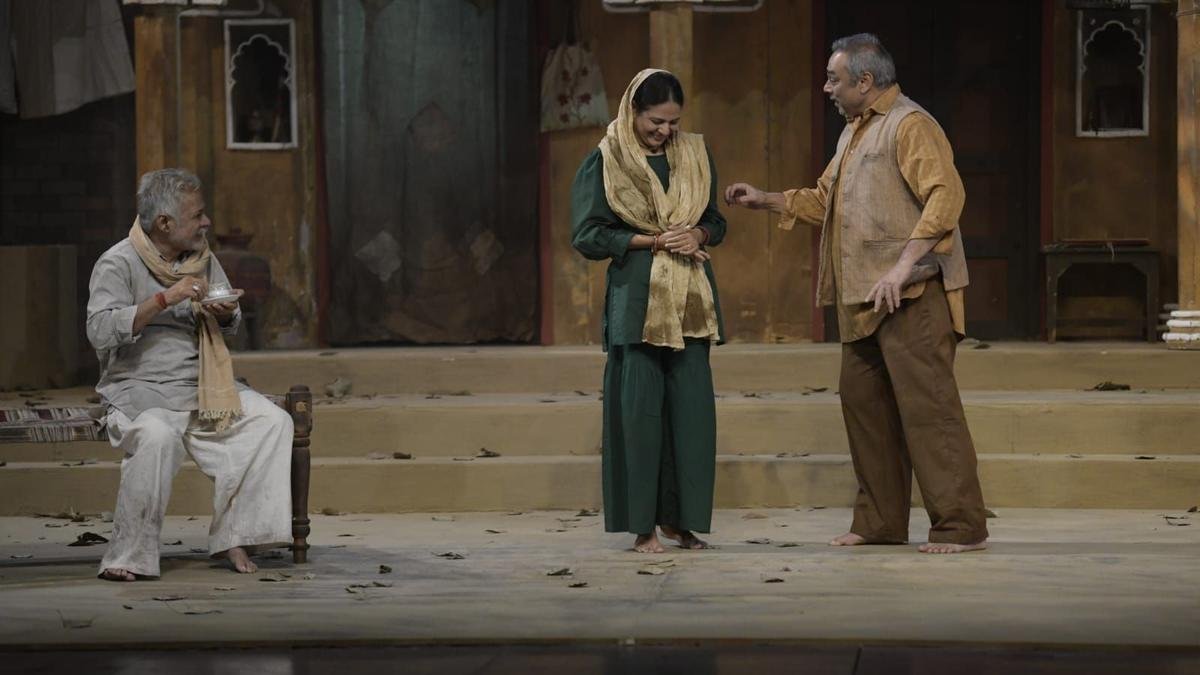

A scene from Firoz Abbas Khan’s latest play hind 1957. | Photo Credit: Special Arrangement
Expressing the unspoken, Firoz Abbas Khan’s hind 1957 makes us think about humanity. hind 1957, Staged at the Bharat Rang Mahotsav, it is about a Muslim family who chooses to live in India after Partition. This is a sensitive and thoughtful Hindustani adaptation of August Wilson’s Pulitzer Prize-winning play fence (1985), by Vikas Bahari. The play transforms the African-American experience of the 1950s in Pittsburgh into a Muslim narrative in post-Partition India.
Spanning two acts, the play explores themes of patriarchy, prejudice, family secrets, and the tension between an exhausted father’s despair and his sons’ optimism for a better future. This touching story makes you realize that classics do not age.
The central character, Tabrez Ansari (portrayed by Sachin Khedekar), is a poet who participated in the independence movement. He has been wrongfully imprisoned after his father defected to Pakistan. He is tired of repeated interrogation by the police, and works in a beedi factory to make ends meet.
Charged as a spy, Tabrez portrays the broken dreams of a generation, which is ultimately depicted poignantly through Abhishek Shukla’s poetry, ‘If I say home, India will understand…‘
Firoz Abbas Khan opposes generalizing Muslim irritation or romanticizing the lamentations of progressive writers. Tabrez’s understanding of society and family is flawed and he uses religion opportunistically. His poetry is progressive, but his behavior within the four walls is not visionary. For them, drinking alcohol is liberal, but when it comes to infidelity, they appeal to Shariat. He uses his brother’s pension to keep a roof over his family’s head.
Tabrez tries to pass on his bitterness to his sons, who move away from traditional depictions of Muslim families to embrace India with all its imperfections. They are not bound by the fear of their father. Latif carries forward his father’s poetic legacy while Kaif displays his love for the nation in his army uniform. He believes that his father will get justice under the Indian Constitution, and the author rewards his patience and optimism.
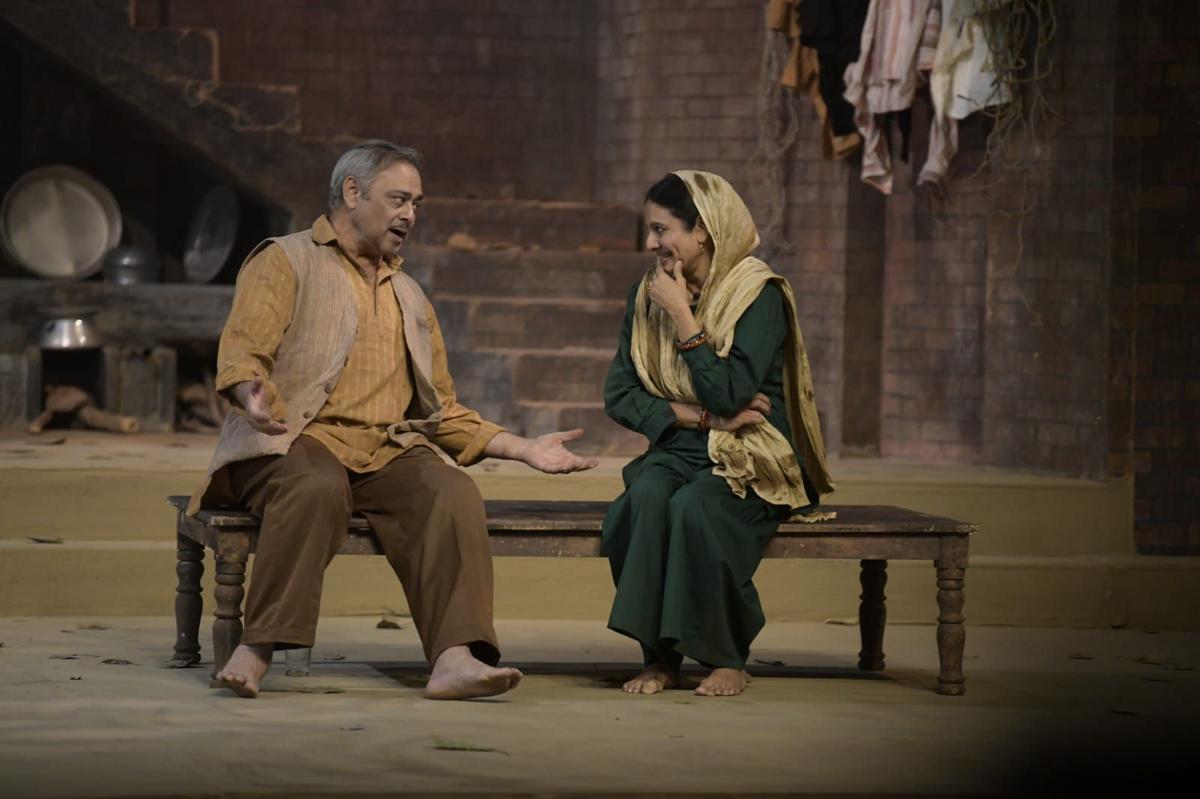
Sachin Khedekar and Sonal Jha Hind 1957.
| Photo Credit: Special Arrangement
However, this is not a promotion of hope. Within its layers, the play holds stories of everyday discrimination that continue to haunt us as a society. Over a shared glass of country liquor, Tabrez’s close friend Banwari (Dadhi R. Pandey) talks about his pain when he is not allowed to touch beedis in the factory because he is a Dalit. Perhaps, that is why Banwari understands Tabrez’s pain of remaining an other in Pakistan despite not following in his father’s footsteps.
Known for writing about strong female characters, Firoz Abbas Khan takes a dig at deeply ingrained patriarchal traditions. Sachin’s restrained but powerful portrayal of the flawed patriarch ties the drama together, but it is Sonal Jha who emerges as its emotional fulcrum. As Razia, she confronts Tabrez when he uses family responsibilities as a way to have fun. She says that she has given as much to the family as she has, but she doesn’t have the option to get tired of the relationship. The emotional conflict between Tabrez and Razia is the highlight of the play.
Firoz Abbas Khan makes generous space for tragic scenes, such as Tabrez’s mentally challenged brother, Gulrez, bringing roses for Razia amid a heated argument over Tabrez’s acceptance of an extramarital affair.
Firoz Abbas Khan Shukla use Poetry As a cultural bridge to convey longing, belonging and emotional depth, while the rich production design and lighting evoke an era in which broken parapets signify broken bonds, leaving the audience emotionally charged.
Hind 1957 will be staged on 21st and 22nd February at NMACC, Mumbai.
published – February 18, 2026 03:41 PM IST