

The life of artist Maqbool Fida Hussain traces the great events taking place in the Indian subcontinent for more than half a century. The year India was born, Husain, along with several other renowned artists like FN Souza and SH Raza, founded the Progressive Artists Group in Bombay, which steered Indian art towards the modernist era.
Hussein died at the age of 95, with nearly 40,000 of his artworks inspired by the rich heritage and culture of his homeland, long after he had left its shores to find a new home and citizenship abroad. His works range from oil paintings, watercolours, lithographs, serigraphs, sculptures and installations to poems in Urdu, Hindi and English and films such as the 1967 Golden Bear-winner. From a painter’s point of view.
As a tribute to the man who chose his country to explore his final artistic chapter, the Qatar Foundation (QF) in Qatar launched the Laah Wa Kalam: MF Hussain Museum on 28 November. The Foundation is a non-profit organization established in 1995 and supports sustainable human, social and economic development through initiatives focused on education, science and research, and community development.
Maqbool Fida at the National Art Gallery in Mumbai in 2004 Photo courtesy: AFP
Hussein considered himself a global nomad – his works are found in galleries and private collections around the world, and often sell for unprecedented prices, but he came from obscure beginnings. Having lost his mother in his childhood, he moved in and out of his father’s life, and although he studied at Bombay’s renowned Sir JJ School of Art, he began his artistic career as a toy designer and a cinema hoarding painter.

With the distinctive colors and strokes that define his style, the bearded and barefoot Hussain kept India close to his art and presented its colonial transition, diversity, politics, cinema, popular lore, religions and mythological narratives to the audience, often on sequential life-size canvases. He was nominated to the Rajya Sabha and received two Padma awards, but some of his actions attracted the ire of the right wing; This led to his self-deportation and Qatari citizenship in 2010.
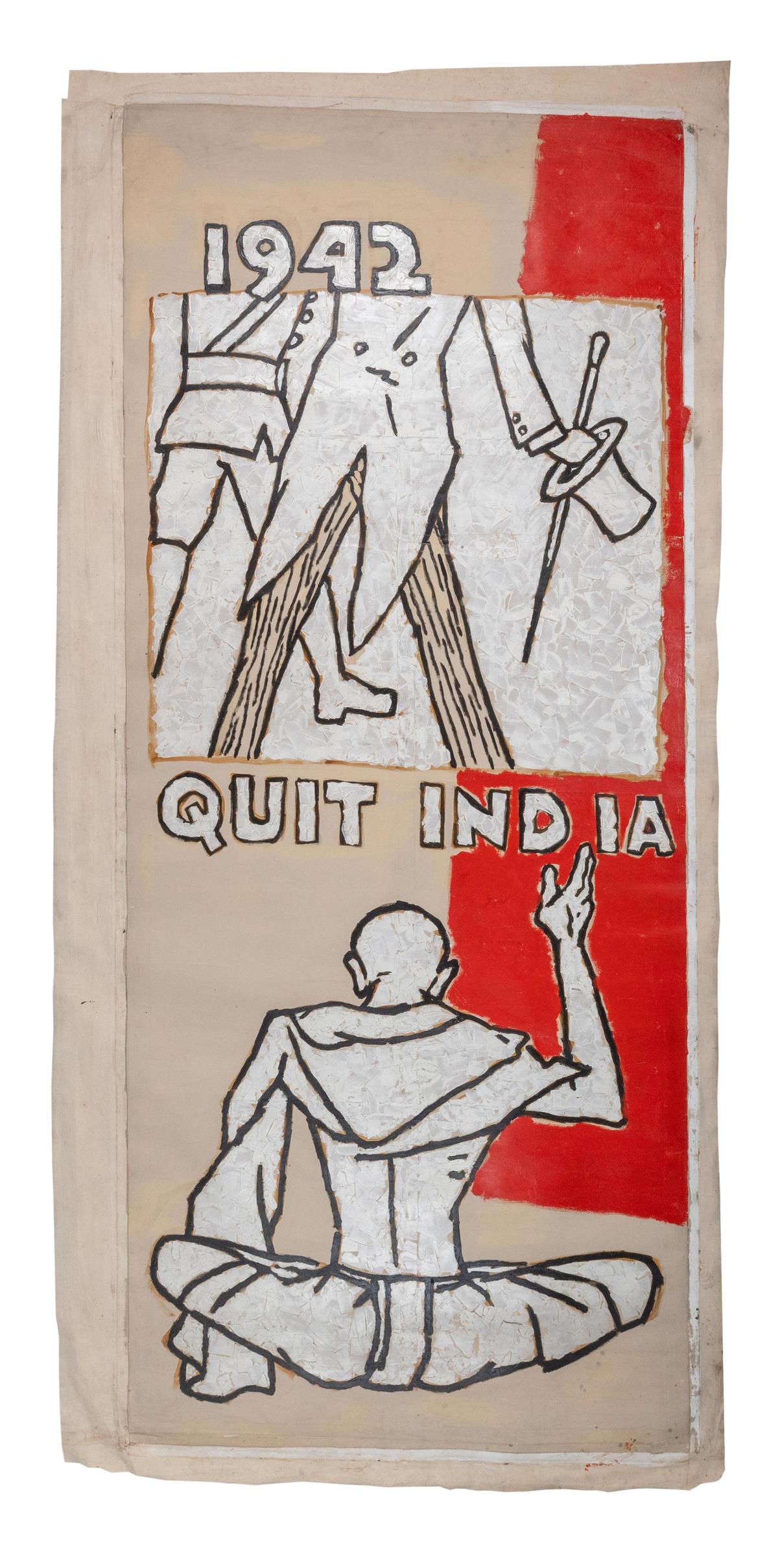
MF Hussain’s Quit India Movement. Photo Credit: Qatar Foundation
The museum’s curator and project manager, Nouf Mohammed, says, “Hussein first visited Qatar in 1984 and exhibited with Qatari artist Youssef Ahmed. His visit marked the beginning of a deep cultural connection with the country during the opening of the Museum of Islamic Art in Doha in 2007. Several of his commissioned works, including Cross-Cultural Dialogue and The Last Supper in the Red Desert, were displayed. This not only introduced him to audiences in Qatar. His time in the country was marked by prolific creativity, as he produced a significant body of works commissioned by Qatar’s cultural institutions.

Curator Noof Mohammad | Photo Credit: Qatar Foundation
The 3,000-square-metre museum, located in Education City, Doha, will be the world’s first and largest dedicated to tracing Hussein’s artistic journey from the 1950s – the earliest work here is Doll’s Wedding – until his death in 2011. It will showcase 147 works – paintings, films, tapestries, photography, poetry and installations, some presented through multimedia storytelling. A series of paintings created by QF Chairperson Sheikha Moza bint Nasser and inspired by Arab civilization will also be displayed.
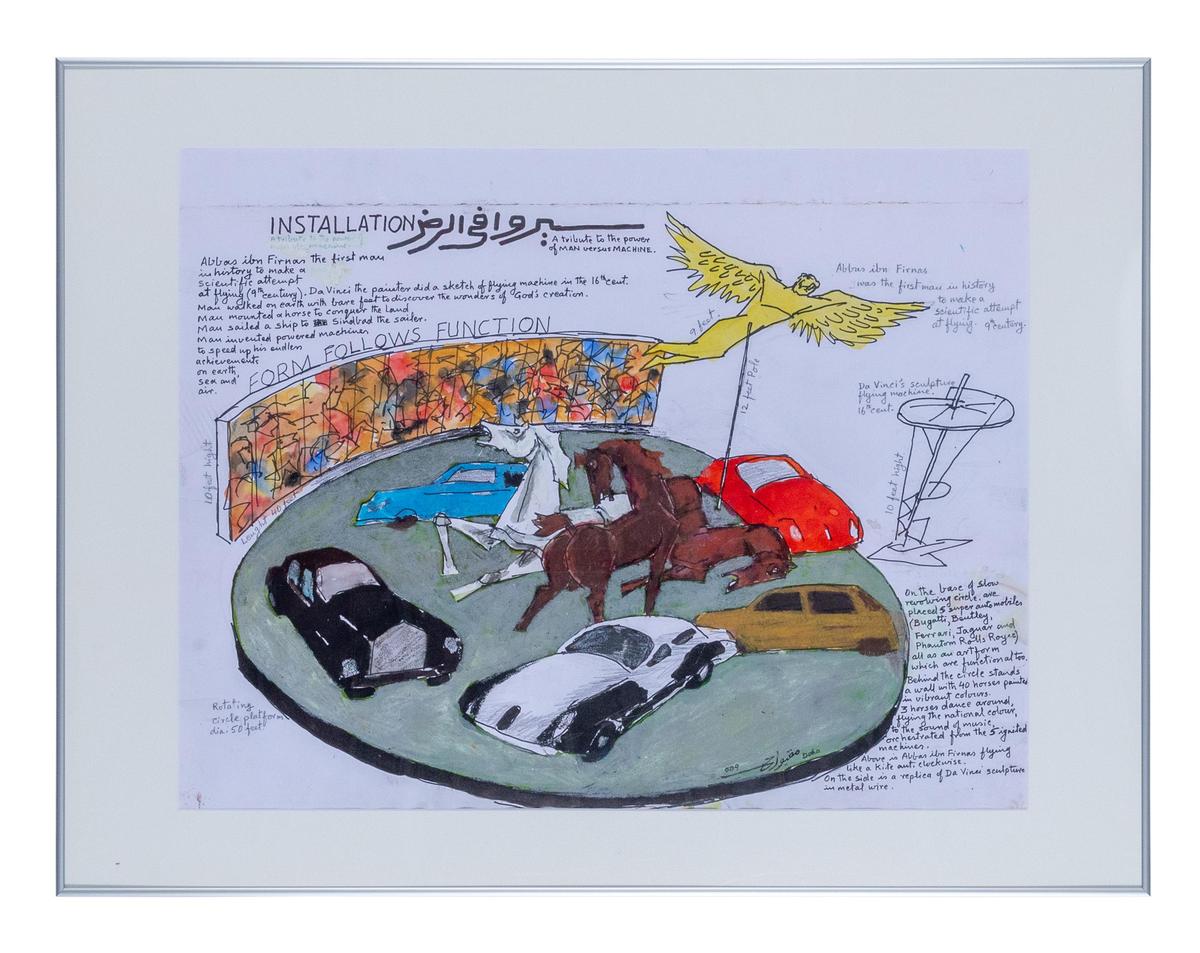
Hussein’s Sero Fe Al Ardh | Photo Credit: Qatar Foundation
The museum will also include Hussein’s last monumental kinetic installation – Ciro Fe el Ardha, conceived for QF in 2009 – which unites a mosaic of a horse, sculptures of Abbas Ibn Firnas and da Vinci’s flying machine, stained glass horses and vintage cars to celebrate humanity’s progress on Earth.
“The museum offers a 360-degree immersive and interactive experience that invites visitors, schools and colleges to step into the mind of the artist and explore the influences that have shaped his vast body of work,” says Knopf. “Hussain wrote Urdu poetry, and we are hoping to include poetry readings as part of our outreach programmes. His poems will also be available in the museum’s library.”
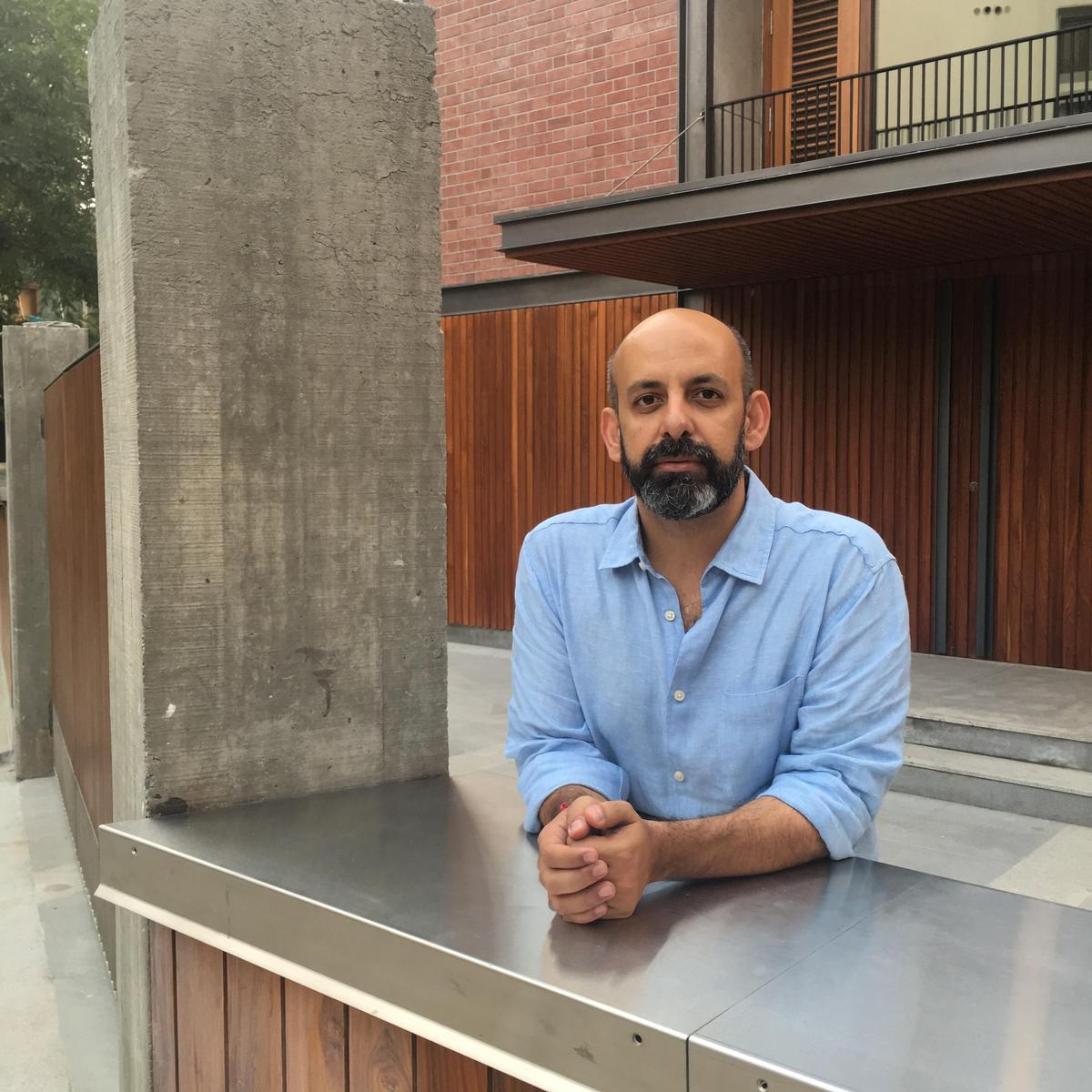
Architect Martand Khosla Photo Courtesy: Dolly Singh
Hussain’s works have yet to lose their connection to India – the museum has been designed by Delhi-based Romi Khosla Design Studio, helmed by Martand Khosla, a graduate of London’s Architectural Association School of Architecture. “We brought to the table my learnings at that school, which has multiple Pritzker Architecture Prize winners, the studio now in its 25th year, my experience as a teacher at the Center for Environmental Planning and Technology, and the many projects we have worked on, residential, institutional and commercial, when designing for the museum,” says Martand.

“We were invited to create a proposal for a museum of this scale and the whole process took three and a half years. We worked with a local architectural firm appointed by the client. Qatar has good guidelines for sustainable building. It was a challenging building in a location with extreme temperatures where the temperature outside is 50 degrees, but inside, you have to maintain a cool temperature for both humans and artefacts,” says Martand, explaining how glazed tiles have been installed outside to insulate the heat.
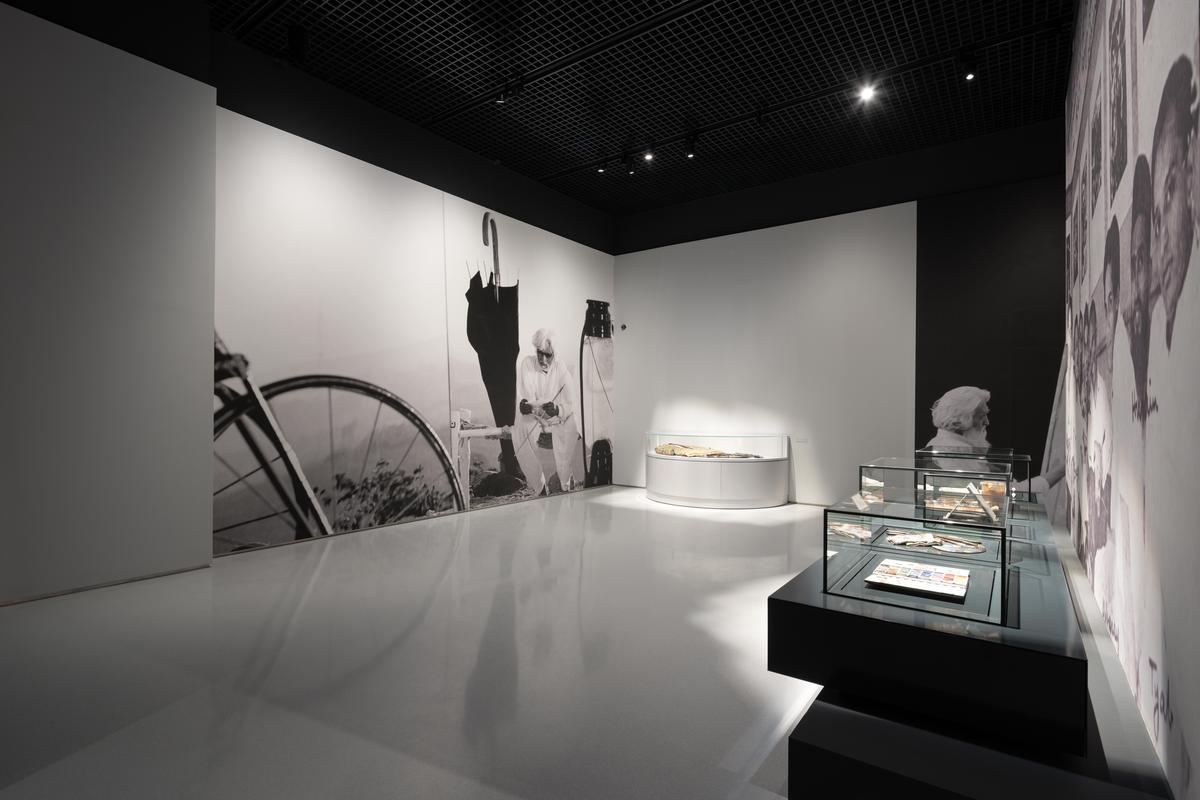
Inside the Museum Photo Credit: Danny Eid
Another challenge was the control of natural light. “There are certain areas where the lighting is controlled but there is natural light that we had to work around,” he says. “When you enter it you pass through a cave-like structure before going into the main complex bathed in light and glazed tiles. There is some seepage of natural light on the lower galleries, but on the upper galleries it is completely blocked off, which then allows the right frequency of light on some of the artefacts which are quite old.”
Designing also meant working with the museography team who had control over how the narrative flowed. “Ultimately it was about: Have we managed to tell Hussein’s story well?”
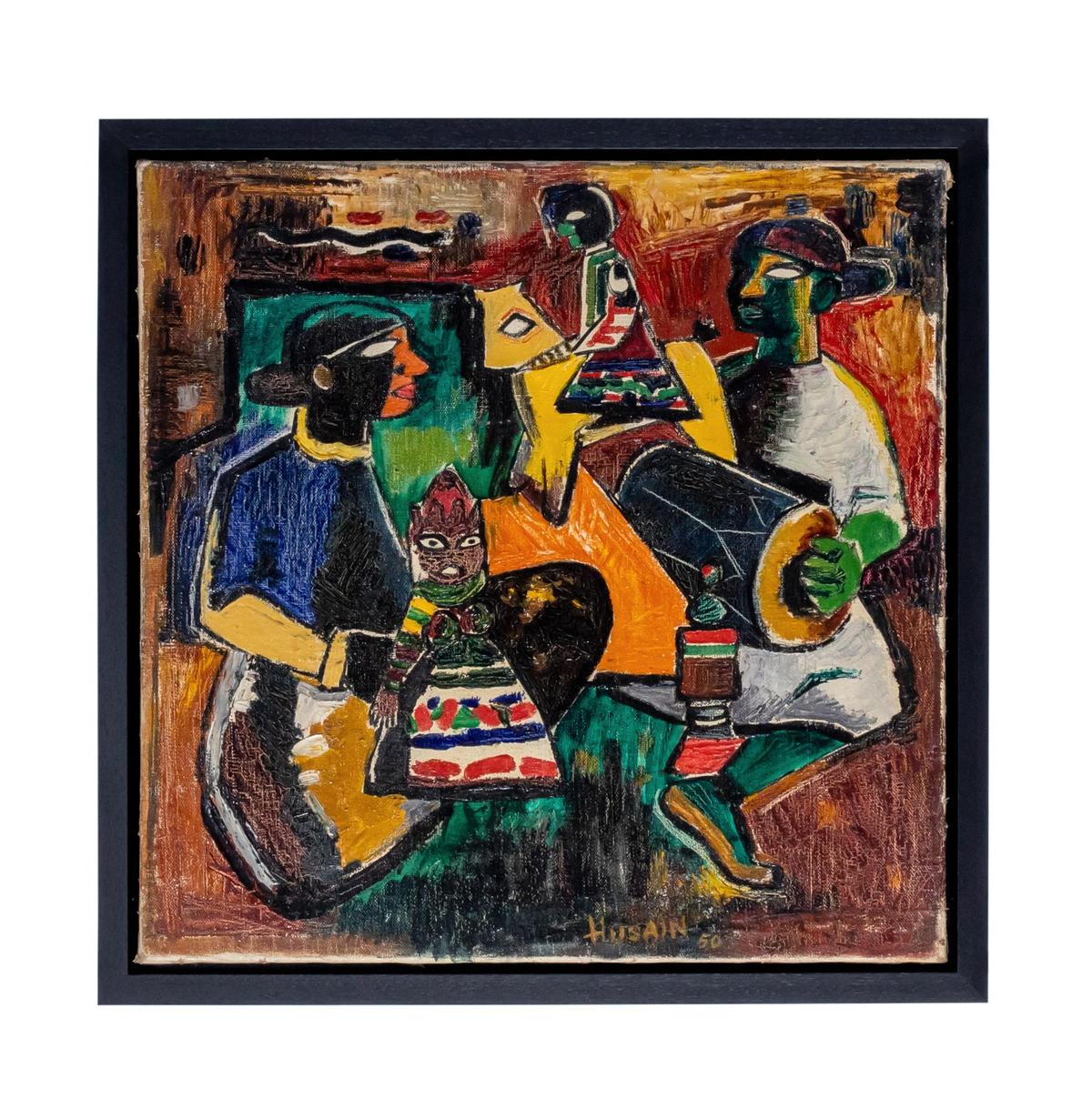
Hussain’s Gudiya’s wedding. Photo Credit: Qatar Foundation
Beyond the main galleries are administrative offices, research and conference rooms, a cafeteria, and a restoration studio. A small museum shop sells Hussain prints and souvenirs – a scene that immediately reminds one of Hyderabad’s Cinema Ghar, where he once signed one of his postcards pieta For me.
published – November 28, 2025 at 10:00 PM IST