

From Sangeeta Mumurtigal
| Photo Credit: Special Arrangement
Capturing the greatness of Shyama Shastri, Tyagaraja and Muthuswami Dixit – the triumvirate of Carnatic music – in a single performance is no less than a challenge. Nevertheless, United Visuals took on this difficult task with their latest production, Sangeeta MumurtigalRecently it was staged in Hamsadhwani. Conceived by writer Visavi, written by Chandramohan with drama by TV Varadarajan and music direction by Bombay Jayashree Ramnath, the play weaves together episodes from the lives of these legendary musicians and composers.
Hailing from the Thanjavur region, it is interesting that the Trinity lived and made music at the same time – a phenomenon reminiscent of the Renaissance period in Western art, which was dominated by Leonardo da Vinci, Michelangelo and Raphael. The drama chose to focus on the personal camaraderie between the three and dramatized some of the key events.
The play began with the introduction of Shyama Sastri on the backdrop of the Agraharam, and then introduced Tyagaraja and Muthuswami Dixit. Given practical constraints prohibiting frequent scene changes, the production employed the inventive technique of using contextual images. The idols of the Goddess, Rama and Subramaniam were thoughtfully transformed into puja-hall furnishings to represent the homes and beloved deities of the three great men. The drama also attracted attention from his family members, an aspect of his life not widely known.
Incidents of popular appeal such as the singing of Raga Amritvarshini by Dikshitar to bring rain to drought-stricken lands; Tyagaraja’s humility and generosity in acknowledging the superior quality of the Nagaswaram Vidwan’s music; Shyama Shastri faced the challenge presented by the musician Kesavayya and defeated him; And dance sequences depicting Dikshitar’s contribution to the musical education of the Tanjore Quartet were included in the play.
The costumes, props and setting were used thoughtfully to highlight the naturalness and cultural milieu of the period.
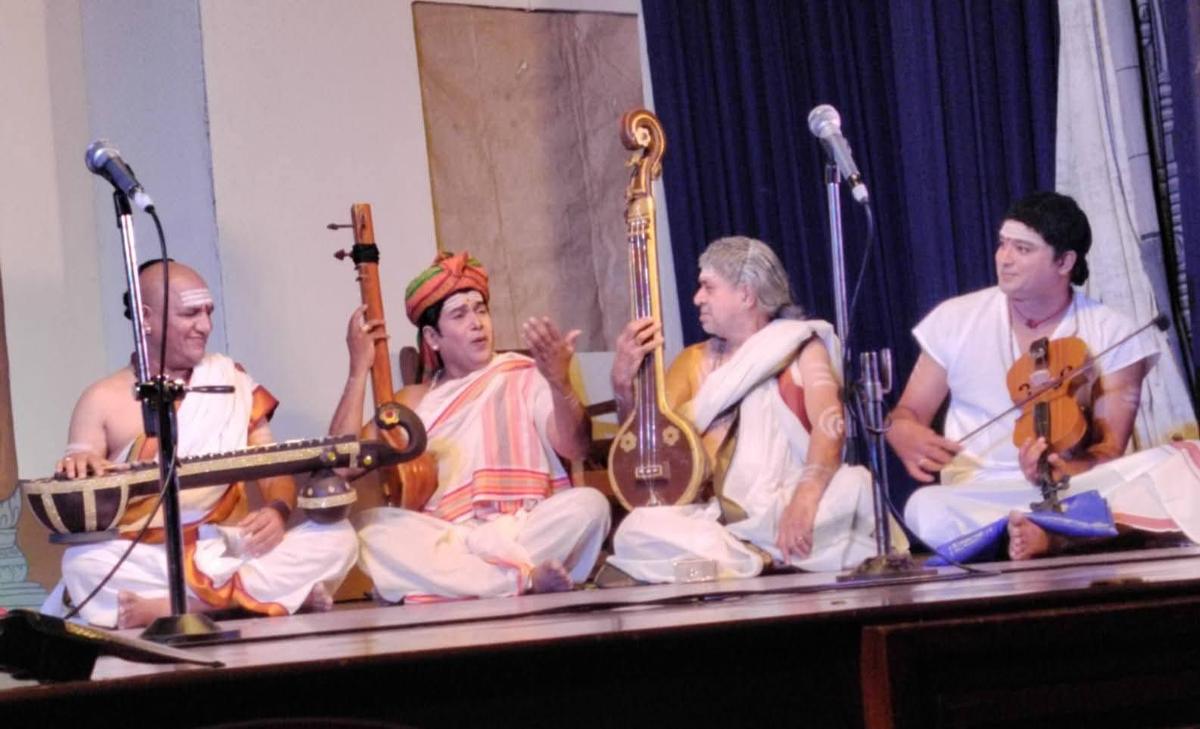
This play is a great mixture of drama and music. Photo Credit: Special Arrangement
It’s difficult to lip-sync to a recorded voice, but the actors played their roles with admirable conviction. Ramesh as Muthuswamy Dikshitar looked a little self-conscious, but Varadarajan as Shyama Sastri and Balagurunathan as Tyagaraja were convincing. Primarily dialogue-oriented in approach, the actors followed the demands of the script well.
Some scenes like Dixit learning Hindustani music and composing Natuswaram felt contrived and did not flow well with the narrative. The scene changes could have been executed more professionally. It can be difficult to select suitable songs from Trinity’s vast repertoire of compositions, but Visvi and Bombay Jayashree chose songs that were perfect for the play. He was included at relevant moments. Many young composers have lent their voices to the musical scores conceived by Jayashree; But a consistent voice for each of the trinity would have been more effective.
Despite the seamless flow of scenes, the ending felt sudden. Perhaps, the impact of the play would have been greater had it been conducted by the Sutradhar, who would have helped create a better connect with the audience through his storytelling.
published – February 11, 2026 03:34 PM IST