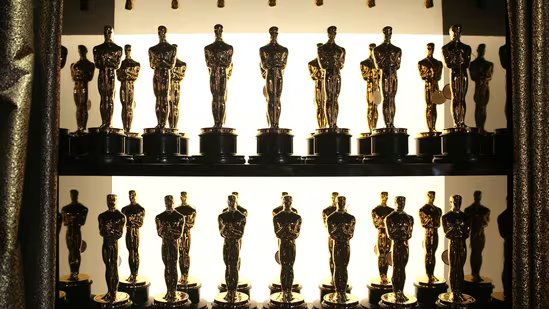

Best picture. Best Director. best Actress. best Actor. Best Screenplay. Known as the “Big Five” of the Oscars, these categories garner the most discussion before and during the ceremony.
But now it’s time to expand that list to include the best international features. At a time when Americans are increasingly exposed to global headlines – many of them delivered in real time through social media feeds – the category takes on additional cultural significance.
Against the backdrop of the conflicts in Iran and Gaza, this year’s contenders – notably It Was Just an Accident and The Voice of Hind Rajab – offer intimate portraits of communities long affected by Western political rhetoric and media coverage.
Directed by Iranian filmmaker Jafar Panahi, It Was Just an Accident tells the story of a mechanic who kidnaps a man he believes tortured him in prison. Meanwhile, Palestinian filmmaker Annemarie Zakir’s The Voice of Hind Rajab, based on a true story, documents the efforts of Red Crescent volunteers to rescue a five-year-old girl from an Israeli military attack in Gaza. Panahi and Zakir use cinema to stimulate conversation and evoke emotions – anger, sadness, curiosity – that go beyond passive and biased headlines. The director throws the audience into the action, portraying the characters as fully realized people with inner lives and families rather than just names.
It matters that these stories are being showcased on one of the most visible platforms in the world. With millions of viewers in attendance, the festival – and, by extension, the film industry – can be a powerful tool for legitimizing the experiences of marginalized communities.
This is especially true for Palestinians, whose displacement and occupation have often been filtered through coverage that, as analysts have documented, distorts their lived experience. The New York Times, one of America’s most prominent news organizations, has been the subject of numerous studies and criticism over its biased coverage of the Middle East. But it is hardly alone in reflecting these patterns. Decades of research have emphasized similar findings in US and UK news coverage more broadly, with people from the Middle Eastern region often being portrayed in dehumanizing ways. These narratives also extend to depictions in films and television. In a 2021 USC Annenberg study analyzing 200 popular films, Muslim characters accounted for only 1.6% of speaking roles. When they were portrayed, they were often portrayed along racial lines, with over 51.1% of Muslim characters only appearing in films in the past. The media can greatly shape public perception of others, influencing the level of empathy people receive and influencing whether they are seen as heroes or villains. Shows like Showtime’s Homeland widen the gap between understanding and representing the Middle East through stereotypical portrayals, while the Netflix Inc. series Moe and the Oscar-nominated All That’s Left of You thoughtfully contextualize the experiences of marginalized characters without relying on tropes.
The films in this year’s International Feature category are powerful because their stories and characters are filled with compassion. In the case of The Voice of Hind Rajab, the humanity inherent in the film compensates for the media’s often disrespectful and passive attitude toward the real-life event that inspired it. Rajab is no longer the girl who was “found dead”, but a child whose life was full of hopes and fears and whose plea will now echo in people’s hearts.
Importantly, both It Was Just an Accident and The Voice of Hind Rajab encourage the general public to seek out films told from the perspective of the people they depict, rather than solely from a Western perspective. This is an important distinction. These films bring the unfiltered experiences of Palestinians and Iranians to audiences through a grounded, character-driven approach that avoids the shadow of the news cycle and savior-style storytelling that often casts American characters as saviors or teachers of minorities.
Movies and shows don’t have to be related to be understandable. They are magical that way. So, regardless of who takes home the coveted Oscar statuette, these films accomplish something bigger: They restore dimension to people who are often discussed and portrayed in the abstract.
More from Bloomberg Opinion:
- How does the Iran war end? America needs a better answer: Editorial
- Whitewashing ‘Wuthering Heights’ hits differently now: Mae Abdulbaki
- ‘Stranger Things’ finale is the escapism we need: Brian Reisman
This column reflects the personal views of the author and does not necessarily reflect the opinion of the editorial board or Bloomberg LP and its owners.
Mae Abdulbaki is a critic, entertainment journalist and podcaster. She has been a member of the Gotham Television Awards nomination committee and a juror at film festivals including SXSW.
More stories like this available bloomberg.com/opinion
©2026 Bloomberg LP