

Day. Not day. white. Not white. If you look hard enough, you’ll see differences of opinion everywhere in the semantics of existence. Yet when we think about life, it is always holistic. That’s why the philosophy of yinyang (I like to write it together rather than ‘yin-yang’ because that way it looks more like a flow), the philosophy of interconnected forces, is always interesting to read. Yinyang is always present and universal.
The earliest concrete trace of Yinyang’s philosophical theory is seen in an ancient book called i ching (Pronounced ‘ee-ching’) While yinyang is described as something indivisible, the opposite forces nevertheless play against each other in the law of complementarity. This dialectic is dynamic and eternally fluid in Yinyang.
The fundamental energy struggle between Yin and Yang transforms each other, keeping them controlled and balanced. Where now? The important thing is where in the system of our lives do we see such a pattern?
The universality of Yinyang confirms itself in science. The most important scientific information regarding our life is that everything is made of atoms, right? Positive protons and negative electrons are present in equal numbers in an atom due to which the atom becomes neutral or in other words balanced and stable. The reason for the existence of atoms is the strong nuclear force of attraction between the protons and neutrons in the nucleus.
Let’s take a turn. In electrostatics, a fundamental, universal law exists – like charges repel each other and unlike charges attract each other. There will be a force of electrostatic attraction between the positive and negative charges, creating a feeling of unity. The same idea prevails in Yinyang. Positive yang and negative yin (opposite forces yet interdependent) combine in a supreme polarity.
The sun shines its rays on the lush green and gorgeous mountains and valleys. , Photo Credit: Unsplash Images
mountain and valley
Here’s the back story. The sun shines its rays on the lush green and gorgeous mountains and valleys. The visual root of Yinyang philosophy lies here.
The original linguistic meaning of the words yin and yang is related to the contrasting imagery of mountain and valley. A part of the mountain, including the valley, remains unaware of the light that is shining on the other side of the mountain, creating a polarity. Yin meant the shady, dark side of the mountain-valley (northern aspect), while Yang meant the sunlit, bright slopes of the mountain (southern aspect).
Then the sun moves, and yin trades with yang. Since time immemorial, this chiaroscuro has been representing a perpetually cyclical cycle of life. You can easily connect the dots here and see how the yinyang concept eventually evolved to represent dark/black and light/white in terms of color in Taijitu, where the lighter side is yin and the darker side is yang.
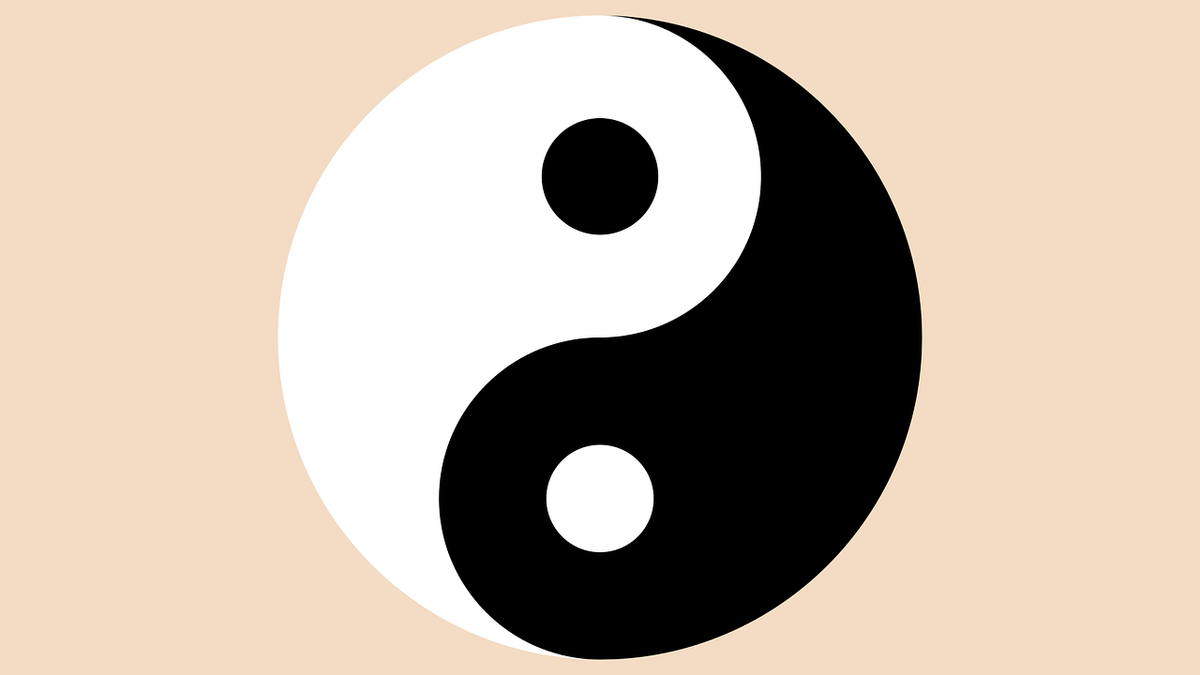
great ultimate. , Photo Credit: Creative Commons
Taijitu – diagram of supreme polarity
Tagged as the Supreme Polarity as well as the ‘Great Ultimate’, Taijitu is the most popular and classic representation of Yinyang. Here, you see two opposite flowing forces captured in a circular pattern. An S-line divides the two halves, where each half resembles a tear drop. One side represents light, while the other side represents darkness. Additionally, a white dot is present on the black side, and a black dot is present on the white side. In Taijitu these two exist in harmony and balance, symbolizing the interdependence and completeness of all creation in the universe. The point shows that nothing is perfect.
Nothing is pure. nothing is perfect. This is life.
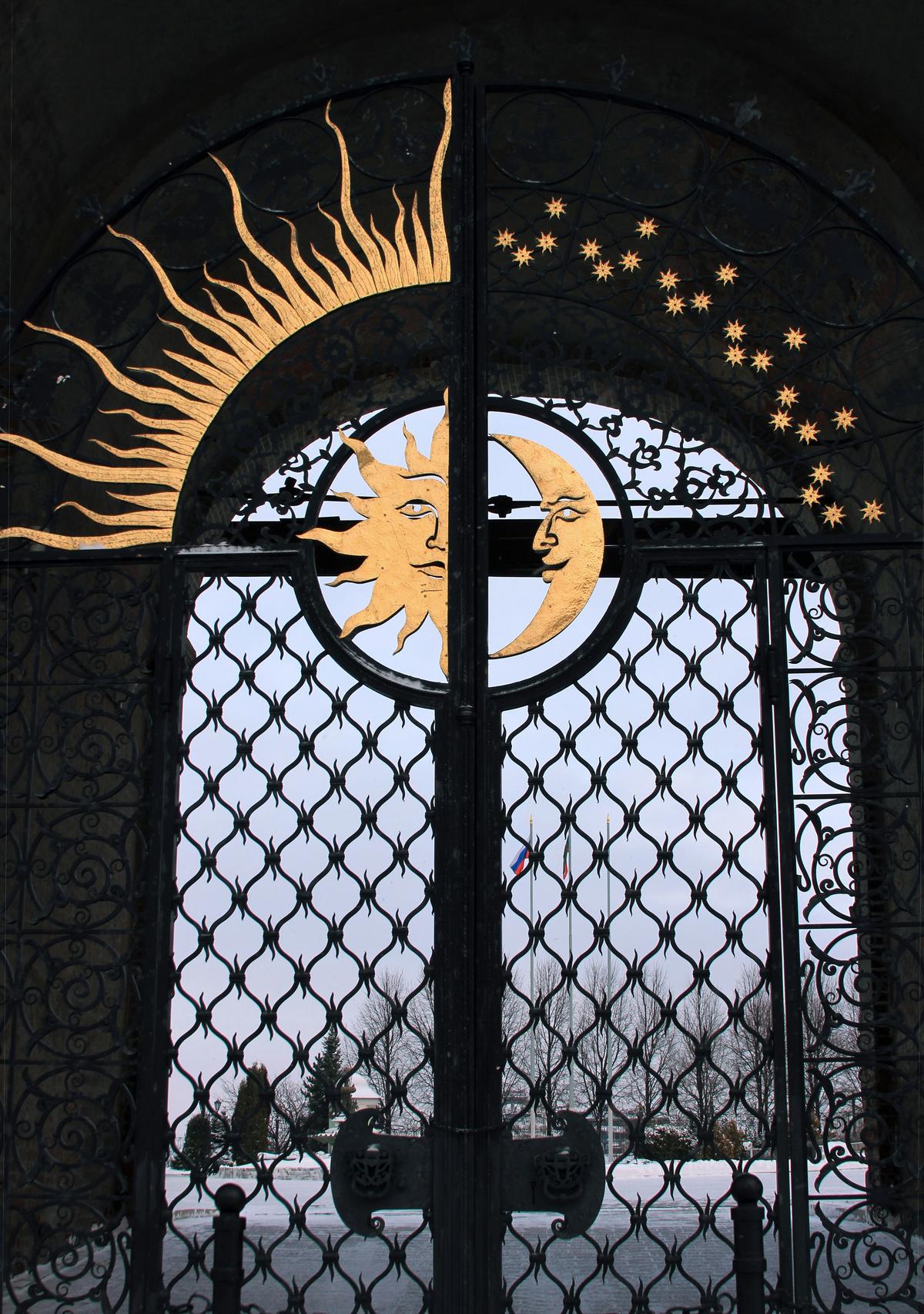
The Sun and Moon also further the idea of light and darkness. , Photo Credit: Unsplash Images
Sun and moon
The classic natural symbolism of yinyang, the sun and the moon, also carries forward the idea of light and darkness that is deeply embedded within the concept of yinyang. Shao Yong, the ancient Chinese cosmologist and historian, called the Sun “Greater Yang”, while placing the Moon in opposition and calling it “Greater Yin”. In Chinese mythology the Sun and the Moon are represented by mythical creatures called the three-legged crow and the three-legged toad, respectively.

Painting of the Dragon and Tiger by Utagawa Kuniyoshi (1837) Photo Credit: Creative Commons
dragon and tiger
Dragons and tigers are at the core of many folklore, arts, and myths of Asian cultures. They are powerful forces.
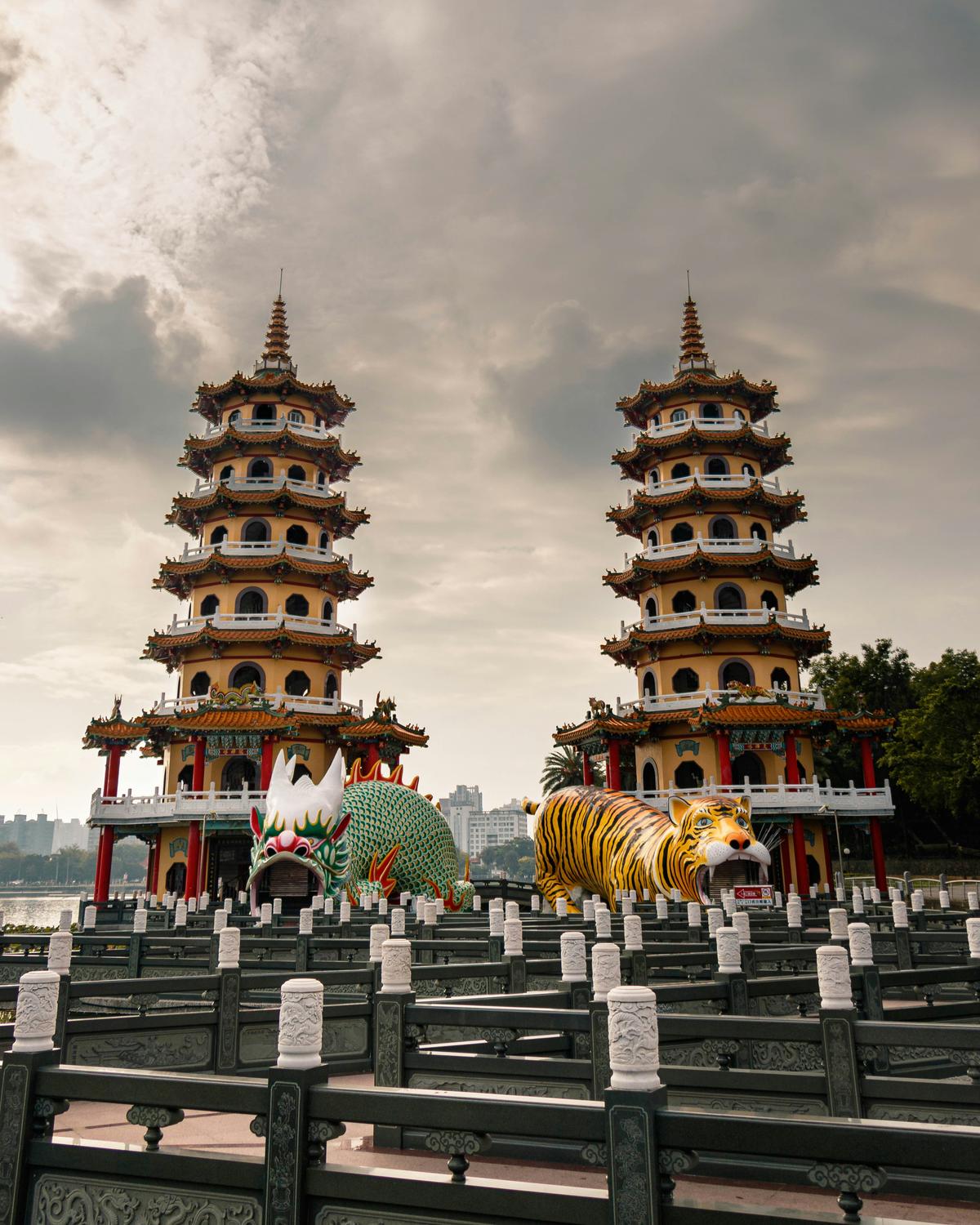
Dragon and Tiger Pagoda in Kaohsiung, Taiwan. , Photo Credit: Unsplash Images
In East Asian imagery, the patron of the East – the Dragon, and the patron of the West – the Tiger, come together to represent life and death, embodying the core principles of Yinyang. They are also prominent animals in the practice of feng shui, a Chinese art of arranging objects, spaces, etc. to achieve yinyang balance and harmony.
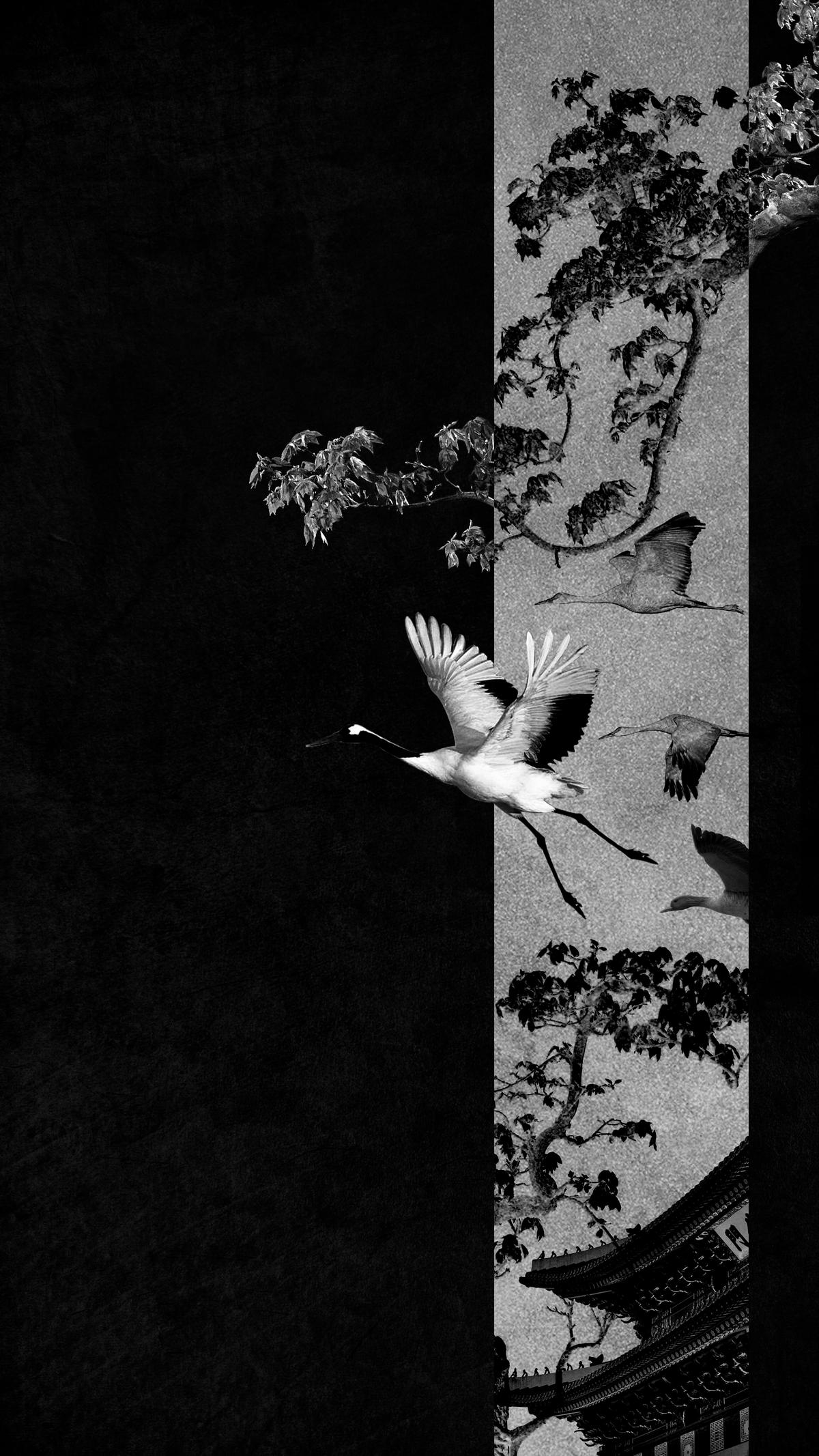
Crane strength and agility. , Photo Credit: Pexels
crane and snake
The imagery of the battle between the snake and the crane is much celebrated in Chinese folklore and myth. Particularly in Tai Chi, a form of martial arts in China, they represent complementary yinyang dynamics. The strength and agility of the crane combined with the softness and flexibility of the snake is an important martial arts concept. If you like watching martial arts movies, I would recommend the movie “Snake and Crane Arts of Shaolin” starring Jackie Chan to get a deeper understanding.
Snake Crane in Kung-Fu The Wing Chun style also borrows the basic idea from the yinyang symbolism between snakes and cranes.
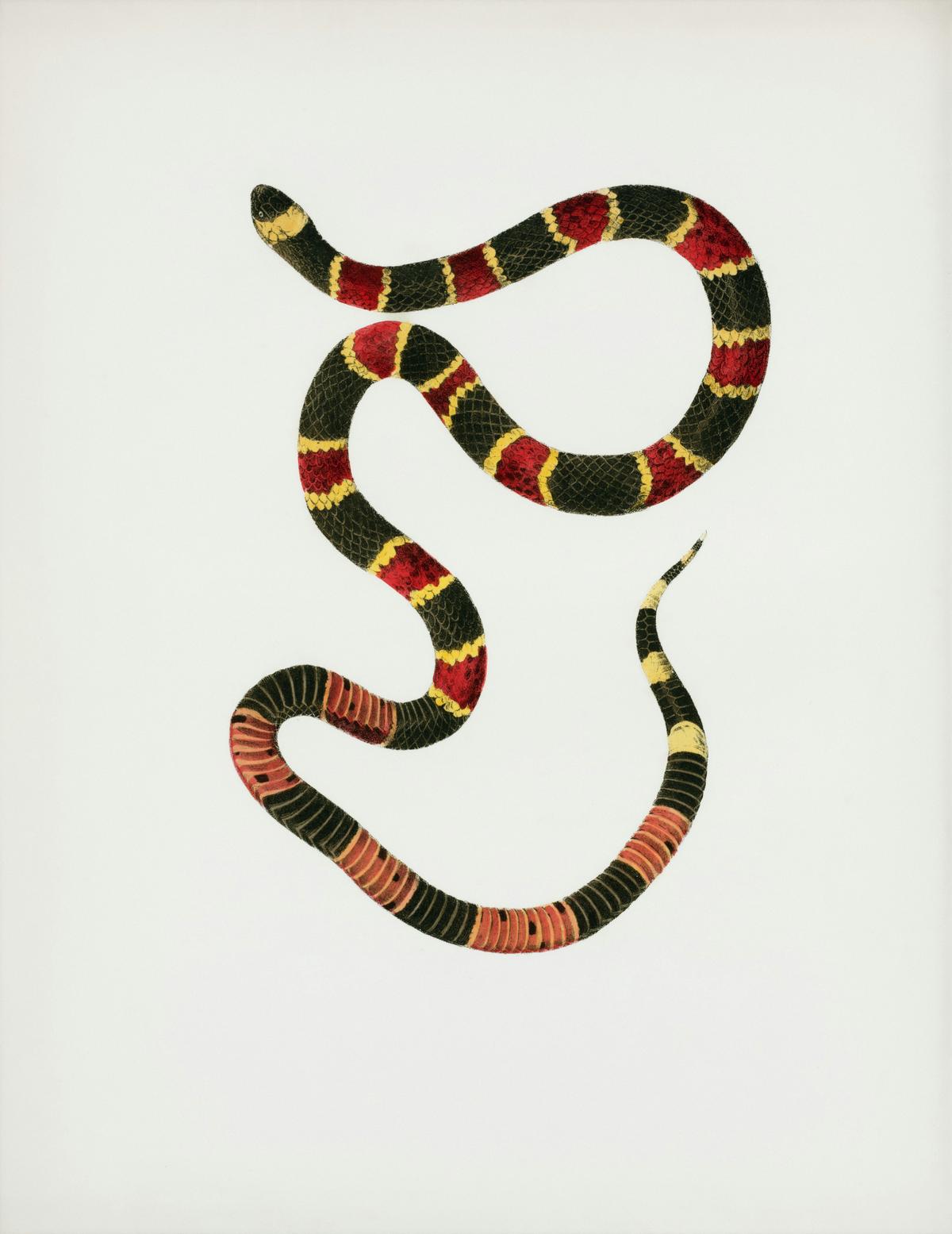
The softness and flexibility of the serpent. , Photo Credit: Unsplash Images
Do you know?
sometimes also called snake xiao long Due to visual similarity with dragons in Chinese folklore.
published – October 31, 2025 04:57 PM IST