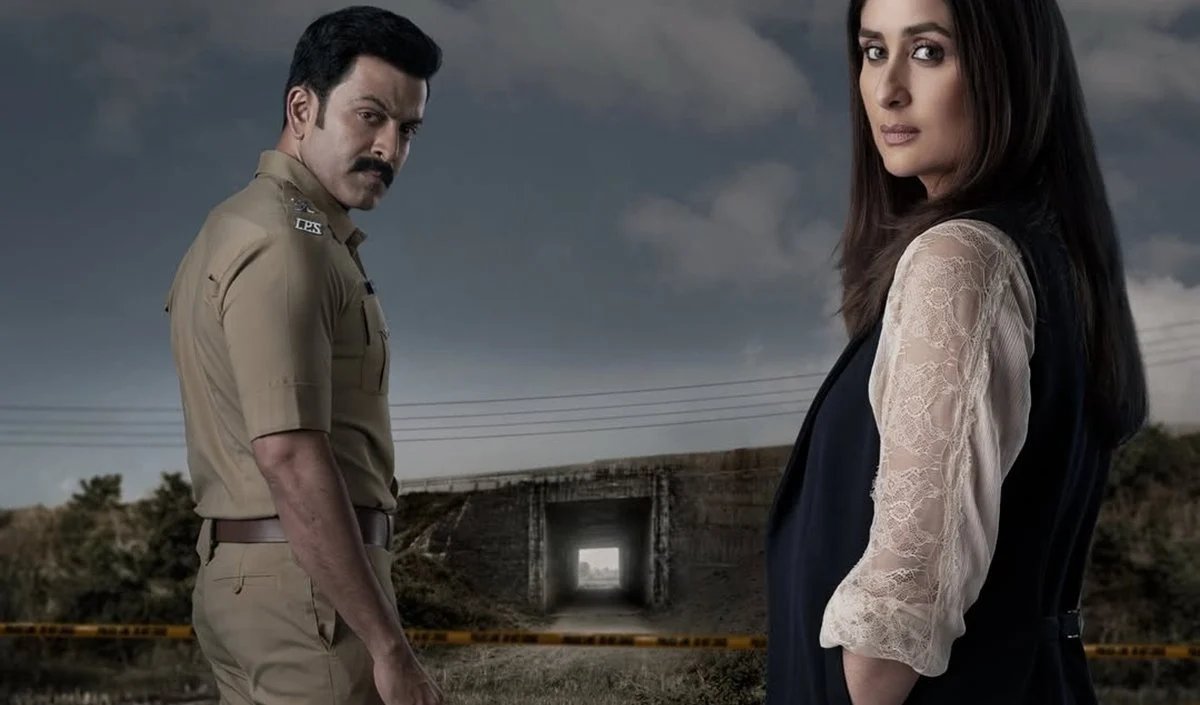
Meghna Gulzar’s films have always brought out the hidden and uncomfortable aspects of society, which are often avoided. After serious stories like ‘Raazi’, ‘Talwar’ and ‘Chhapaak’, Meghna has come up with ‘Daira’ this time. Starring Kareena Kapoor Khan and Prithviraj Sukumaran in the lead roles, the film highlights the bitter truth revolving around the Indian justice system, police attitudes, public desire for prompt justice and women’s safety.
There are several questions in the film that directly enter the viewer’s mind, but at the level of cinematic structure and conflict, the film fails to convey its message with the aggressiveness expected of it.
What is the main story of ‘Daira’?
The film begins with a very high-profile and dramatic twist. DCP Raman Kumar (Prithviraj Sukumaran) and his encounter team are being ignored by the people. His team has killed the four main accused in the inhuman cruelty, gang rape and murder of 24-year-old Ragini Pujari in an alleged police encounter. There is celebration among the general public and the media, but silence in the corridors of law. The question arises whether the contest was really in self-defense or was it a well-planned fake contest to pacify the crowd?
Meanwhile, DCP Ajuni Kohli (Kareena Kapoor Khan), a strict and principled internal vigilance officer, enters the story. Ajuni has been entrusted with the responsibility of conducting an impartial investigation into the entire contest. As Ajuni and his team delve deeper into the matter, horrifying and shameful layers are revealed before the encounter that calls into question our entire system.
More than Encounter, the film attacks the negligence in police stations when crimes are committed. The moving of the victim’s family from one police station to another while filing a missing complaint, the insensitive attitude of the police officers, the precious hours spent on paperwork and the ‘convenient’ disappearance of CCTV footage – all this shows that our system has killed Ragini many times before she was murdered. This entire script is reminiscent of the much talked about Hyderabad encounter case of the year 2019.
Acting and Characters: Solid performances, but incomplete emotional tracks
Kareena Kapoor is excellent as Ajuni – calm, composed and a woman who neither wastes time nor talks unnecessarily. The scene where she meets Ragini’s family and hears about those lost hours is one of the calmest and best moments of the film. She is not playing the role of a hero. She plays a woman who is doing her job within a system she trusts, despite the evidence around her that shows the system isn’t always worthy of that trust.
There is an interesting side to Ajuni’s character that the film shows but never fully explores. Kanwaljit and his father, played by a retired judge, were shot dead in the court premises. So their faith in the judiciary is not just bookish, but personal and complex. Has what happened to her father strengthened her commitment to the legal process, or is she just too angry at the system she defends? Is he ever afraid of becoming like Raman? The film does not give any solid answers to these questions and moves at a fast pace and this is its biggest mistake. If the father-daughter relationship had been given five more minutes, Ajuni could have become a truly complex character instead of just a woman of principle.
Prithviraj Sukumaran’s work as Raman Kumar is impressive; He is someone whose stand is clear from the start and who doesn’t pretend to be anything else. They believe that the system has failed in Ragini’s case. He is sure it will fail with the next girl too. The movie doesn’t ask you to agree with him. She simply asks you to understand her, and Prithviraj manages to do just that – without making Raman such a sympathetic character that his faults can be overlooked.
How is the movie?
The more ‘Dira’ makes you angry about what happened to Ragini, the easier it becomes to understand why a man like Raman did what he did. The film should have taken advantage of this contradiction. ‘Daira’ knows this is out. But, he is not able to make full use of it. ‘Daira’ presents itself as a commentary rather than a thriller, and that is the filmmaker’s own choice. The film is not interested in telling who is right. It puts both sides forward and then retreats. The statistics shown at the end of the film—reports of rape every 20 minutes, encounters are reported every day, and only 23 percent of rape perpetrators are convicted—make this clear.
But here is the problem. Right from the beginning, the film portrays Ajuni and Raman as people with different ideologies. Their meeting at the airport – when she unexpectedly meets him on the way back – should have been the moment the film was made of. Their views clash. Their personal life stories matter. The audience is forced to think critically about both sides. Instead, their confrontation is slow and almost graceful — and lacks the desired impact.
In a film that spent two hours building up to this confrontation, the impactful moment is barely felt. The cat-and-mouse tension expected from the investigation never materializes, and by the time the final confrontation arrives, the film has already established who’s on which side. There are no surprises, no real test of a character’s faith, and no moment when the situation changes completely.
The ever reliable Jitendra Joshi has done well in the supporting role. Biswapati Sarkar, as Raman’s senior, is used sparingly but effectively. Kanwaljit Singh plays Ajuni’s father in a few scenes, but like the character, he doesn’t get to do much. Kashti Jog is excellent in the role of Ragini’s mother. You can feel their pain.
‘Daira’ is a film made with right thinking and true conviction. Meghna Gulzar raises important questions about justice, the judiciary and women who fall victim to the flaws in the system that is supposed to protect them. The legal process components are good. Both Kareena and Prithviraj are good. The film’s anger at the failure of the system is genuine.
But where the film should have pushed forward and made a point, it backtracks. Personal matters related to the main character are not shown properly. The final confrontation doesn’t leave the impact it should. And if you want your audience to think about a difficult moral question, you have to make them really uncomfortable first. But, ‘Daira’ doesn’t quite reach that point.
This movie is worth watching, but it might not give you as much as you expect from it.