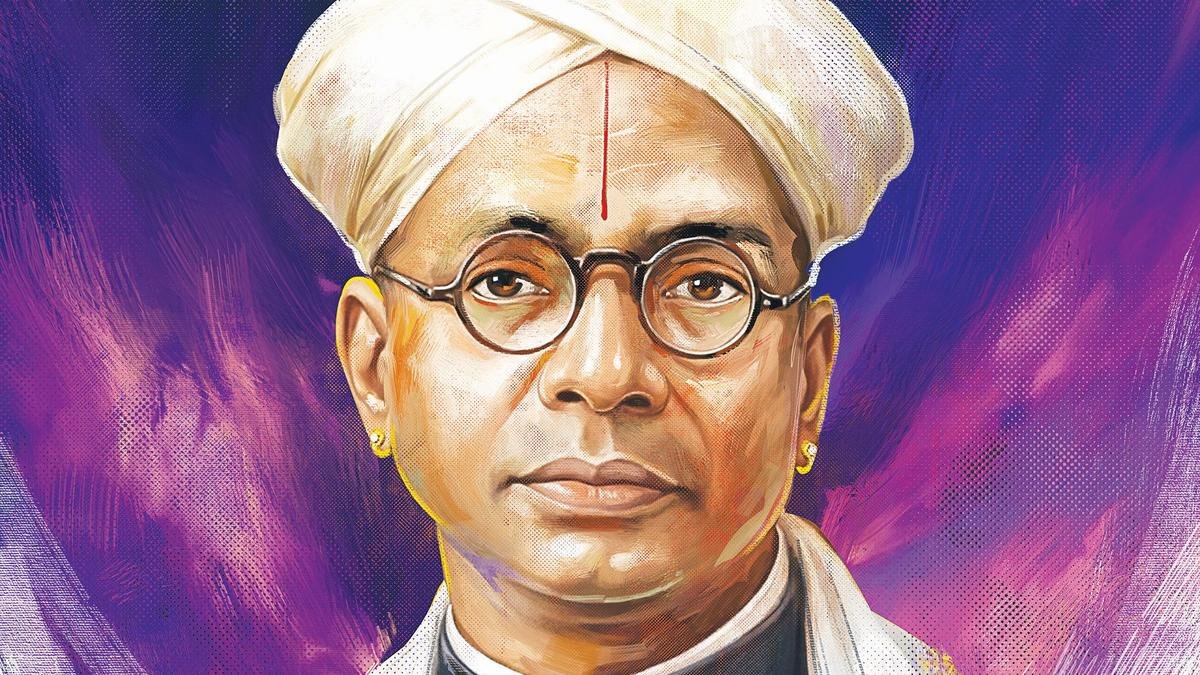
Ramanujacharya founded a drama troupe called the Madras Secretariat Party to use theater to support charitable causes, particularly the Students’ Home and the Ramakrishna Math. | Photo Credits: Illustration: SAAI
Due to heavy patronage, Tamil theater was actively involved in raising funds for various charitable and public causes. Many theater groups staged plays whose income was used for educational institutions, hospitals, benefit funds and disaster relief. The Madras Governor’s War Fund greatly benefited from the staging of several Tamil plays during World War II. For example, MK Tyagaraja Bhagavatar’s performance pavalakkodi In 1941, a sum of Rs 7,000 was raised at the Sun Theater in T. Nagar, which was donated for the cause. One of the major institutions highly supported by Tamil theater was the Ramakrishna Mission Students’ Home in Mylapore – thanks to the efforts of C. Ramanujacharya.
Born in 1875, Ramanujacharya obtained a BA degree from Presidency College and joined the Madras Secretariat as a clerk. While in college, he became part of the group of followers who gathered around Swami Vivekananda during his stay in Madras in early 1893, before he left for Chicago to attend the Parliament of the World’s Religions. When Vivekananda was given a grand welcome in the city on his return from the West in February 1897, Ramanujacharya got the opportunity to interact closely with him and joined the Ramakrishna movement.
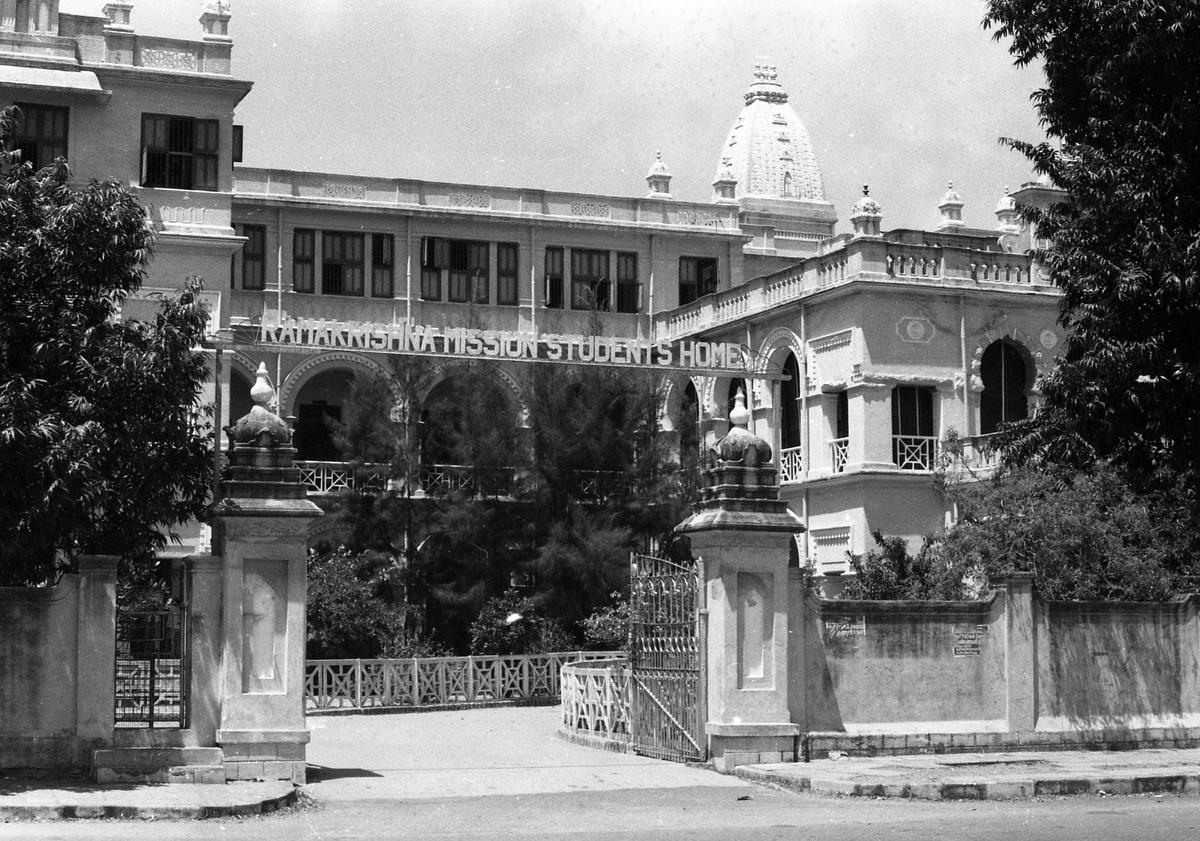
One of the major institutions highly supported by Tamil theater was the Ramakrishna Mission Students’ Home in Mylapore – thanks to the efforts of C. Ramanujacharya. | Photo Courtesy: The Hindu Archives
When Swami Ramakrishnananda, who was sent by Swami Vivekananda to spread the message of Sri Ramakrishna in South India, came to Madras in March 1897, Ramanujacharya became one of his ardent supporters. In 1905, Ramanujacharya’s cousin C. Ramaswamy Iyengar was impressed by the plight of four boys from Guntur who came to the city seeking help with their studies, but found none. This inspired the establishment of a home to provide free food and accommodation to poor students coming to the city for their studies, and thus with the blessings and guidance of Swami Ramakrishnananda, the Ramakrishna Mission Students Home was born. Ramanujacharya remained closely associated with the activities of the Griha since its inception and became its Secretary after the death of Ramaswamy Iyengar in 1932.
In 1917, Ramanujacharya founded a drama troupe called the Madras Secretariat Party, involving his colleagues, to use theater to support charitable causes, particularly the Students’ Home and the Ramakrishna Math. Ramanujacharya was the director, lead actor and composer… all in one. When Swami Brahmananda, the first president of the Ramakrishna sect, came to Madras on three occasions, Ramanujacharya used the proceeds of a benefit play to purchase the land on which the old temple of Mylapore Math stands today. During his 1921 visit, Swami Brahmananda saw a demonstration Mirabai Staged by the Madras Secretariat Party at the Victoria Public Hall, Ramanujacharya played the role of Rana. Later, on Swami’s suggestion, Ramanujacharya translated and performed the Bengali drama Bilwamangal In Tamil.
Apart from Ramanujacharya’s associates, the Madras Secretariat Party included members such as the famous violinist Parur Anantharaman and several residents of the student house such as Mannargudi Sambasiva Bhagavathar, who later became a renowned Harikatha exponent, and Anna N. Subramanian, who became a renowned author of religious books. In his memoirs, the renowned philosopher TMP Mahadevan, who was also a resident of the Home in the 1920s, says that rehearsals used to be held on the premises on Sunday mornings and were much-awaited occasions.
In December 1936, Ramanujacharya gathered a group of actors from the Madras Secretariat Party, Suguna Vilasa Sabha and some other amateur drama troupes under the banner of the Madras Premier Amateur and went on a tour of the Malay states to stage a series of performances to raise funds for the Students’ Home. This arrangement was made by an advance party led by Rao Bahadur MR Ramaswamy Sivan, who had retired as the first Indian Principal of the College of Agriculture in Coimbatore. However this was not Ramanujacharya’s first fund-raising venture in this area. Apart from theatre, he was a well-known figure in the world of Carnatic music (his contribution to the field is well documented) and he counted many stalwarts of the art among his friends, one of them being Musiri Subramaniam Iyer. In February 1935, he organized Subramaniam Iyer’s tour of Malaya.
During three weeks in January 1937, the troupe performed 15 performances in all the important centers of the Malay states such as Malacca, Seremban, Kuala Lumpur, Klang, Penang, Ipoh and Singapore. The plays presented included Nandanar, leela sukhaar, royal loyalty And Ram, the ideal son. This tour was very successful. In 1940, the Madras Secretariat Party embarked on a Bombay tour, holding four demonstrations to raise funds. A curtain raiser for the tour, which appeared in Bombay Chronicle The troupe was said to have performed 198 performances since its inception, of which 172 were for the benefit of the Students’ Home, and the rest for causes such as flood relief, anti-tuberculosis fund and girls’ education. according to the book palace for the poorWhich details the history of the Students’ Home, the total amount of money collected through the plays staged by the Secretariat Party was more than Rs 5 lakh, which went into the treasury of the institution. In the 1940s, Ramanujacharya founded and mentored Ramakrishna Kripa Amateurs, through which he continued his journey of raising funds through theatre. Ramanujacharya died in November 1956.
published – March 26, 2026 12:56 PM IST