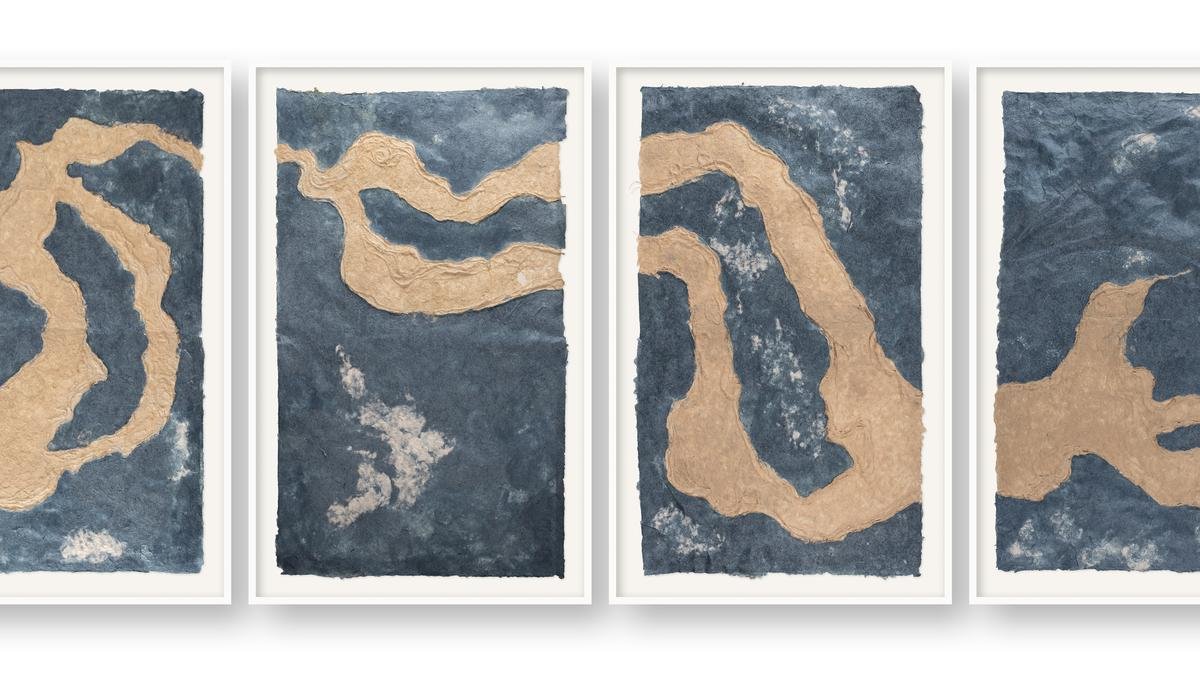

At a time when Artificial Intelligence (AI) is posing a serious threat to creativity, printmaking is turning its attention to it. The artistic process, which traces its roots back to 3000 BC – when cylinder seals were used in Mesopotamia and the Indus Valley – has an underlying sense of dynamism that is difficult to quell. One reason for this is that its moment is coming in 2026.
In Kolkata, the third edition of the Print Biennale is ongoing (till February 15) at the Lalit Kala Akademi. Showcasing over 204 artists from around the world, it highlights contemporary printmaking. In the national capital, Dhumimal Gallery is opening an exhibition called Print Age – The Art of Printmaking in the Age of AI Reproduction (on 3 February), in conjunction with the India Art Fair. It will showcase a collection of 156 original prints created by 80 artists from diverse backgrounds and eras, including Pablo Picasso, Marc Chagall, Anish Kapoor, Jyoti Bhatt and contemporary Indian artists. All of this begs the question: Why is printmaking thriving in the age of AI?
“Printmaking in India is thriving despite difficulties [because it is working] Through them – lack of awareness among the general public, absence of studio facilities and persistent market challenges, says Krishna Setty, curator of the Print Biennale and commissioner of the Lalit Kala Akademi. “These constraints have forced printmakers to innovate, collaborate, share resources and constantly rethink the ideological, technical and social possibilities of the medium, giving contemporary Indian printmaking a new vitality and vital relevance.” The Academy has long given a great support to printmaking; Its new regional center offers state-of-the-art printmaking studios.
“We have an extensive, and often overlooked, history of printmaking in India. Our visual landscape has been shaped by print culture for centuries, and this exhibition draws from a number of important private and institutional collections in Vadodara, Ahmedabad and Delhi, which have amassed important works over time. It also includes new works created by young artists.” Johnny M.L Curator, Print Age
Just another design tool
Printmaking, historically, also holds an important place in Indian culture. Art historian and collector Neville Tully says, “The Quit India Movement was made viable through the many letters and posters created by a dedicated team of printmakers from India such as Chittorprasad, Bimal Roy, Zainul Abedin and Somnath Hore.” “Indeed, Chittorprasad traveled extensively in the famine-stricken areas of Bengal to document and report on the dire conditions of the people, sparking outrage and revolution.” It is on this strong culture that printmakers now build their community.
And new challenges and technologies are important for their mill. For printmakers, AI is just another tool in their artmaking arsenal. Artist and researcher Paula Sengupta, who has organized the group exhibition, says, “The history of printmaking is a testament to the continuous appropriation of technology by printmakers.” Purvai: Printmaking in Eastern India – Pedagogy for PracticeAt Emami Art, Kolkata (till March 7). “When digital technology made its presence felt, printmakers used it to create digitally-assisted prints, more often than not combining it with traditional processes. Similarly, AI is the new tool to capture their imagination.”
east wind Explores contemporary printmaking in Eastern India and features 44 artists and groups from the north-eastern states, West Bengal, Jharkhand, Odisha and Chhattisgarh. “It aims to showcase the versatility of the medium as applied and expanded by vibrant creative minds,” says Sengupta.
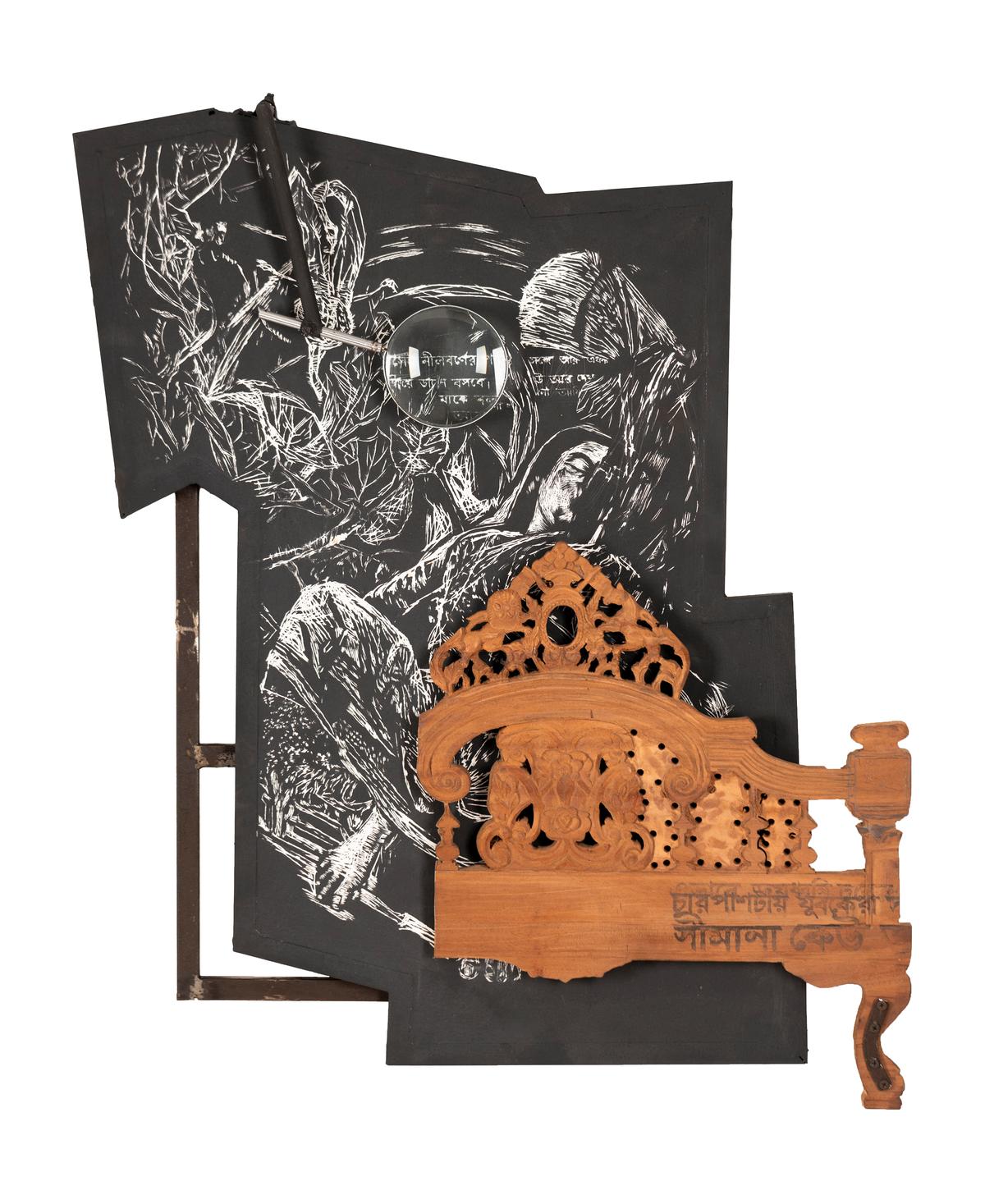
Pradeep Das’ untitled (Engraving on plaster, wood, acrylic, iron and magnifying glass)
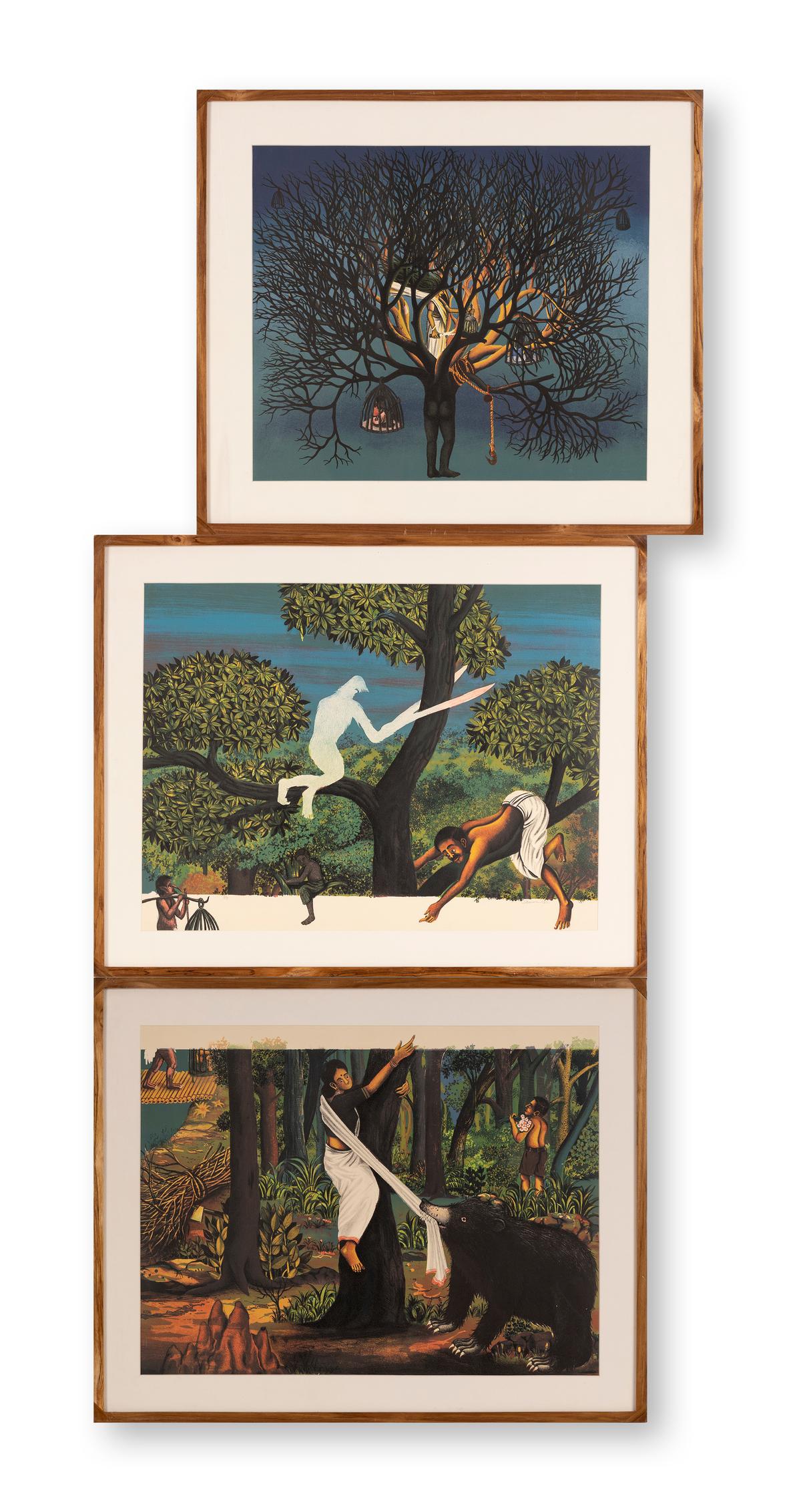
Subrata Kumar Behera’s cursed tree (Lithography on paper)
A more democratic art scene
Today, due to the dedicated efforts of artists, institutions and networks, printmaking is experiencing renewed interest around the world – a medium that is technically demanding but economically within the reach of young collectors. As printmaker D.D. This, says Apte, “makes all the efforts to keep the technologies alive worthwhile”. Uday Jain, director of Dhumimal Gallery, says this new vigor in the processes and the continued growth of confidence in the international art market in prints has created an urge for exhibitions of this nature as well.

“Printmaking, like ceramics, is a very skilled and technical process, and requires the human touch to execute. I think this is where it scores points over AI, even more so than painting, which can be replicated to some extent.”Rahul KumarCeramist and Curator
“Collectors are beginning to understand not only the historical but also the physical value of limited-edition prints by master printmakers,” he says, adding, “As we enter an era with the use of AI in creative fields, original art will become much more relevant and in demand.” Additionally, printmaking involves technology and can sometimes combine the qualities of painting as well as digital art forms. Jain says, “The art landscape is now more democratic than ever before. Textile videos, photography, performance art, print-making, canvas painting and art works on paper all form a large landscape of art portfolios today. And these do not have to be at war with each other, but rather live in harmony and give the audience more choices.”
This is also reflected in the focus on printmaking in government agencies: supporting the Fine Arts Print Biennale; Print-making departments at Delhi Collage of Art and Maharaja Sayajirao University of Baroda are flourishing; And the Public School of Fine Arts in Surat is known for hosting intensive workshops on techniques such as the carving and cutting process. “Many prestigious art institutions and specialized centers around the world support printmaking through dedicated studios, academic programs and artist-in-residence opportunities,” says printmaker Anand Moy Banerjee.
And these art institutions, small and large printmaking studios and galleries “…show that printmakers are thriving and that printmaking is here to stay”, Sengupta concludes.
published – February 01, 2026 09:53 AM IST