There was a time when watching The Ramayana There was no need for a teaser promising a Rs 4,000 crore cinematic universe, a sea of CGI or a visual spectacle unlike anything seen before. All it needed was a television screen, a familiar tune and a story generations had grown up hearing.
And then, along came a Japanese-Indian animated film that decided to tell this Indian story through the language of anime.
After more than three decades. Ramayana: The Legend of Prince Rama is an interesting watch, especially for someone from Gen Z who grew up in an era where mythology is being amplified as a grand cinematic event.
After revisiting the film, one thing becomes clear: while animation technology has come a long way, the emotional and artistic integrity of this 1993 adaptation is not something that can be recreated with a bigger budget.
Originally completed in December 1992, Ramayana: The Legend of Prince Rama First screened at the International Film Festival of India (IFFI) in January 1993. However, it did not get a proper theatrical release in India at that time.
After a limited theatrical outing in 1997 and finding a new generation of viewers through television broadcasts, particularly on Cartoon Network in the early 2000s, the film finally received a wide theatrical release in India on January 24, 2025 in a digitally remastered 4K version.
Directed by Yugo Sako, Ram Mohan and Koichi Sasaki, the film is an Indo-Japanese animated adaptation. The Ramayana. It features music by the renowned Vanaraj Bhatia and brings together the artistic sensibilities of two countries to interpret one of India’s most enduring epics.
But is it still intact? And does it offer anything beyond the nostalgia associated with watching it on television? Quite a bit, actually.
An anime adaptation that understands the assignment
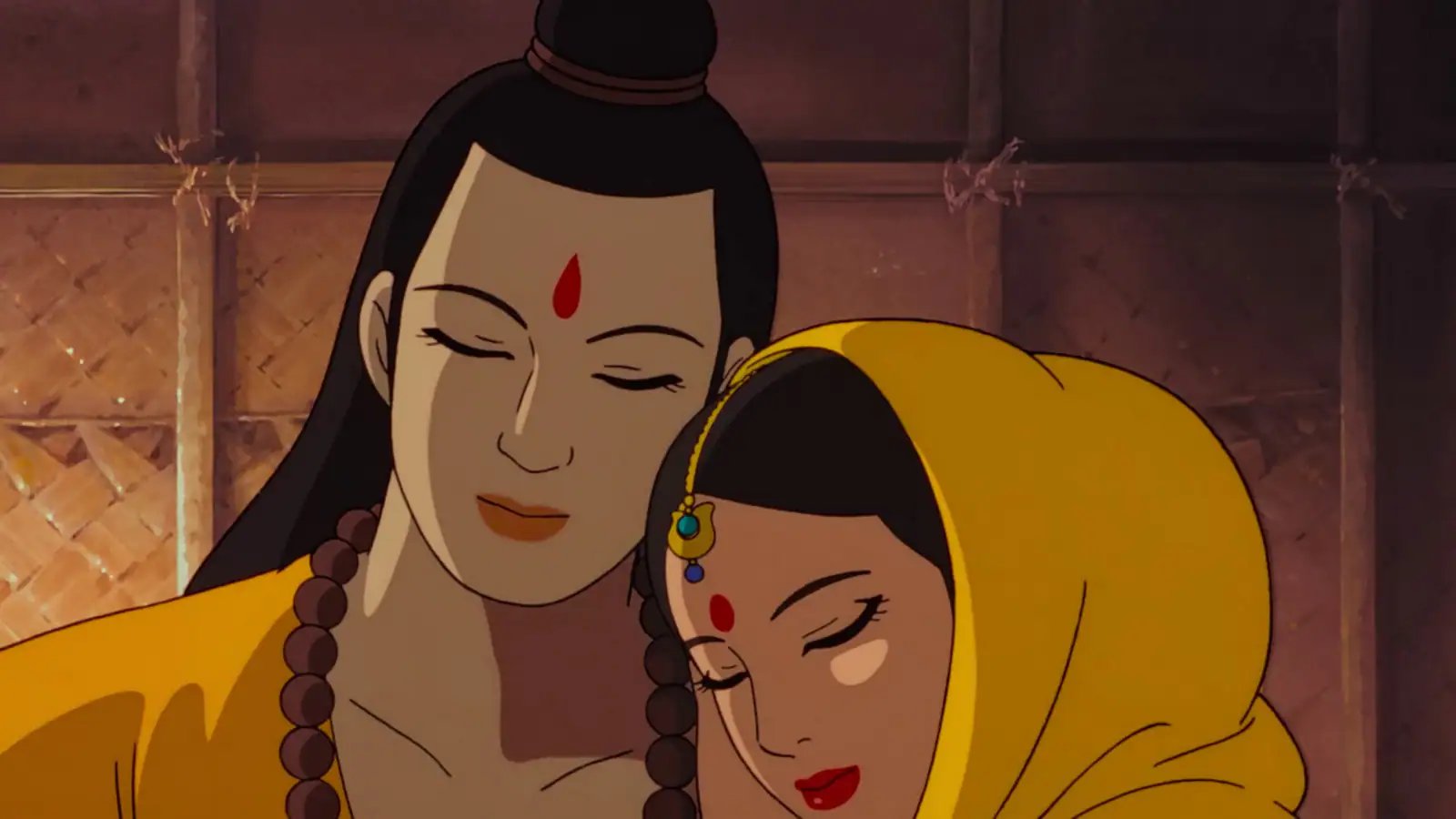
The first thing that strikes you Ramayana: The Legend of Prince Rama It has a visual language. Rather than trying to recreate the epic through realistic-looking characters or excessive spectacle, the film embraces traditional hand-drawn animation and allows its images to do much of the storytelling.
There is something truly beautiful about the way the filmmaker imagines Ayodhya, the jungles, the palaces and Lanka.
The backgrounds are highly detailed, the landscape has a distinct personality, and the use of color gives the film an almost painterly quality. The transition between the peaceful jungle settings and the chaos of the battlefield is particularly impressive.
What makes it even more impressive is the scale of production. The film brought together around 450 Japanese and Indian actors and took several years to complete. Over 100,000 hand-drawn animation cells went into its creation.
At a time when international collaborations did not facilitate emails, video calls or digital file transfers, teams worked across countries to bring the project together.
And you can see that hard work on screen.
The animation isn’t necessarily flawless by contemporary standards. Some character movements look stiff, facial expressions can feel limited, and some action sequences lack the fluidity that today’s audience is used to. However, the artwork has aged very well. The hand-painted backgrounds, in particular, have a warmth that makes the film visually unique even after all these years.
The 4K restoration certainly helps bring out colors and fine details, but the underlying craftsmanship deserves credit.
Rama, Sita and Ravana: familiar characters, familiar interpretations
The film follows the well-known journey of Rajkumar Ram, who was exiled from Ayodhya for 14 years after a palace conspiracy involving Kaikeyi. Along with Sita and Lakshmana, he begins life in the forest, only to have their peaceful existence disrupted when Ravana abducts Sita.
This is followed by Rama’s search for his wife, his alliance with Sugriva and the Vanara army, Hanuman’s journey to Lanka, the construction of Ram Setu and the final battle against Ravana.
For anyone familiar with the epic, there are few surprises. However, the film’s greatest achievement is how skillfully it translates a vast story into an animated feature without feeling like a collection of disconnected episodes.
Rama is presented as the ideal prince: creative, compassionate, courageous and unwavering in his sense of duty. There is little attempt to explore his inner contradictions or the moral dilemmas that have made his character the subject of countless interpretations.
Meanwhile, Sita is depicted with grace and dignity. Her devotion to Rama is central to the narrative, but her characterization also reveals a limitation of the film. Much of his journey revolves around being kidnapped, waiting for rescue and becoming the emotional motivation behind Rama’s war.
On the other hand, Ravana is a formidable opponent. His ten-headed appearance, magnificent palace and commanding presence make him a formidable visual antagonist. Yet, the film does not spend much time exploring the intellectual, scholarly or more complex aspects of his personality. He is largely positioned as the embodiment of arrogance and evil.
The characters are recognizable, and the film knows exactly how the audience is expected to perceive them. But this familiarity sometimes comes at the cost of complexity.
Hanuman is an absolute scene-stealer
If there is one character who constantly brings energy and personality to the film, it is Hanuman.
His introduction, his devotion to Rama, his journey to Lanka and his confrontation with Ravana’s forces are among the most entertaining parts of the narrative. The film understands that Hanuman is not just a supporting character, but an integral part of India’s emotional and adventurous fabric. The Ramayana.
His leap across the sea, his meeting with Sita and especially, the sequence in which he carries a mountain of medicinal herbs to save Lakshmana are beautifully imagined.
The latter moment remains one of the most memorable moments of the film. It’s an example of how animation can make extraordinary mythological images feel truly magical without relying on photorealistic effects.
There is also a certain lightness in Hanuman’s character that provides relief in otherwise serious proceedings. His devotion never feels like an afterthought, and the film gives him plenty of space to leave a lasting impression.
Music deserves its own praise
One cannot discuss this film without talking about Vanraj Bhatia’s music.
The soundtrack adds considerable emotional weight to the narrative, especially through its Sanskrit compositions. Rather than presenting music as background decoration, the film uses it to establish the spiritual and cultural atmosphere of the story.
The musical passages along Rama’s journey, the vanara army and the final confrontation with Ravana lend a sense of grandeur to the narrative without making everything unnecessarily bombastic.
The decision to retain the Sanskrit songs in the restored versions is particularly impressive. They give the film a cultural quality that might have been lost in translation.
For a generation accustomed to mythological films that rely heavily on thunderous background scores and dramatic musical cues, there is something refreshing about restraint.
Has it aged well? More than you expect
This is perhaps the most interesting question about the film.
Animation has undergone a massive transformation since the early 1990s. Contemporary audiences are familiar with elaborate CGI, motion capture, sophisticated character designs and vast digital worlds. Against that backdrop, a traditionally animated film from 1993 could easily feel dated.
Surprisingly, this does not happen.
The film’s visual imagination remains its greatest asset. Its landscapes, architecture, character designs and use of colors have a distinct artistic identity. The 4K restoration makes these details easier to appreciate, but it’s the original artwork that gives the film its lasting appeal.
More importantly, the film doesn’t feel like it’s trying too hard to impress its audience. It is comfortable with its storytelling style.
However, not everything ages equally well. The pacing can feel uneven, especially in the second half, where the narrative moves from one major event to another. Some emotional developments receive less attention than they deserve, while some supporting characters are introduced without enough room to make an impact.
Dialogue and voice acting can also feel in theatrical spaces. It’s not necessarily a deal breaker, but viewers accustomed to more naturalistic performances may take some time to settle into the film.
Its story is straightforward, sometimes to a fault. But the visual craftsmanship more than makes up for many of these shortcomings.
Where the film could have done better
Appreciating a film doesn’t mean ignoring its limitations. And while Ramayana: The Legend of Prince Rama An honest adaptation, there are aspects of its storytelling that deserve a closer look.
The most noticeable limitation is the treatment of Sita. Despite being one of the central figures of the epic, he is defined by his relationship with Rama and his position in the larger conflict. His emotional experience is acknowledged, but his point of view rarely drives the narrative independently.
The film also presents Soorpanakha’s humiliation as an episode that moves the story towards the larger conflict without spending much time examining the violence and gender dynamics involved. From a contemporary perspective, this sequence can feel uncomfortable, especially when the consequences of the event become more important to the screenplay than the woman at its center.
There is also the question of how the film presents morality. Rama is almost completely idealized, while Ravana is largely antagonized. The distinction between good and evil is deliberately made clear, leaving little room for moral ambiguities that The Ramayana Such an interesting lesson to revisit.
Interestingly, the film version of the epic also omits several episodes associated with its later parts. The RamayanaIn which Rama questions Sita’s loyalty, her subsequent exile and the story of Lava and Kush.
This is an important creative choice. This gives the film a more reverent and celebratory conclusion, but it also means that audiences looking for a more comprehensive exploration of the epic’s difficult questions won’t find it here.
The film is closer to the devotional tradition of Tulsidas’ Ramacharitmanas than to Valmiki’s complete rendition. The Ramayana. It focuses on Rama’s journey, battle against Ravana and his triumphant return to Ayodhya.
These omissions do not necessarily fail the film. An animated feature cannot contain every episode of an epic as vast as that The Ramayana. However, it must be acknowledged that the version presented here is a selective interpretation, and not the whole story.
Final decision
Ramayana: The Legend of Prince Rama This is not an innocent film, nor is it an adaptation that tries to reinvent the epic for a contemporary audience. It is a largely traditional, reverent retelling that prioritizes visual storytelling, cultural authenticity and the emotional familiarity of a story passed down through the generations.
And maybe that’s why it works.
For Gen Z audiences, the film offers an interesting alternative to the increasingly spectacle-driven approach of mythic cinema. It reminds us that scale isn’t always about the number of visual effects, the size of the production budget or how many screens a film opens on. Sometimes, it’s about the thought that goes into creating a single frame.
There are storytelling choices one could question, characters one wishes received more depth and moments where the pacing could have been tighter. But the film’s artistic sincerity is hard to dismiss.
More than 30 years after its completion, Ramayana: The Legend of Prince Rama Still has the ability to hold your attention. It may not have the technical polish of contemporary animation, but it has something that’s hard enough to produce: a unique visual identity and a genuine love for the story it’s telling.