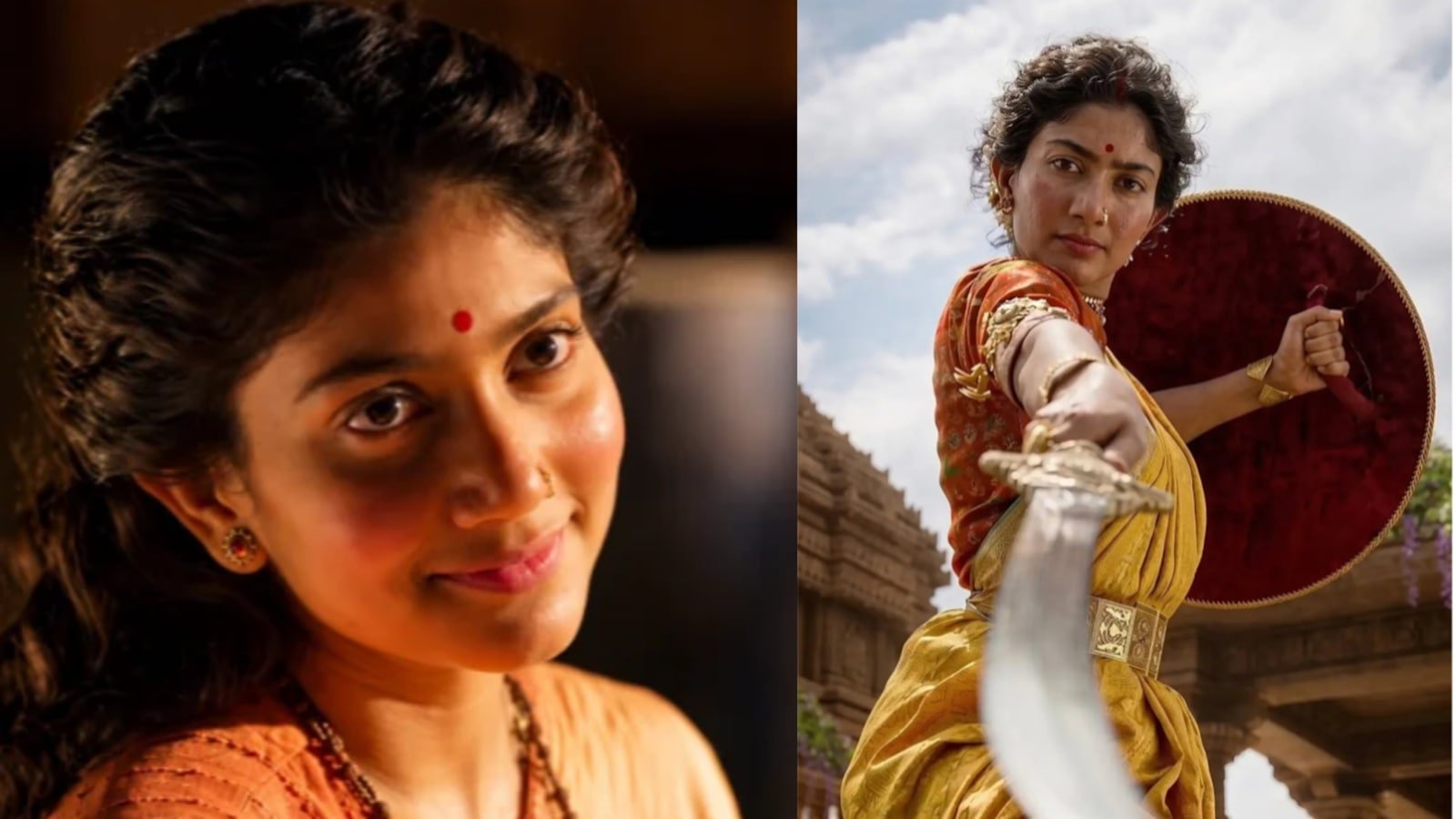
“Sita picked up the Lankan quiver. There were some arrows in it. She quickly strapped it around her back and shoulder. She picked up the bow. And ran, ran hard! Toward the makeshift camp. She had to kill another Lankan soldier before her team arrived and warned.”
Before the world saw Sai Pallavi as a warrior Sita in Nitesh Tiwari’s film The RamayanaAmish Tripathi painted a picture of him in the opening chapter of his book with these words, Sita: Warrior of Mithila (2017) nearly a decade ago.
It was Tripathi’s second book in the Ram Chandra series which was released later Rama: Descendant of Ikshvaku (2015).
The portrayal of the warrior Sita in pop culture was unusual until Nitesh Tiwari’s time. The Ramayana Made it mainstream.
Mythologists have read about him; Writers have reimagined him in fiction.
The idea of a warrior Sita has probably been analyzed and disseminated in literary circles by those specializing in the epic Ramayana and its many interpretations.
But 4,000 crore rupees The RamayanaDominating the pop culture conversation for over a year now, ‘Yodha Sita’ has made social media the talk of the town, the subject of making reels, the basis for exchanging heated opinions about who Sita is, what she is.
From Valmiki The Ramayana To Tulsida Ramcharitmanas to The amazing Ramayana For the imaginations of Amish Tripathi and Chitra Banerjee Divakaruni (with references to Valmiki), Sita has come a long way, as have her readers and viewers.
A symbol of courage, endurance and resilience, Sita is often celebrated for her inner spirit in various guises. The Ramayana. But was she ever a warrior fighting on the battlefield? Physical or mental power, what exactly is Sita?
There is probably no single answer to these questions.
“Warrior Sita is no problem”
“As I send The Enchanted Forest In the world, I seek the blessings of Sita, goddess, daughter, sister, lover, warrior, mother – and a role model for women around the world. I pray that this novel will sink deep into the hearts of readers, regardless of their gender; Because Sita’s story has much to inspire and comfort us all.” Indian-American writer Chitra Banerjee Divakaruni calls Sita a ‘warrior’ in the prologue of her fiction. The Enchanted Forest (2019).
When Divakaruni called Sita a warrior, what did he really mean?
“A warrior is someone who is physically and mentally courageous. A warrior can stand up to wrongs like Sita. As a result, Ravana does not touch her, he respects her great mental strength. Her warrior strength allows Sita to raise two children (Luv and Kush) alone in the forest without her husband or family. The amazing Ramayana)” explains Divakaruni NDTV
Divakaruni has yet to watch the Ranbir Kapoor-Sai Pallavi film. His observation is based on the film’s trailer, which shows Sai Pallavi wielding a sword.
When asked if portraying Sita as a warrior robs the character of her dignity, Divakaruni emphatically says “No”.
But in his view Sita’s physical strength and mental strength are not mutually exclusive.
“Since I haven’t seen the film yet, I can’t comment on this particular portrayal. But for it to work well, one needs to show her mental strength and values when she’s fighting,” Divakaruni tells us.
Citing sources from Valmiki Ramayana, Adbhuta Ramayana, Kamba Ramayana, And Bengali Kritibasi RamayanaDivakaruni’s perception of Sita in her book was based on these ideas: Sita is a human being with human failings, Sita’s quiet courage can be seen as meek.
The warrior Sita may upset the internet and a large section of academia, but Divakaruni doesn’t mind the portrayal.
“I don’t agree that warrior Sita is a problem in itself,” she adds.
“Worst Case of Women Empowerment”
While a large section of the internet embraced Sai Pallavi’s warrior Sita, India scholar Narsingh Prasad Bhaduri called the portrayal “a case of female empowerment at its worst”.
Has composed books like Bhaduri Balmikir Ram O Ramayana And RamayanaSaid that there is no warrior of Sita in Valmikiji The Ramayana Or of Tulsidas Ramcharitmanas.
On the other hand, he argued that according to Valmiki’s version, Sita forbade Rama to have weapons with her when they were in exile in the forest of Panchavati.
“There is no reference to a warrior Sita in The Ramayana; Neither in Valmiki nor in Tulsidas. In Valmiki The RamayanaSita also forbade Rama from fighting. When they first left Ayodhya and faced them the monster In the forest, Sita asks Rama not to keep weapons with her. He argued that people react strongly if they see a person with weapons. So, it was Sita’s prudence or practicality that prevented Rama from fighting,” Bhaduri tells us.
The depiction of a warrior Sita is, in Bhaduri’s view, a “perversion of the epic”.
” has many interpretations The Ramayana. In an Indonesian version, Sita is Rama’s sister. But our reference point must be the core The Ramayana By Valmiki,” Bhaduri said when asked about it The amazing RamayanaIn which the warrior Sita is mentioned.
what The amazing Ramayana Said about Sita?
From Amish Tripathi to Divakaruni to director Nitesh Tiwari, all three mentioned it. The amazing Ramayana As source material for imagining Sita as a warrior.
Valmiki is considered, and Valmiki is considerably less popular than the two The Ramayana and the Awadhi version of Tulsidas, The The amazing Ramayana It is composed in 27 sargas (chapters) of various meters and summarizes the traditional narrative surrounding Rama.
In this version of The amazing RamayanaSita is depicted as taking the fierce and fierce form of Mahakali and slaying the 1,000-headed Ravana (Chapter 23, compiled and translated by Ajay Kumar Chavacharya)..
“In this canto, Valmiki has erased the one regret or burden that was on his heart, and it was to show that Sita was not meek and weak, but very powerful, powerful, valiant, effective and powerful as Shakti called her, which she really was,” read the translation.
Alluding to the destructive image of Mahakali, the depiction of Sita in this version depicts her as the goddess of death, wreaking havoc on the battlefield when Rama’s army was failing.
“Seeing Sri Rama mortally wounded and lying unconscious on the chariot, Sita manifests her true form as the cosmic force called ‘Shakti’, before whom nothing can stand. She assumed a monstrous, terrifying and extremely terrifying form of ‘Mahakali’, literally the great goddess of death, destruction and destruction, and reenacted a doomsday scene on the battlefield. Within a short time the entire giant army including their thousand-headed king Ravana was killed. Meanwhile, thousands of terrifying war spirits appeared from every single hair on Mahakali’s body, and these terrible ghostly spirits used to bowl over the severed heads of monsters scattered everywhere on the battlefield. His fierce anger, rage and revenge broke all boundaries, and the whole world was on the verge of destruction.,” read the description.
Possibly, this version inspired creative writers and directors to paint an unconventional picture of Sita in their work.
“Sita Retains Grace Under Pressure”
While cultural experts differ on the depiction of the warrior Sita, no one doubts her intelligence and strength in any case.
“Sita embodies grace under pressure,” says Divakaruni.
Reluctant to accept Sita’s warrior (physical) portrayal, Bhaduri says that her mental strength is what makes her a strong woman.
The words “warrior” and “combatant” traditionally conjure up images of war. However, they cannot be fully understood without understanding the intended meaning in specific contexts.
Sita was always a warrior in the true sense of the word. She will always be one.
Also Read | Sai Pallavi A.S of the Ramayana Sita: Why is the internet divided over her casting?