In a world where everyone is preoccupied with creating and crafting their image, it’s curious to think what would happen if a man, who has tightly controlled his public image for years, allowed cameras into every corner of his private life? And the bigger question is, when behind that camera is a filmmaker like Nathan Fielder — who has made his mark by blurring the lines between real life and acting — what will the result be?
The documentary film ‘You Can See Everything’ directed by Lance Oppenheim and Nathan Fielder brings this conflict and complexity to the fore. The film focuses on Elizabeth Holmes, the founder of Theranos, who was later convicted of defrauding investors. The story revolves around the 34 days leading up to his imprisonment, featuring intimate portraits of Holmes, his accomplice Billy Evans and family members. But the film also shows that being so close to someone doesn’t always guarantee access to the truth.
Conversations and subtle cues that flow without conflict
Holmes still claims he never lied. This stance continues despite being convicted on fraud charges. In this case, the filmmakers don’t immediately blast every claim with questions like in a traditional investigative documentary. Instead, they let the dialogue flow smoothly and naturally.
At times these silences and pauses make the viewer uncomfortable, but at the same time, the small expressions and reactions of Holmes and those around him speak volumes.
Cinematography: The journey from close-ups to opening frames
In this documentary the language of the camera acts as a narrator:-
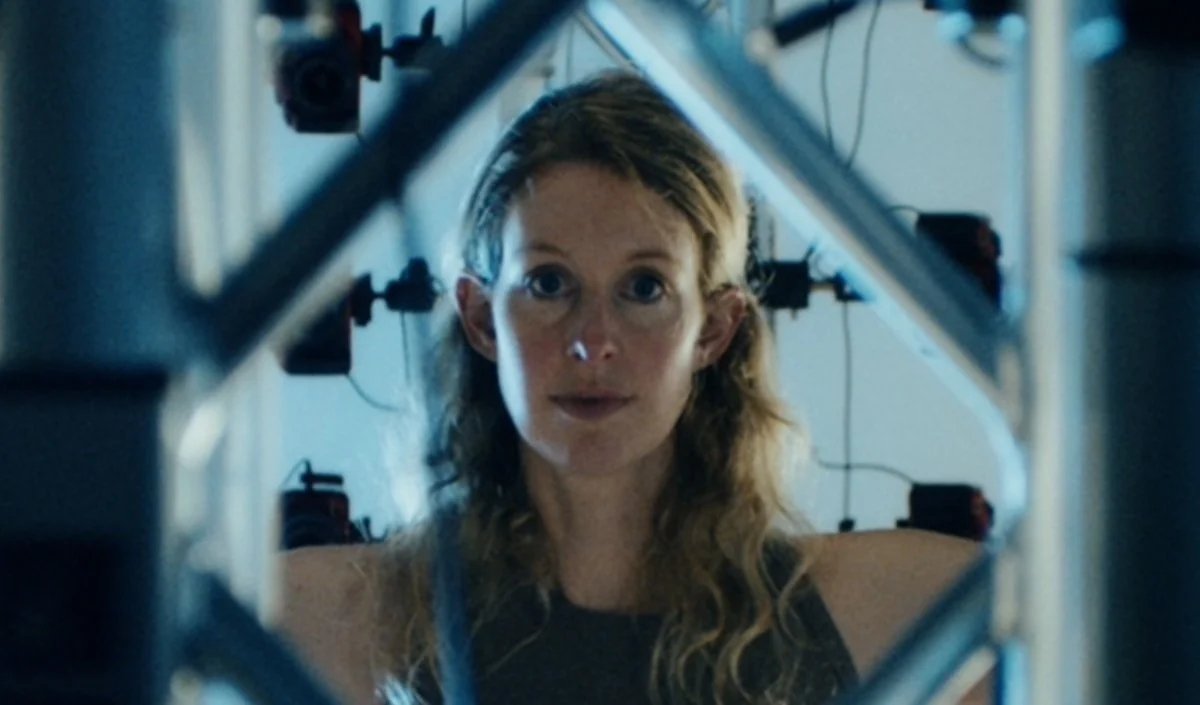
Initial 1 hour 20 minute intensive: In the early part of the film the camera takes the viewer into a kind of dense and intense atmosphere. Too many ‘tight close-up’ shots leave little room for the screen to breathe. Slight facial movements, grunts, hesitations and head nods to control oneself or to reassure oneself are seen so closely that the viewer is unable to relax.
No ‘comfortable distance’: Oppenheim’s framing does not allow the viewer to stand at a distance and watch the events unfold. Every subtle reaction matters, making it difficult to determine whether an apparent emotion is genuine sensitivity, intentional behavior, or a means of escaping an uncomfortable situation.
Amanda Seyfried’s entry: A real mix of reality and acting
The scene changes with the entry of actress Amanda Seyfried – the same actress who played Elizabeth Holmes in ‘The Dropout’. In this documentary she recreates the scenes that the filmmakers were not able to actually capture on camera.
This twist gradually opens up the framing of the camera and creates a new space and openness on the screen through mid-shots and wide compositions. This transition is a sharp contrast to the tight framing of the first part and highlights the differences between the original footage and the recreated scenes. The involvement of Seyfried, who played Holmes in a scripted project in this fictional investigation, adds an interesting and almost surreal layer between reality and drama.
A glimpse of the private sphere and deep suspicion
Despite the intimate access to Holmes’ personal moments, family environment and relationships, it is not easy to make clear how much of the scene before us is natural and how much is manipulated by camera and presentation. The film doesn’t jump to any easy conclusions; Instead, it prompts viewers to think about how perceptions are formed, who is influencing whom, and what is involved in the process taking place in front of the camera.
Conclusion: An impressive film that leaves more questions than answers
Despite having a runtime of almost three hours, ‘You Can See Everything’ retains the audience’s interest. Rather than being bound by a fixed genre, it questions ways of seeing and notions of ‘truth’. The title may give the impression of ‘seeing it all’, but there are limits to what is visible on the screen. After the end of the film, we may not have all the answers about Elizabeth Holmes, but many new questions about the difference between reality and performance definitely remain in mind.
This documentary is going to be released in India on November 27.
Entertainment News Hindi Today only on Prabhasakhi
Disclaimer: Prabhasakshi has not edited this news. This news is published from PTI language feed.