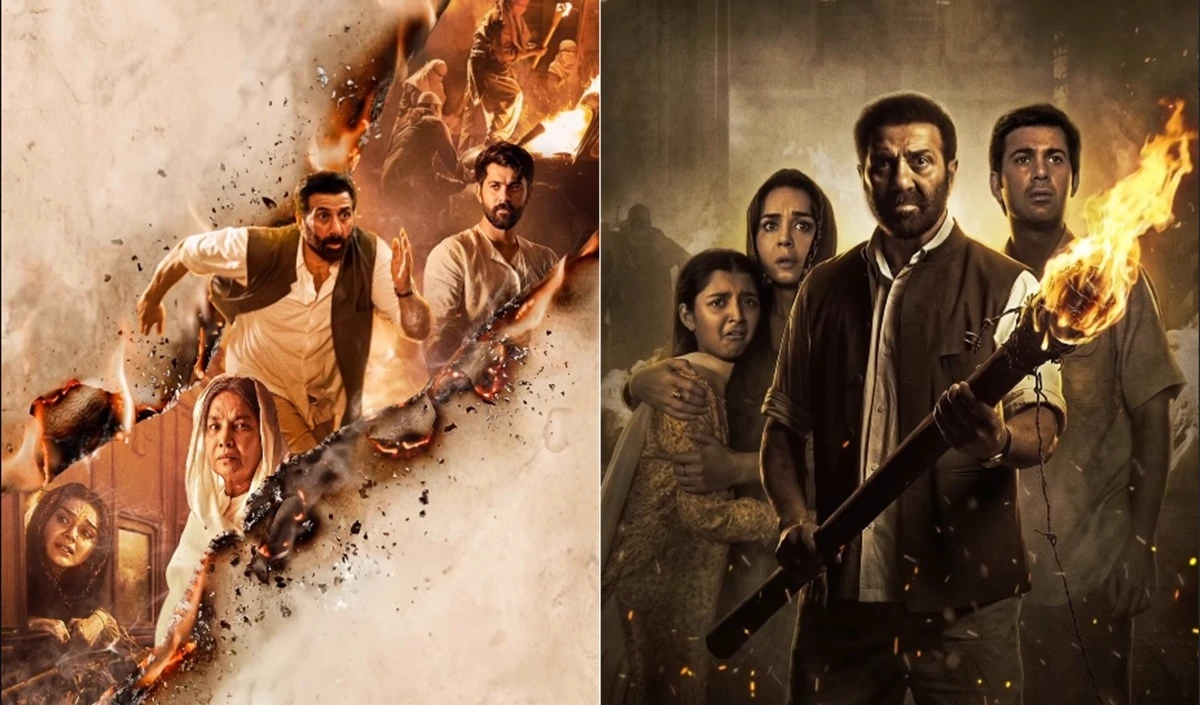
The film ‘Bantwara 1947’, based on Asghar Wajahat’s much-hyped and award-winning play “Jis Lahore Nai Padhya, O Jamya Hi Nai”, has been released in theatres. The duo of director Rajkumar Santoshi and Sunny Deol who gave all-time blockbusters like ‘Ghayal’, ‘Damini’ and ‘Ghatak’ is back on the big screen once again. The film depicts the horrific period of 1947 partition where humanity triumphs in the midst of hatred.
Rating: 3.5/5 stars
Director: Rajkumar Santoshi
Starring: Sunny Deol, Shabana Azmi, Preity Zinta, Ali Fazal, Karan Deol, Abhimanyu Singh
What is the story of the film?
The story of the film is based on the backdrop of Lahore immediately after partition. Moved from Lucknow to Lahore in the midst of crowded refugee camps, Sikandar Mirza’s (Sunny Deol) family – including his wife Hamida (Preity Zinta), son Javed (Karan Deol) and daughter Tanveer – find their new home in a lavish mansion.
The haveli is abandoned by a Hindu family, but the real twist in the story comes when they discover that an old Hindu woman ‘Mai Durgavati’ (Shabana Azmi) is still living in the haveli. The mother flatly refused to leave her home. On the one hand Sikander has the responsibility of protecting his family and on the other hand there is the threat of enemies like Yakub Pehlwan (Abhimnew Singh) who spread hatred. From here begins a very emotional story of two families, mutual bond and clash of humanity.
Distribution 1947: Acting
Sunny Deol has left a strong impression in the character of Sikandar Mirza. He brings his signature speed and powerful presence to the character, especially in the emotional and action-packed segments. Sikandar is ready to go to any extent to protect his family and Deol has played those moments well. Some of his action scenes may remind the audience of ‘Gadar’.
However, Shabana Azmi is the passionate life of this film. Her role as ‘Mai’ is touching, and there are many scenes that have direct impact. Some of their moments are truly heart-wrenching and remembered for a long time.
Preity Zinta is back on the big screen with ‘Bantwara 1947’ after a long break of almost eight years. She left a good impression in the role of Hamida Mirza, although her character could have been portrayed better.
Also Read: Full Break On Divorce News! Sunita Ahuja has withdrawn her divorce petition against Govinda, the manager confirmed
Karan Deol’s character in ‘Javed’ is interesting and has a lot of scope, but his acting could have been better. There was much more to the story for this role, which could not be fully conveyed through acting.
Ali Fazal in the role of Habib Kazmi adds a new dimension to the film. He plays this character in a very calm, poised and almost poetic manner, imbuing the story with a different energy. There is a kind of calmness to her scenes with Alexander, which is in stark contrast to the violence going on around them.
Abhimanyu Singh plays the role of Yakub Pahlwan and leaves a great impression as the villain. He seems genuinely dangerous and becomes the face of the hatred that the film ultimately seeks to eradicate.
The supporting cast also makes ‘Partition 1947’ much more than just a star-studded story. It really is a movie with a great cast. Khushi Hazare has done a good job in the role of Tanveer Mirza, while supporting actors like Kanika Kapoor, Esha Sandhir, Khalid Siddiqui, Rukhsar Rahman, Parminder Singh Kanth, Shivika Rishi, Ambika Nagwani, Pankaj Raina, Rajan Modi and Chandan Dilawar have also contributed to the story.
Also Read: Awarpan 2 Creates History! 100 crore in 5 days, Emraan Hashmi’s first solo film, ‘Kabir Singh’ and ‘Sooryavanshi’ on par
Division 1947: direction
Rajkumar Santoshi’s direction brilliantly captures the pain shared by people on both sides of the India-Pakistan divide. The film emphasizes that Partition did not just divide the country. It tore apart families and forced countless people to start their lives anew.
The plot is strong and the subject matter naturally has great emotional depth. The first half of the film is very good and keeps the audience engaged. However, the second part feels a little drawn out.
The direction and editing could have been better at some places, especially when the film starts to feel repetitive. Sunny Deol’s action and hero scenes are perhaps more than enough for the emotional atmosphere of the film. Some scenes are overly dramatic and exaggerated, which doesn’t always fit with the more personal and emotional tone of the film. There are emotional moments in the dialogues, but some dialogues could have been more effective and suited to the scenes.
Distribution 1947: Music
The background score does a good job in reinforcing the emotional atmosphere of the film. The good thing is that the story doesn’t get bogged down by useless songs.
A song filmed on Shabana Azmi stands out for its emotional quality. Lord Rama and Queen Kaushalya are mentioned, which adds another layer to the emotional aspect of the film.
Distribution 1947: Technical Analysis
Santoshi and Deol have worked together in action based films before and ‘Bantwara 1947’ once again gives the actors a chance to do a lot of physical work. Technically, the film does a good job of recreating the atmosphere of those turbulent times.
The production design and costumes help create the period atmosphere, while the cinematography conveys the gloom and uncertainty surrounding the characters.
However, the film’s pace slows down at times, especially when it strays from its central emotional struggle. The background score supports the dramatic sections, but at times it forces the emotion rather than letting it develop naturally.
There is a major technical flaw in the way such an emotional and profound subject is presented. Split’s story should maintain depth and interest, but frequent audio cuts and dips can spoil the viewing experience and reduce the impact of the story.
What is the best thing about ‘Partition 1947’?
The biggest strength of ‘Partition 1947’ is undoubtedly its subject matter. Instead of showing partition as a purely political event, the film tries to see it from the perspective of the lives of ordinary people who were forced to leave their homes, memories and identities.
Shabana Azmi’s character ‘Mai’ depicts the pain of a person who has lost almost everything. Also, the film creates a heartwarming relationship between Mai and Sikandar. A Muslim man and an elderly Hindu woman, caught on opposite sides of a divide that should separate them, gradually support each other and begin to feel like family.
It is in this relationship that the main idea of the film emerges most clearly. The story is ultimately more interested in humanity living despite those distances than in the distances created by the Partition.
Partition 1947: Should I Watch It?
Countries can be divided. There may be division of houses. Land may be divided. But humanity cannot be divided. This idea is the main premise of ‘Partition 1947’, which has all the familiar elements of Partition films: action, family, patriotism, emotions and a strong central conflict in the story.
The second half of the film could have been tighter, and the dialogues could have been sharper. At times the bravado and action could have been a little less dramatic, especially in scenes where the exaggerated action detracts from the emotional atmosphere of the film.
Yet the story is the biggest strength of this film. It has such an emotional impact and such a strong central conflict of the story that ‘Partition 1947’ deserves to be watched at least once.
3.5 out of 5 stars for ‘Partition 1947’.