Filmmaker Sanjay Gupta, known for directing films like Kante, the traveler And Firing at Lokhandwalahas died His death marks the end of a career spanning nearly three decades, during which he explored crime dramas, gangster stories and the dark side of the underworld.
One of his most talked about movies eat (2002), a project that came together when the filmmaker was going through one of the lowest phases of his professional life.
Filmmaker Sanjay Gupta was going through the toughest phase of his career when he decided to make Kante. After going five years without signing a film, two of his previous projects failing at the box office and two others stuck in production, Gupta was struggling to find his feet in the industry.
Little did he know that the film he conceived during this time would eventually become one of the most talked about projects of his career.
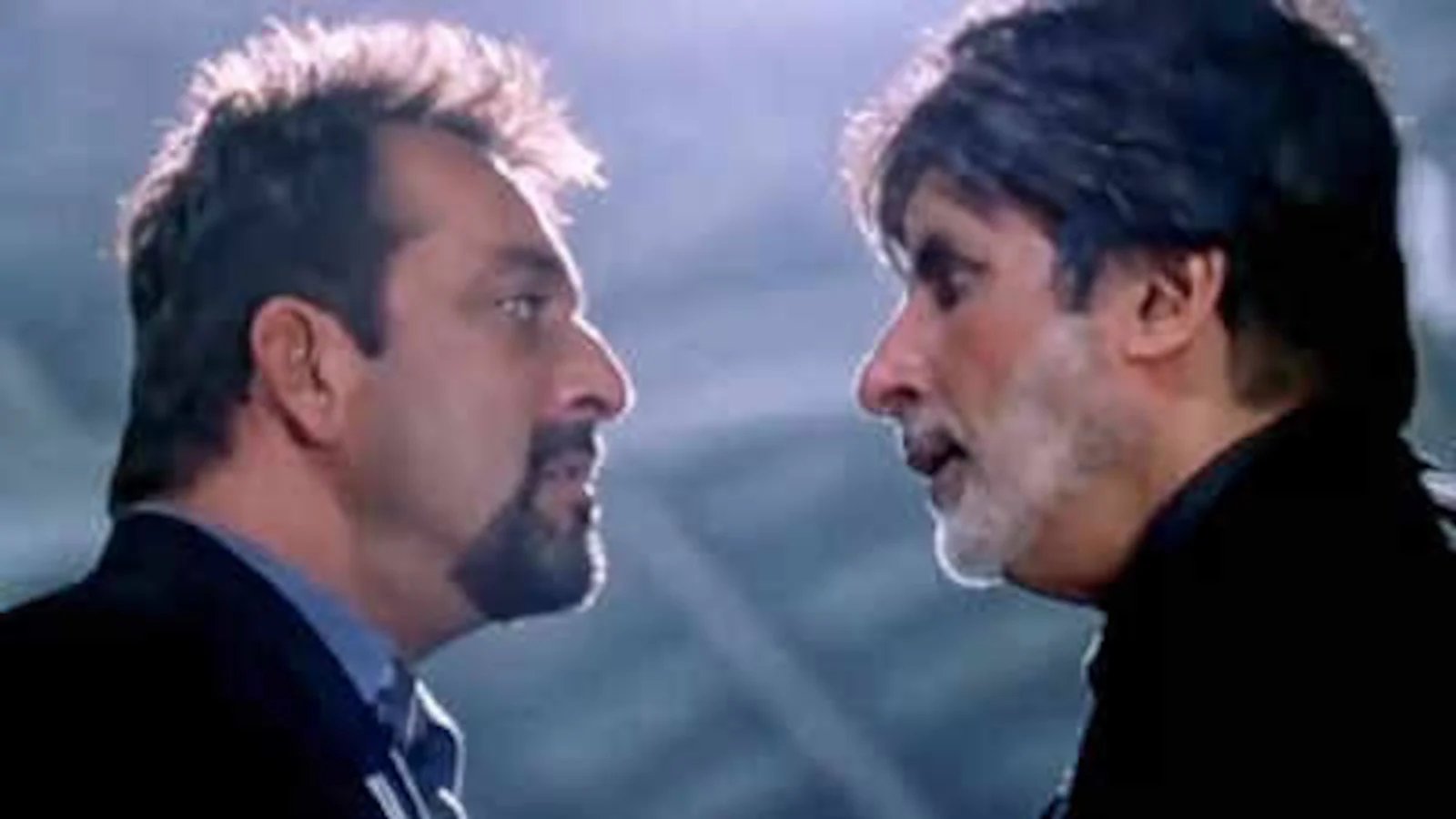
Released in 2002, eat Amitabh Bachchan, Sanjay Dutt, Sunil Shetty, Kumar Gaurav, Lucky Ali and Mahesh Manjrekar brought together an unusual ensemble. Centered on six men who plan a bank robbery in Los Angeles, the film combines crime, betrayal and unexpected twists with a distinct visual style.
Its narrative has been compared to that of Quentin Tarantino Reservoir dogsHowever, Gupta has said that the idea for the film came from a different place.
More than two decades after its release, Kante continues to enjoy a cult following. From its unconventional casting choices and memorable dialogues to its music and behind-the-scenes stories, the film has been an important part of Gupta’s filmography.
In a chat with Indian Express, the filmmaker opened up about the circumstances that led him to make the fork, how he put together the challenges of shooting the film in Los Angeles. Here’s how a project conceived during a low point in his career eventually became a landmark film.
Sanjay Gupta did eat When no one wanted to work with him
For Gupta, Kante was not born out of a desire to make a stylish gangster film. This comes from a period of professional frustration when he was finding it difficult to get projects off the ground.
Recalling his state of mind at the time, the filmmaker said, “I was educated. I hadn’t signed a film for five years, two of my films had bombed, and the other two weren’t getting done. Nobody was touching me with a barge pole. I didn’t know what to do next; I was very frustrated with the whole system. I was working with filmmakers.”
The initial idea was quite different from what eventually reached theaters. Gupta wanted to make a film about six youths from Mumbai’s Dagdi Chawal who carry out an unusual heist, only to find themselves surrounded by the police after returning home.
He traced the idea to the Tribhovandas Bhimji Zaveri & Sons jewelery heist case, which also served as the inspiration for the 2013 film Special 26.
Gupta initially approached actor and writer Makrand Deshpande to develop the story as a play. He later pitched the idea to Sanjay Dutt, who he wanted to join the project as a presenter. However, Dutt was interested in playing Aju, one of the central characters.
The filmmaker was initially hesitant as the project involved new actors. He believed that casting Dutt meant finding five other actors of comparable stature. With no producer on board, Dutt suggested they join hands and start their own production company.
This eventually led to the formation of White Feather Films, which were initially called Our Kind of Films.
Was inspired by the fork Reservoir dogs? Sanjay Gupta tells about its origin
One of the biggest talking points around eat It has similarities with Tarantino’s 1992 film Reservoir dogs. Both films revolve around a group of criminals and a heist that takes an unexpected turn. However, Gupta has repeatedly disputed the idea that his film was merely a remake.
The film’s setting has changed after Los Angeles-based producer Raju Patel expressed interest in making a Hindi film in the US. Gupta then began exploring the possibility of setting his characters in Los Angeles instead of Mumbai.
He told that s The usual suspects also influenced his thinking, particularly the premise of strangers coming together in lock-ups. Ringo Lam’s City on Fire was another reference point, while Gupta also mentioned Vinod Khanna. the traitor As a film with a similar story.
address the comparison with Reservoir dogsHe said, “The whole world thinks eat Reservoir is dogs, no it isn’t. The second half of the film has some similarities but Kante’s debut was the Tribhovandas Bhimji Zaveri & Sons jewelers robbery case, which was later made into the film Special 26. To this day it remains unsolved.”
Gupta also pointed out a structural difference between the two films, explaining that the warehouse sequence in Fork begins much later in the narrative, unlike Reservoir Dogs, which opens with the characters already inside the warehouse.
He further revealed that Tarantino had admired Kante and Backstory Gupta had shared about its making.
Amitabh Bachchan, Sanjay Dutt and Sunil Shetty agree to waive their fees
Assembling the cast was surprisingly not a difficult task for Gupta. According to him, everyone came on board during the first iteration, although one of his initial casting choices didn’t work out.
The filmmaker had originally approached Akshay Khanna for the role played by Lucky Ali. However, after several statements, Khanna remained undecided about whether his character was a hero or a villain.
Gupta later considered Lucky Ali for the part. He was already in talks with the singer-actor regarding the film’s music, and the casting suggestion received an immediate response from Sanjay Dutt. Ali agreed to come on board.
Amitabh Bachchan’s casting also happened suddenly. Gupta recalled that Dutt called the veteran actor, who agreed to the film even before the detailed description.
However, one of the most significant moments during the making of Conte came when the production ran into financial trouble in Los Angeles.
On the fourth day of shooting, shooting had to be halted after union members intervened as the team was trying to work outside the union system. The resulting confusion pushed up budgets, leaving producers uncertain about how to proceed.
It was then that the actors stepped in to help keep the project alive. Gupta revealed that five of the six lead actors, except Kumar Gaurav, have waived their remuneration.
Recalling the gesture, he said, “It was Mr. Bachchan who came forward and said, ‘I don’t want any money, but let’s do the film.’ Then Sanjay and Sunil said no, and they had a huge amount. Mahesh and Lucky’s amount was less.”
Kumar Gaurav’s remuneration was handled separately by producer Raju Patel, who was also his brother-in-law. Gupta described the actor’s decision to waive his fees as unconditional support that helped the film overcome a major production hurdle.
eat It was shot in 33 days, but its post-production took a lot of time
Despite the challenges, eat was completed on an unusually fast shooting schedule. The entire film was shot in just 33 days in Los Angeles, making it Gupta’s fastest production.
Post-production, however, took considerably longer. The filmmaker described the project as his most important filmmaking experience, with several incidents making the shoot particularly memorable.
One such incident was the September 11 terrorist attack in America. The team began shooting in the first week of September 2001, and Gupta was on his way to the location on September 11 when he heard about the first plane crashing into one of the World Trade Center towers.
When he arrived on set, the crew watched the second plane crash into the second tower on a small television. The shoot was immediately put on hold, and the production faced further difficulties as several locations became unavailable.
The situation was particularly worrisome for the team because Gupta’s first assistant director had a brother who was inside one of the buildings.
Production finally resumed after a grueling four-day break.
Amitabh Bachchan had a condition regarding the offensive dialogues of the film
Another interesting aspect of eat It had a language. The film features several characters who often exchange insults, which become an important part of its sinister atmosphere.
Gupta recalled that Bachchan had initially made it clear that he was not comfortable using offensive language on screen. However, the actor had no objection to other characters doing the same.
Recalling their conversation, Gupta said, “Once, Mr. Bachchan took me aside and said, ‘Sanjay I will not swear, this is something I have never done, so I will not do it. If someone else is swearing, I have no problem’.”
Gupta accepted the condition. However, Bachchan eventually delivered a memorable line in the film which had a sarcasm.
The filmmaker also recalled an exchange between Sanjay Dutt and Bachchan’s characters, which included the dialogue, “Major sara din tu bhokega ya cutega vi”.
This scene was one of the parts that invited comparisons to Reservoir Dogs , especially due to the latter film’s famous dialogue about barking and biting.
Sanjay Gupta missed out of the fork Success after a near-fatal accident
While eat Becoming the biggest success of Gupta’s career, the filmmaker could not fully experience the excitement surrounding its release.
The film hit the theaters on 20 December 2002. Just seven days later, on December 27, Gupta met with a serious accident while returning from Khandala. His driver hit the car, seriously injuring the filmmaker.
Gupta was admitted to the intensive care unit, where he stayed for 11 weeks. The accident occurred at a time when the film was garnering a lot of attention, meaning he missed out on many of the celebrations and activities surrounding its release.
Looking back on the experience, Gupta described it as the biggest irony of his life. A film that had taken him through years of frustration, an eventful shoot and a challenging production had finally reached audiences, but he was fighting for his life when his breakthrough came.
today, eat One of the defining films of Gupta’s career. What started as an idea during a difficult professional phase eventually roped in some of the biggest names in Hindi cinema and developed into a cult crime drama.