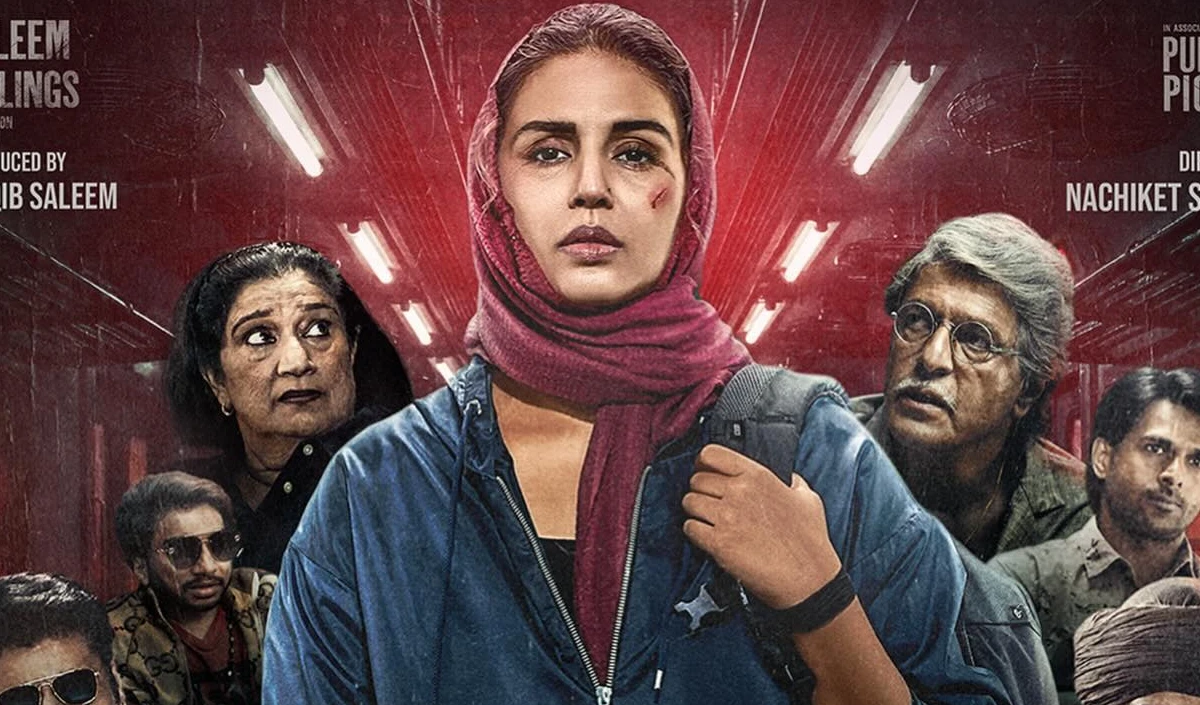
When a cinema takes the risk of breaking away from the traditional masala films and thriller formulas and taking a new path, the attention of cinema lovers is drawn to it. Director Nachiket Samant’s Baby Do Die Do, releasing on the big screen this Friday, is a bold attempt to break the trend of Hindi cinema. The title of the film may seem a little strange or complicated at first listen, but when you delve deeper into the story, the math becomes clear. In fact, the name is derived from the nickname of the main character ‘Baby Karmarkar’ – ‘Kar-Mar-Kar’ i.e. ‘Do, Die, Do’. This 2 hour 5 minute ‘A’ certified action-crime-thriller creates a unique world of pulp fiction and dark humor, where the echo of silence is louder than the sound of weapons.
Story: ‘Hitwoman’ with dark shadows and umbrellas from the past
The film begins not with a bang, but with an eerie silence. The main character ‘Baby’ (Huma Qureshi) can neither speak nor hear. During an unexpected childhood trip, Baby and her twin sister enter an abandoned luxury five-star hotel, where both sisters unwittingly witness a gruesome murder. The ruthless killer strangles Baby’s twin sister to death, while Baby somehow escapes with her life. The spark of revenge that burns in the heart of Baby, who grew up in the shadow of an alcoholic father, takes him far away from a normal life that night.
As Baby grows up, she encounters PM Jain (Chunky Pandey), who brings her into the dark and brutal underworld of contract killing. Instead of turning her physical disability into a weakness, Baby makes it her biggest shield and emerges as the crime world’s most unsullied ‘hitwoman’.
Style of Killing: The way a child is killed varies greatly. Instead of a conventional gun or knife, she uses a specially designed ‘umbrella’, which is as simple in appearance as it is deadly in action.
A spate of high-profile murders in the city has shaken the police department. However, Baby’s real goal is not just to remain a professional assassin; She wants to break through that massive corporate and criminal nexus and get to the real killer of her sister. Meanwhile, love comes knocking in his life, and the story goes beyond revenge and stands at the pinnacle of identity, emotion and redemption.
Acting: Huma’s silence is powerful, Chunky Pandey’s surprise package
Huma Qureshi (Baby): The film rests entirely on Huma’s shoulders and is the most mature performance of her career. Without speaking a single word, just through his eye movements, the subtle lines of his face and his composed body language, he brings the child’s pain and anger to life. Her decision to present herself on screen without any heavy makeup makes the character very real (raw). One moment she turns into a ruthless shooter and the next she turns into a sensitive lover.
Chunky Pandey (PM Jain): Chunky Pandey is the biggest ‘surprise package’ of this film. Completely shedding his old comic image, he terrorizes the screen as a cold, serious and extremely ruthless gang leader of the underworld.
Sikandar Kher (Zafar): Sikandar Kher makes a strong presence in the villainous role of a cunning and greedy builder, which deepens the tension of the story.
Seema Pahwa (DCP Anjum Khan): As always, veteran Seema Pahwa has given a very natural performance. One of his dialogues—”We are police, not heroes”—captures the realistic mood of the film well.
Rachit Singh (Sidhu): As Baby’s lover ‘Sidhu’, Rachit Singh is quite sincere. His character is not that of the traditional and venomous muscular hero, but instead prides himself on being a ‘domestic’ and caring companion. His and Huma’s romance in black-and-white flashback scenes is a breath of fresh air amid the film’s violence.
Apart from this, Vidya Malwade, Himanshu Malik, Rupesh Bene, Arun Kushwaha and Marudhar Shekhawat have done full justice with their small but interesting characters.
Direction and technical aspects: Excellent ‘noir’ treatment
Director Nachiket Samant has molded a very sensitive and bold subject in the mold of commercial entertainment. Instead of giving undue glamor to Mumbai’s crime network, he portrays it as an organized system where violence is simply a business transaction. The pace of the film is fast, which keeps the audience engaged.
Baby Do Die Do: Dark humor, noir treatment and strong direction
Director Nachiket Samant has tried to adapt a bold and sensitive subject in a completely commercial and entertaining format. He describes Mumbai’s crime network not as overly glamorous or glamorous, but as an organized system where violence operates like a business deal. The director’s attempts to strike a balance between dark comedy, suspense and action have been largely successful. The film maintains a brisk pace right from the beginning, so that the audience never gets bored.
Technically the film is quite brilliant. Tojo Xavier’s cinematography is another major highlight of the film. They depict Mumbai’s rain-soaked streets, narrow lanes and dimly lit rooms in the style of classic noir cinema, creating a mysterious and intense atmosphere throughout. The city of Mumbai itself emerges as a silent character in the story. The editing is tight, so the story doesn’t drag on unnecessarily. The action sequences are very stylishly choreographed, especially the murder sequence filmed inside a local train in Mumbai, which is very scary and hair-raising. The background score and music enhance the impact of the scenes, and the songs are woven into the story in such a way that they do not interrupt the flow of the story.
Additionally, the film also contains some interesting contemporary cinematic references, such as the mention of ‘Alpha’ and a queer club number titled ‘Alpha Q’ featuring Saqib Salim. The film also has a smart ‘Easter Egg’ related to Sonakshi Sinha.
Baby Do Die Do: Where did ‘Baby’ go weak?
Despite its many merits, ‘Baby Do Die Do’ also has some shortcomings. The first half takes a long time to set up and the challenges that ‘Baby’ faces come quite late, which can feel a bit dull. However, if you tolerate the initial 10-12 minutes of slowness, the story does not disappoint later.
Also, the film ends at a point that leaves scope for a part 2. However, this turn may not have been necessary. The reason is that the purpose for which the ‘baby’ became a criminal – his desire for revenge – has already been fulfilled. In such a situation, the other half has no personal motive and just continues to commit crimes because once she enters the world of crime, there is no turning back. It seems like a purely commercial endeavour.
Baby Do Die Do: Movie Highlights
The film maintains suspense at every moment and till the end it is difficult to guess what will happen next. The suspense unfolds gradually in the second half. The second half of the film is very well written and has many twists. The climax is the strongest part of the film; It might surprise you and make you feel like “we didn’t expect that”.
The cinematography is stunning; From water drops to long shots, everything is shot beautifully.
Baby Do Die Do: Final Verdict
Despite its flaws, ‘Baby Do Die Do’ is a very honest, bold and entertaining thriller. A major feature of this film is that in an era when women-centric action films are often released directly on OTT platforms, its makers (Saqib Saleem) showed the courage to release it in theatres. This film proves that there is still room for new ideas and experiments in mainstream Hindi cinema.
If you like to watch stylish, slightly dark and suspenseful films that are different from the traditional, formulaic masala films, then you must visit the theater to watch Huma Qureshi’s quiet yet powerful avatar. This movie definitely deserves a place on your watchlist.