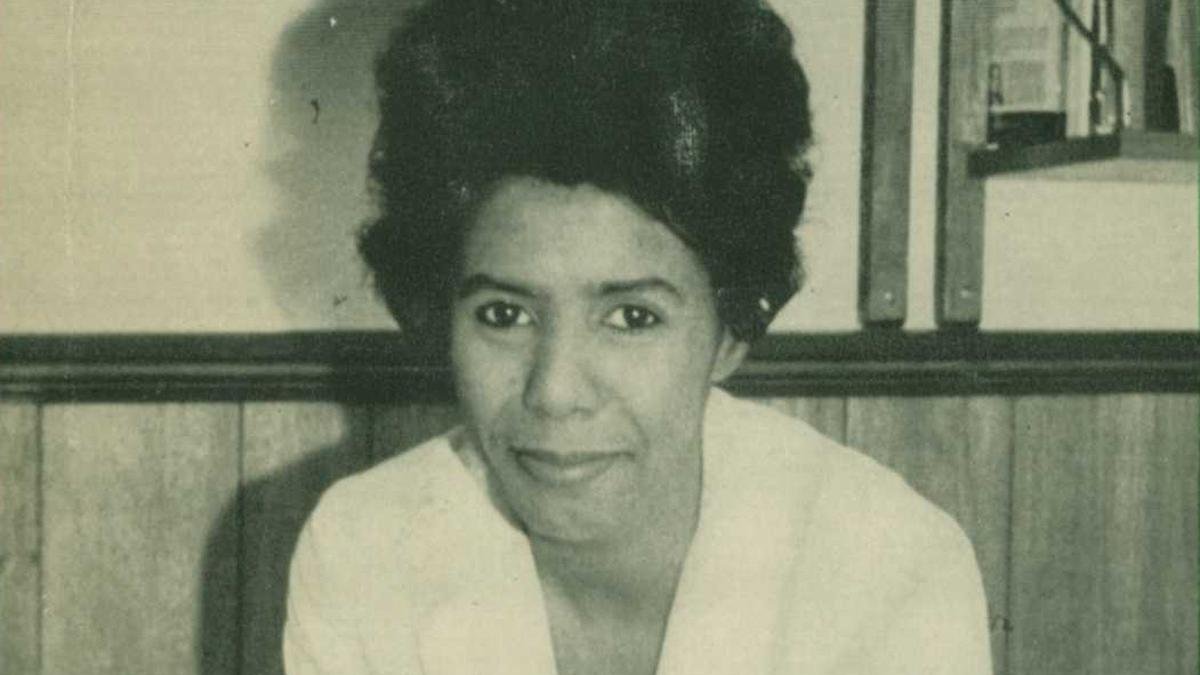
On May 19, 1930, the cry of a newborn baby girl was heard from a corner of Provident Hospital on Chicago’s South Side, as her family proudly waited to welcome her. That small cry became one of the most important and influential voices in black history. This is the story of Lorraine Hansberry – a playwright, writer and activist.
Inspired by the racial conflicts of mid-20th century America, Lorraine Hansberry’s life was a powerful blend of art, activism, and resilience. Born into a prominent black family, Lorraine’s father was a successful real estate broker and political figure, while her mother, Nanny Perry, was a former school teacher. The youngest of four children, Lorraine grew up exposed to people from all sections of society as well as prominent personalities, which probably helped her grow into an exceptionally brave woman who stood her ground.
growing up, revolution style
His childhood was filled with revolutionary moments, which is an understatement, from the family’s move to an all-white neighborhood, to his father’s later legal battles (U.S. Supreme Court in Hansberry v. Lee (1940)) that challenged restrictive housing covenants and struck a blow against segregation.
After majoring in painting at the University of Wisconsin-Madison, Lorraine discovered the world of theater and production. She soon left her studies and moved to New York to pursue art. Here she began her journey of activism, which led her to join newspapers such as Freedom, edited by W. E. B. Du Bois, in which she wrote about Africa, women and peace, criticizing colonialism and racism while reflecting on encounters with African students and leaders. His ideas also supported Pan-Africanism and brought a blend of radical thinking that was against racial and gender oppression.
Lorraine met Robert Nemiroff, a Jewish songwriter and activist, during a protest in 1953 and a new story began on their personal front. His theater career got a break in 1957 when he completed his first play, ‘A Raisin in the Sun’ (originally titled The Crystal Stair). Inspired by his own battles and his family’s battles in the racist American society of that time.
Producers were skeptical that the story of a black family could be successful on Broadway, but Lloyd Richards, the first black director since 1907, supported it. The play, which opened at the Ethel Barrymore Theater on March 11, 1959, broke barriers: the first play by a black woman on Broadway, running for 19 months, spawning the 1961 Sidney Poitier film (Cannes winner), and earning Hansberry a New York Drama Critics Circle Award at the age of 29 – the youngest American and first black playwright to win.
Success and Challenges
Success did not come easily; Sexism and racism in the industry always followed her as she came into limelight very quickly. However, she still managed to empower an entire generation of black artists through her works and personal life.

Lorraine Hansberry. | Photo Credit: Wikimedia Commons
Some of his plays include The Sign in the Sidney Brustein Window (1964), Les Blancs (unfinished, posthumously produced 1970), which criticizes colonialism in a fictional African nation, and The Movement: Documentary of a Struggle for Equality (1959 TV narration). She was also a part of several landmark moments in black history, such as the equality hearings in 1953 and raising funds for the NAACP and the Congress of Racial Equality.

In 1965, she died after battling cancer, leaving behind a legacy for generations. Nemiroff compiled her autobiography, To Be Young, Gifted and Black, a mosaic of letters, diaries, and speeches that became a bestseller and Off-Broadway hit. A ray of hope that was gone too soon, Lorraine Hansberry is a name that remains etched in history and the struggle for equality even in the 21st century.
published – April 13, 2026 08:00 AM IST