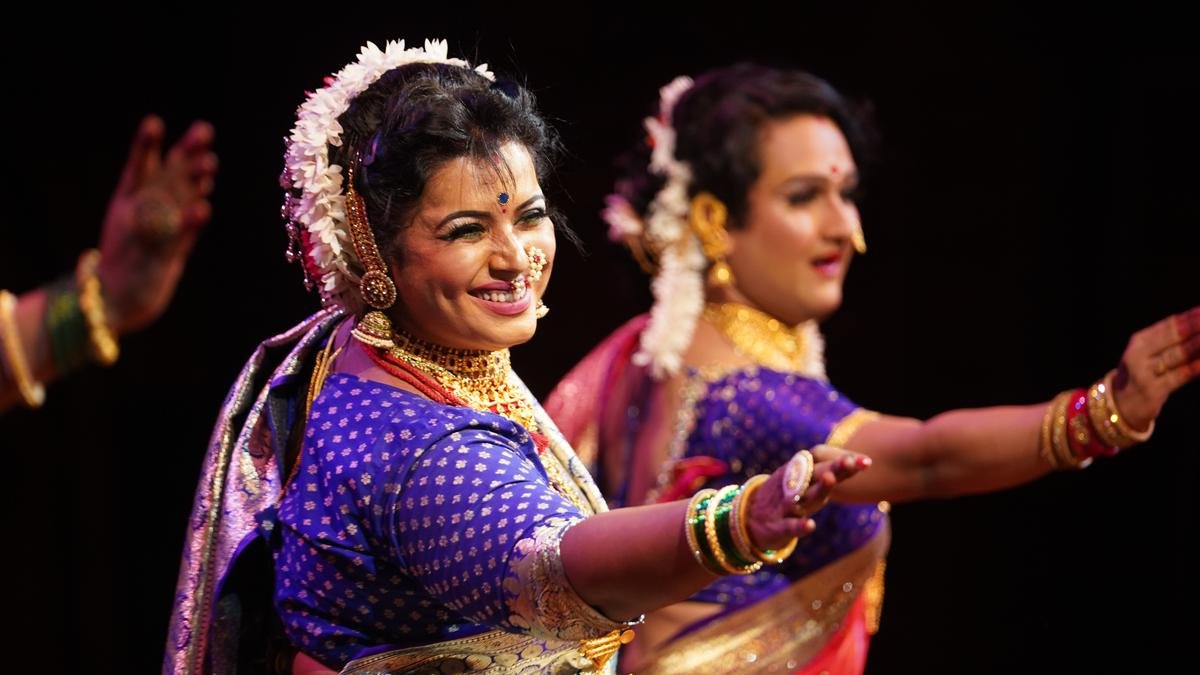
A woman in a nine-yard sari, dancing to the beat of the dholki with anklets tinkling – for many, this is the image of Lavani. But how much do we really know about the woman behind that image?
This will be the central question of Lavanyavati (An Artist of Lavanya), a documentary theater production produced by Kali Billy Productions, which will be screened at The Lab @ Shanta on 1 October.
Lavani, an art form from Maharashtra, was traditionally performed by women from communities such as Bhatu, Kalwat and Dombari, many of whom are from nomadic or OBC (Other Backward Class) communities. Historically, while the performers have been mostly women, in venues such as Tamasha and Sangeet Bari, the audiences have largely been men from dominant communities.
Years ago, when Savitri Medhatul, founder of Kali Billy Productions, began researching Lavani, she realized that its portrayal in popular culture was distorted, with Lavanyavati often being labeled vulgar or treated as the ‘other woman’. He felt this narrative needed to be changed. Savitri will perform in Lavanyavati with a team of six people.
Explaining the choice of documentary theatre, Savitri says, “To counter such fictional narratives woven around Lawani artists, the production has been built around research, oral histories, interviews and personal narratives, using a non-fiction format.”

For Savitri Medhatul, encountering traditional Lavani artists through dramatic stage performances and interactions is the key to changing perceptions of the form. | Photo Credit: Special Arrangement
“Lavanyavati are perceived as either vampires or victims. I wanted to challenge both these ideas and show that Lavanya women are independent, intelligent and artistic entrepreneurs. The problem was never women, but the larger patriarchal society,” she says.
is in the heart of love make up juice (feeling of love). Although its form may be cumbersome, Savitri believes its text can be viewed through a feminist lens, allowing the performance to be seen as an expression of agency and empowerment rather than exploitation.
For him, encountering traditional Lavani artists through dramatic stage performances and interactions is the key to changing perceptions of the form. “Once you meet traditional Lavani artists, you understand that their portrayal in popular media is inaccurate. But it’s important to have that encounter.” Through LavanyavatiThe group hopes to facilitate that encounter by bringing the artists’ stories to urban, middle-class and upper-middle-class audiences, thereby changing the way Lavani is viewed. The production has previously performed in Goa, Mumbai and Delhi
“Everyone talks about the glory of Lavani, but no one talks about the sustenance of these artists,” says Savitri, adding that government support and patronage is essential if the traditional form is to survive.
Over the years, Savitri has also seen positive changes in the way Lavani is approached and understood. The form is no longer confined to the communities that traditionally perform it, Lavani workshops attract people from diverse backgrounds across Maharashtra. The growing interest in learning and performance, she says, provides hope for its continuation.
With the search for new audiences through Hindi cinema and other popular platforms, Lavani’s association with obscenity has also begun to change. The increasing interest for Savitri is a positive sign.
ThroughLavanyavati, she hopes to take that conversation forward. She says, “It’s like a domino effect. Through the exhibit, I hope it will spark more conversations about Lavani while keeping it alive.”
Lavanyavati, a documentary theater production by Kali Billy Productions, will be presented at The Lab@Shanta on Thursday, October 1 at 7 pm.
published – September 30, 2026 03:44 PM IST