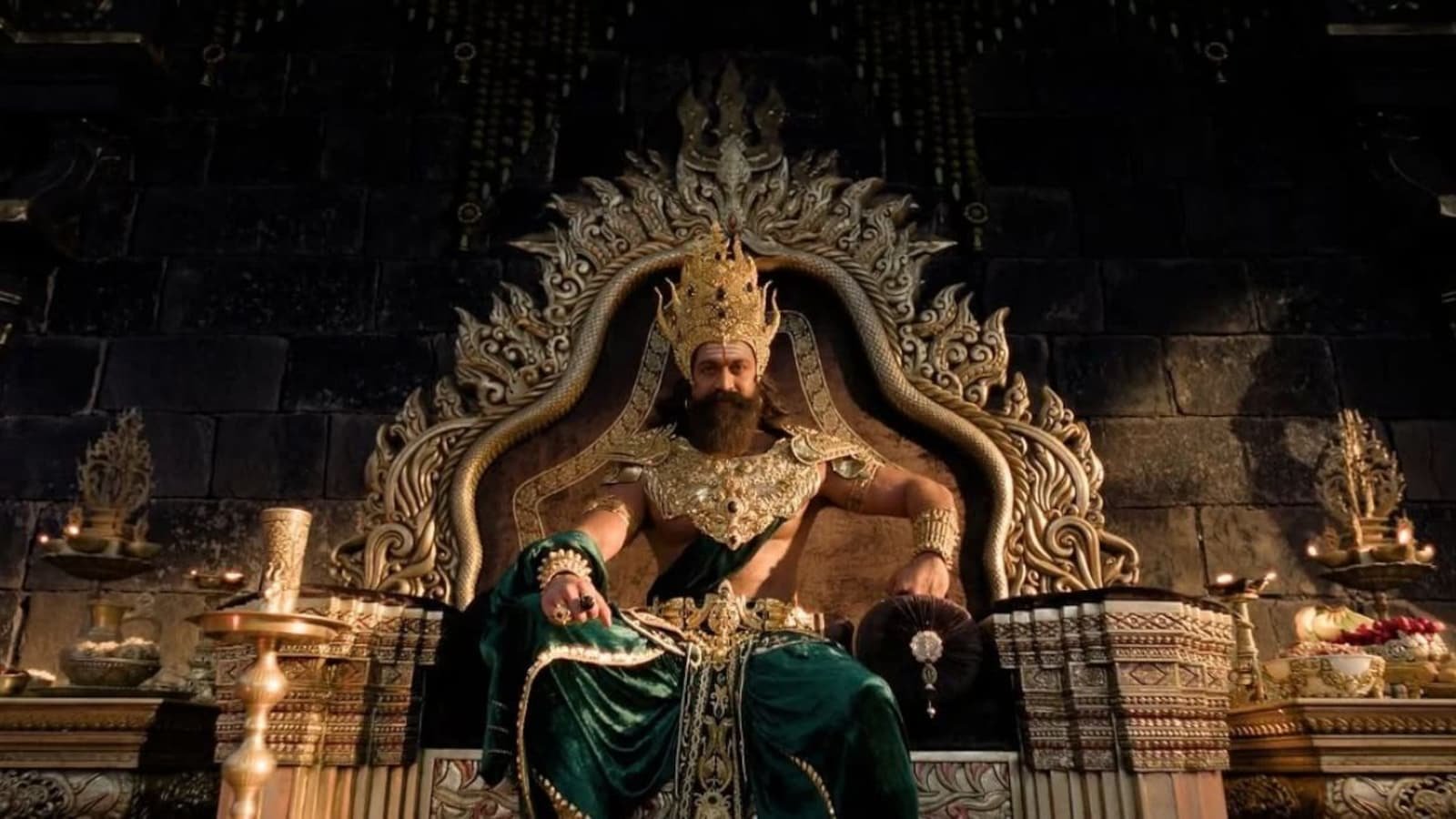
Two versions of Ramayana: The Rise of a Legend There are several differences with the English cut, except for a few important sequences that are part of the original Hindi version.
While both versions follow the same central story, the English version is about 30 minutes shorter and omits some scenes that add context to the characters and their motivations.
According to a report by IndiwireThe Hindi version runs for around 196 minutes (3 hours and 16 minutes), while the English version has a runtime of 166 minutes (2 hours and 46 minutes).
The shorter English cut retains the overarching narrative but removes several sequences, including the emotionally significant Bharat Milap episode.
Here’s a look at the main differences between the two versions.
1. Bharat Melap The sequence is missing from the English version
The biggest difference between the two cuts is the absence of the Bharat Milap sequence in the English version. In this scene, Bharata is meeting his brother Rama during his exile in the forest.
In the Hindi version, Bharata arrives at Rama’s hut and informs him of the death of his father, King Dasharatha. He also reveals that he was unaware of the palace conspiracy that resulted in Rama’s exile and Bharata’s accession to the throne.
The brothers later have an emotional conversation, during which Bharata pleads with Rama to return to Ayodhya and accept the throne. However, Rama refused, choosing to honor his father’s promise and continue his 14-year exile.
This sequence also establishes the tension between Lakshmana and Bharata. Lakshmana remains resentful of Bharata and struggles to understand Rama’s decision to stay away from the kingdom.
The entire sequence is missing from the English cut, leaving an important development in Rama’s story unexplained.
2. Ram’s emotional journey has more context in the Hindi version
The absence of Bharata Milap also changes how Rama’s character is portrayed in the English version.
In the Hindi cut, Rama’s decision to remain in exile despite Bharata’s pleas establishes his commitment to duty and destiny. It also becomes relevant later when Sita is kidnapped by Ravana.
When Rama speaks of rejecting fate and choosing his own path after Sita’s abduction, the dialogue carries extra emotional significance in the Hindi version. His first conversation with Bharat gives the moment great context.
The English version, however, does not include this exchange, making Rama’s next decision appear less connected to his earlier experiences.
3. Lakshmana’s anger towards Bharata is missing
The Hindi version gives more insight into Lakshmana’s emotional state through the Bharat Milap sequence.
During the conversation between the brothers, Lakshmana appears unhappy with Bharata and is also angry with Rama for refusing to return to Ayodhya.
These exchanges help explain Laxman’s nature and his reactions in later parts of the film.
Because the English version removes the sequence, the audience does not get the same understanding of the reasons for Lakshmana’s anger.
4. The first form of jatayu is clipped
Another difference concerns Jatayu, a giant bird king who tries to rescue Sita when Ravana abducts her.
In the Hindi version, Jatayu makes an earlier appearance during the Bharat Milap sequence. This establishes her presence in the narrative before she becomes central to the events surrounding Sita’s abduction.
The English version removes this old appearance. Consequently, the inclusion of Jatayu in the climate sequence comes with a comparatively slightly older context.
5. The marriage sequence of Ram and Sita is short in English
There is also a difference in the way the marriage of Rama and Sita is presented in the two versions.
In the Hindi version, the wedding celebrations also include the weddings of Rama’s three brothers. Earlier when Ram and Sita meet, Ram expresses his desire to marry Sita only then his brothers can also get married on the same day.
The Hindi cut includes these extra wedding sequences, while the English version removes them.
While these moments do not significantly change the central story, they provide additional details about the royal family and the events surrounding the wedding.
6. The life of Ayodhya is further described in the Hindi version
The Hindi version also includes additional footage of Rama and Sita’s life in Ayodhya.
A musical montage shows the couple interacting with the people of the kingdom and offers a glimpse into their lives before exile.
The English version cuts this part with some extra action sequences and short moments from the existing scenes.
These cuts make the English version more concise, but the Hindi version provides more time to establish the characters and their surroundings.
7. The English version uses an AI-assisted dubbing technique
Apart from differences in runtime and content, both versions also differ in their presentation.
According to Indiewire, the English version uses an AI-assisted lip-syncing technology called Brahma AI. Techniques were developed to match the actors’ mouth movements with the English dialogue.
The process reportedly involved human actors recording English lines, with some actual actors also taking part. Technology was used to modify mouth movements to match the dubbed performances.
However, the review noted that the technique resulted in exaggerated lip movements and made some English performances appear unnatural. It also observed that original Hindi performances have more emotional depth.
Are there any extra scenes in the English version?
Based on the differences detailed in the Indiewire report, the English version does not introduce any major story or character sequences that are absent from the Hindi original. Instead, it is mainly a short adaptation of the Hindi cut, with several scenes and parts of the musical montage removed.
The Hindi version retains additional family interactions, Bharat Melap Episode, Jatayu’s first appearance and more details about Rama and Sita’s life in Ayodhya.