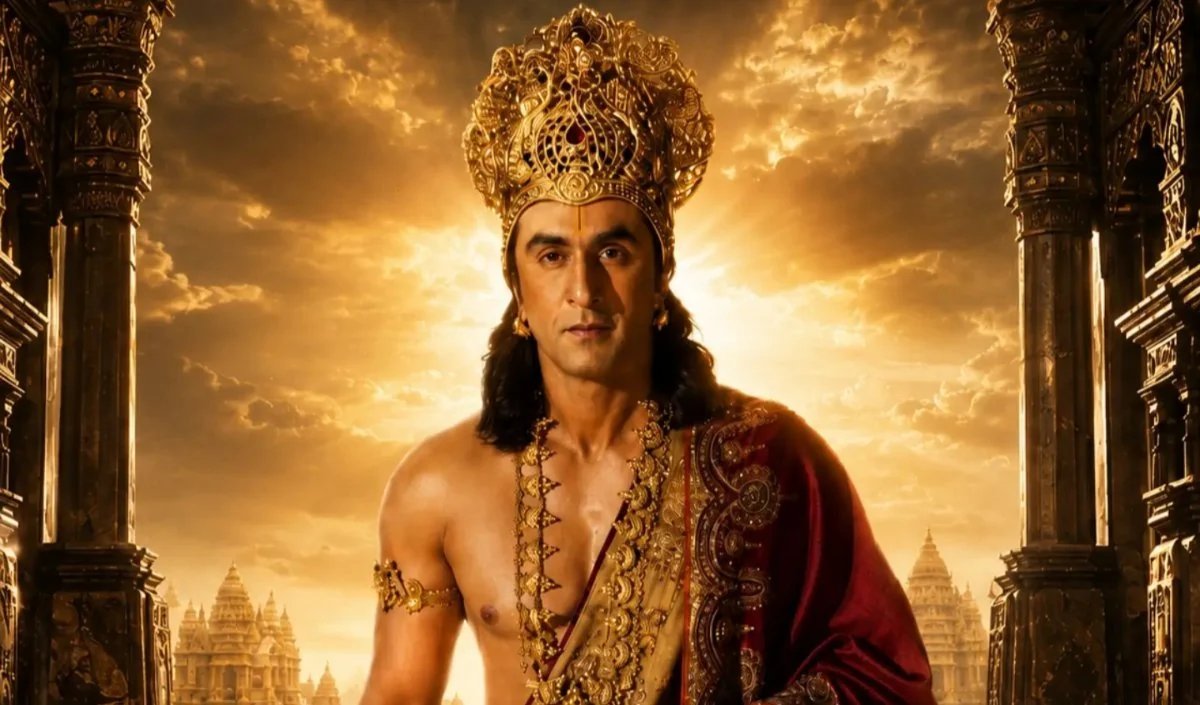
In Indian culture and folk-minds ‘Ramayana’ is not just a book or a story, but a document of ideals, dignity and eternal values of life which has been guiding us from generation to generation. When it comes to bringing such a great epic to the big screen of cinema, the challenges are multiplied. Director Nitesh Tiwari’s ambitious film ‘Ramayan Part 1’ accepts this challenge. The film presents this familiar saga in a new cinematic style with unprecedented use of modern technology, VFX and deep human emotions.
Starring veteran actors like Ranbir Kapoor, Yash and Sai Pallavi, the film is not just a simple sequence of mythological events, but effectively portrays the subtle conflict between power, ambition, love, duty, sacrifice and religion.
Movie Name: Ramayana Part 1
Critic Rating: 4/5
Release Date: November 5, 2026
Director: Nitesh Tiwari
Genre: Epic Drama
Story of the film: Journey from background to exile
Based on the essence of the Valmiki Ramayana, the film begins with an ancient struggle between gods and demons. The defeat of the demons and the re-establishment of their existence in Lanka ultimately set the stage for the rise of Ravana. This version of Ravana played by Yash is not limited to a conventional villain but is the saga of an ambitious ruler who wants to dominate the three worlds on the strength of his harsh austerities, immense wisdom and immense power.
Ravana’s penance, the boon received from Lord Brahma, defeating Indra, the king of gods, and taking Lanka from Kubera – all these events establish the film’s vast mythological canvas in the opening pages itself. The story then moves on to Ayodhya, where Lord Vishnu incarnates as Rama, the eldest son of King Dasharatha. The film closely depicts Ram’s childhood, his manners, education, weapons and the values that shaped his personality.
The historical journey of Rama and Lakshmana with sage Vishwamitra, the killing of Taraka, the rescue of Ahilya and finally the incident of Mother Sita’s swamvar in Mithila gives a new twist to the story. Rama and Sita’s marriage is not just a union of two hearts or two dynasties, but it is the foundation of their emotional and spiritual unity for the difficult trials ahead.
The biggest and most touching turning point in the story comes when Queen Kaikeyi reminds King Dasharatha of his old promises. She demands the throne for her son Bharat and 14 years of exile for Rama. Without reproach or protest, as an ideal son and brother, Rama willingly sacrificed Ayodhya to honor his father’s words. Mother Sita and Lakshman also walk step by step with him in this difficult journey.
On the other hand, in the golden city of Lanka, contradictions of power, family intrigues and lust for power weave a new web of events. Shurpankha’s insult and resulting anger results in the abduction of Sita. The first part of the film reaches its climax here. The epic battle between Rama and Ravana is yet to be seen on screen, but the director has very convincingly created every background and mental state of that decisive battle.
Ramayana Part 1: Direction
The biggest challenge for Nitish Tiwari was to bring to the screen a story that the audience already knows well. The characters and events of the Ramayana are deeply embedded in Indian culture. It is not enough to simply repeat familiar events; The film needed to be given a new cinematic experience.
Tiwari has performed this responsibility well. After showing family emotions and conflicts in a film like ‘Dangal’, the director has now taken up the responsibility of a vast mythological world. The best thing in his favor is that despite such a large scale, he never lost sight of human relationships.
The simple intimacy between Rama and Lakshmana, the emotional dialogue between Rama and Kaikeyi, the tenderness of Rama and Sita’s relationship, and Rama’s meeting with Parashuram – all these combine to ensure that the film is not just a collection of incidents. These moments bring out the emotional core of the film.
Writers Sridhar Raghavan and Nitesh Tiwari have given the story a lot of depth. Their aim is not only to show the life of Rama, but also to understand the personality of Ravana and the circumstances behind his rise. This gives full space to both sides of the story.
Due to the elaborate story, some parts of the film may seem a bit slow. However, it is the patience of the director that gives this story a distinct identity.
For the audience Ramayana is not just a story but an emotion. So, the biggest responsibility is to portray this feeling with great sensitivity – something that was lacking in ‘Adipurusha’. The audience is deeply attached to the original story and wants its characters, facts and language to remain the same. Even small changes can hurt their feelings.
Nitesh Tiwari seems very conscious about it. Without changing the basic form of mythological events and emotions, he has given them a new cinematic form through stunning cinematography and visuals. In the name of ‘creative freedom’, no relaxation has been given in the film, which has hurt the sentiments of the audience.
Ramayana Part 1: Technical Aspects
The biggest attraction of the Ramayana is its technical scale. The production design, cinematography, visual effects and background score come together to create a world that transports the audience to another era.
The grandeur of Ayodhya, the beauty of Mithila, the palaces of Lanka, the jungle and the war scenes enrich the visual canvas of the film. Every place has its own identity. Lanka symbolizes gold, power and wealth, while Ayodhya symbolizes discipline, culture and peace.
DNEG’s visual effects are the biggest strength of this film. Magnificent sets, divine weapons, battle scenes and mythological scenes leave a deep impression on the big screen. The scenes involving Ravana, especially the confrontation between Ravana and Jatayu, attract special attention due to their brilliant technical work.
The CGI can look a bit artificial in places. However, the scale of the world created for the film is so large that these shortcomings are largely masked.
Pankaj Kumar and Mahesh Limaye’s cinematography captures the majesty of the film beautifully. The use of colors in various scenes, palaces and landscapes perfectly matches the mood of the story. The costumes and set designs further reinforce its mythological atmosphere.
AR for music. The coming together of Rahman and Hans Zimmer is another big highlight of the film. Their different musical styles have given the film a unique identity. While the songs reinforce the emotional and spiritual aspects of the film, the background score adds moments of conflict, tension and important events. In many scenes, the music connects directly with the audience’s emotions rather than simply accompanying the story.
The editing of the film is also commendable. Despite being over three hours long, the film holds the audience’s attention for most of the time. Some parts could have been cut better, but help maintain the film’s grand scale and visual experience.
The visuals are really impressive and often make you pay attention to the details on the screen. One might wonder what new can be shown in a story that has been on screen many times before. But, the way it is presented visually, it also gives a new look to familiar events. Its visual impact and grandeur can also help new generation audiences connect with this epic.
Ramayana Part 1: Acting and Performance
The film’s casting and acting are its biggest strengths. Ranbir Kapoor has shown a different side of his acting as Lord Ram. Peace, patience, kindness and dignity are evident in his character. Instead of making his character unnecessarily dramatic, Ranbir has acted with great restraint.
His emotional scenes with Kaikei and the part where he accepts exile are particularly effective. He has struck a perfect balance between Lord Rama’s manners and his human emotions.
Yash has done a very strong job as Ravana. His screen presence and dialogue delivery style is quite impressive. He not only portrays Ravana as a cruel and arrogant ruler, but also shows his ambition, intelligence and intense desire for power. As soon as he appears on the screen, the atmosphere of the scene changes. This character perfectly suits her personality and acting style.
Sai Pallavi’s performance as Sita is very natural and believable. Her work exudes pride, sensitivity and confidence. He presents Sita not just as an ‘ideal wife’ but as an independent woman with her own ideas and inner strength. Her effortless acting adds a deep emotional depth to the character.
Ravi Dubey has done a great job as Laxman. Her devotion to Ram, her natural dialogue with her brother and her anger when needed – all these brought life to the character. There is also light humor in his acting, which gives the audience some respite in the middle of the serious story.
Rakul Preet Singh as Shurpanakha is impressive in both beautiful and menacing roles. Despite getting less screen time, he has left his mark. Lara Dutta portrays Kaikeyi’s changing emotional ups and downs very well, while Arun Govil as King Dasharatha adds depth to the story.
Anupam Kher’s voice has given a distinct identity to the character of Jatayu. The last scene involving Jatayu is particularly touching. Adinath Kothare as Bharat and Vivek Oberoi as Vidyutjeehwa are impressive in their respective roles, while Saurabh Sachdeva as Maarich also makes his presence felt.
Ramayana Part 1: What is special about the film?
The greatest strength of ‘Ramayana’ is that it makes even a familiar story very interesting. The film does not rely entirely on fancy sets and visual effects. It also gives a lot of space to the emotional journey of its characters.
Rama and Lakshmana’s chemistry, the intimacy of Rama and Sita’s relationship, Rama’s interaction with Kaikeyi and the story of Ravana’s rise – all these aspects make the film’s narrative strong on different levels.
AR Rahman and Hans Zimmer’s music, stunning cinematography and stunning production design make this a film made for the big screen.
Another highlight is how the film portrays the conflict between good and evil. This conflict is not limited to physical warfare, but also comes in the form of a clash of different ideas, desires and choices. This brings a depth to the film which is rarely seen in normal mythological films.
Talking about the drawbacks, the biggest drawback is its length (runtime). The film could have been shortened a bit. The digital effects of some of the larger creatures and background visuals could have been better. However, these are minor flaws and don’t detract much from the overall experience of the film.
Ramayana Part 1: The Final Conclusion
Nitesh Tiwari’s ‘Ramayana’ is not just a mythological film. It is a big and bold attempt to present an Indian epic to the world stage. Its greatest strength is that it has struck a perfect balance between stunning visuals and emotions.
Ranbir Kapoor has played the role of Ram with great poise and dignity. Yash makes a strong impression as Ravana, while Sai Pallavi portrays Sita with natural grace and sensitivity.
The story of the film slows down a bit at some places, and some of the visual effects could have been improved. But the film’s vast canvas, excellent music, strong acting and emotional scenes overcome these shortcomings.
The film also brings a lot to the audience who have grown up knowing the Ramayana. They get a chance to revisit familiar themes from a new cinematic perspective. If you love Indian epics, large-scale films and emotional stories, ‘Ramayana’ is a must watch in theatres. It can be experienced even better in IMAX and 3D. One thing is clear: this film totally lives up to the huge hype created about it.